
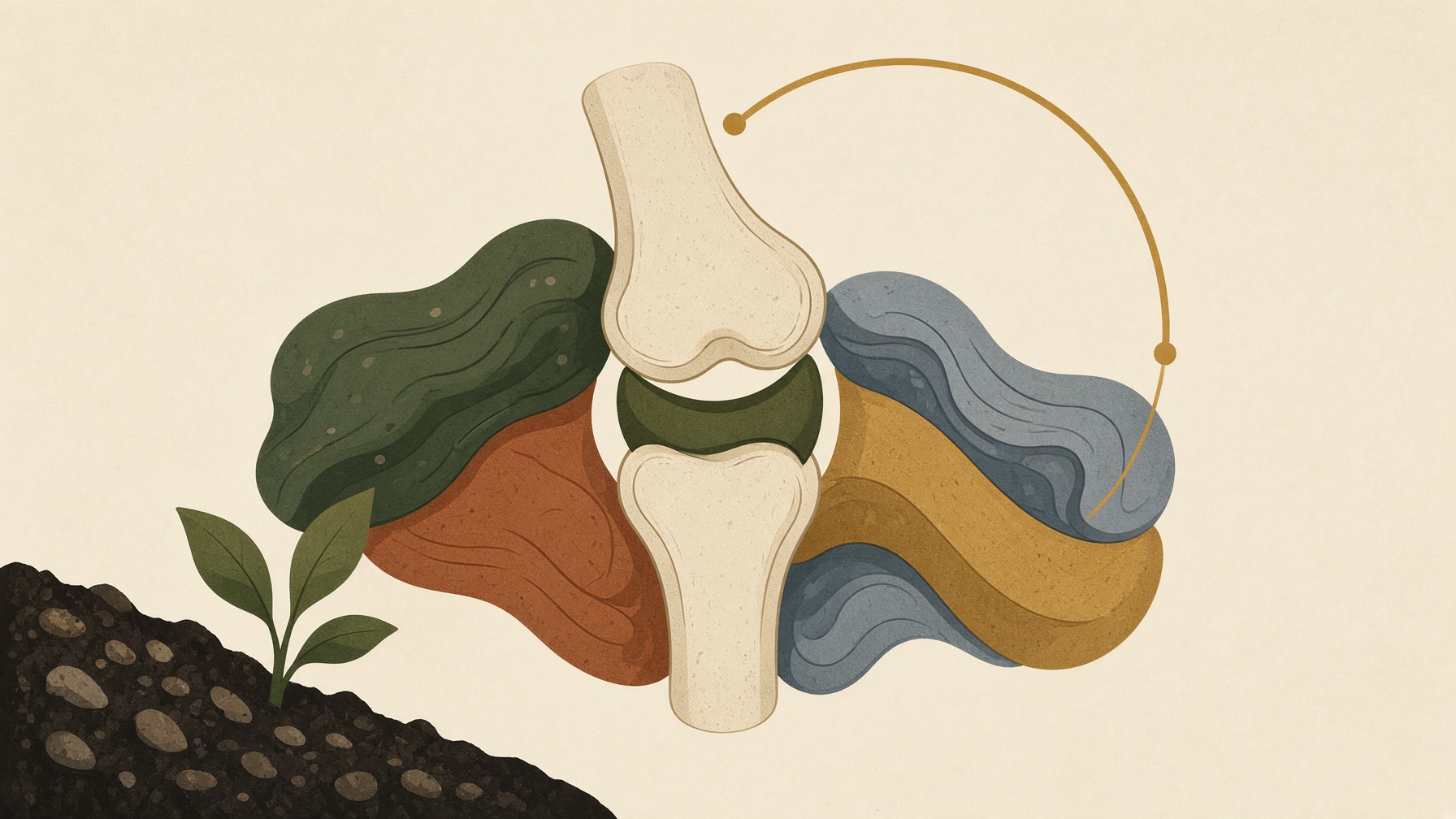
What Can Limit Your Flexibility?
Flexibility reflects joint structure and surrounding tissues as well as stretch tolerance, so similar limits in movement can have different causes.
Wikis
Range of motion (ROM) is the amount of movement available at a joint or body segment, often expressed as an angle in degrees. For example, the ROM of the knee can describe how far the joint moves between extension and flexion. Range of motion is specific to the joint, direction of movement, and conditions under which it is measured .1,2
ROM can be measured actively or passively. Active range of motion is the movement a person can produce using their own muscular effort. Passive range of motion is the movement available when an external force, such as an examiner, moves the joint while the person remains relaxed. Passive ROM is often greater than active ROM because active movement also depends on factors such as muscle strength and motor control .1
The available range of a joint is influenced by several factors. These include bone and joint geometry, the mechanical properties of muscles and other soft tissues, neural control, and a person's tolerance of sensations near the end of the movement. Some of these factors can change with training or injury, whereas others, such as aspects of bone structure, are relatively fixed .2
Range of motion is closely related to, but not identical to, flexibility. Flexibility describes the capacity to move through a range of motion and is influenced by properties of muscles and other soft tissues as well as other factors affecting movement. A change in joint range of motion therefore does not necessarily mean that the physical length or mechanical properties of a particular muscle have changed .2
From this collection
Flexibility reflects joint structure and surrounding tissues as well as stretch tolerance, so similar limits in movement can have different causes.
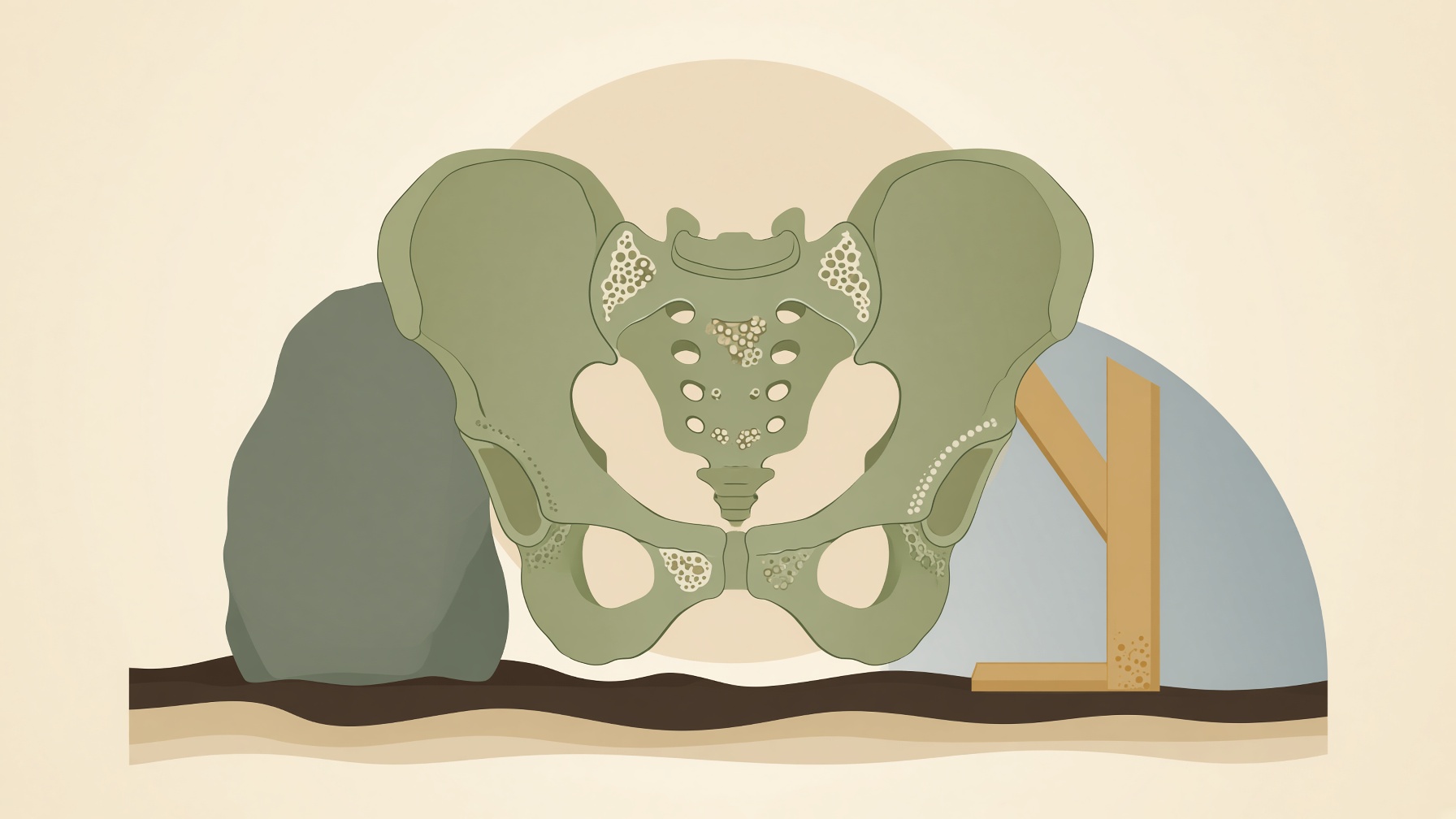
The pelvis limits movement through strong bony connections, providing a stable base that transfers upper-body weight toward the lower limbs.
A simple resistance-training program builds a repeatable routine around major muscle groups, with demands that can change as performance improves.

Health-related fitness describes several distinct qualities, so strength in one area does not necessarily mean equal ability across the others.