
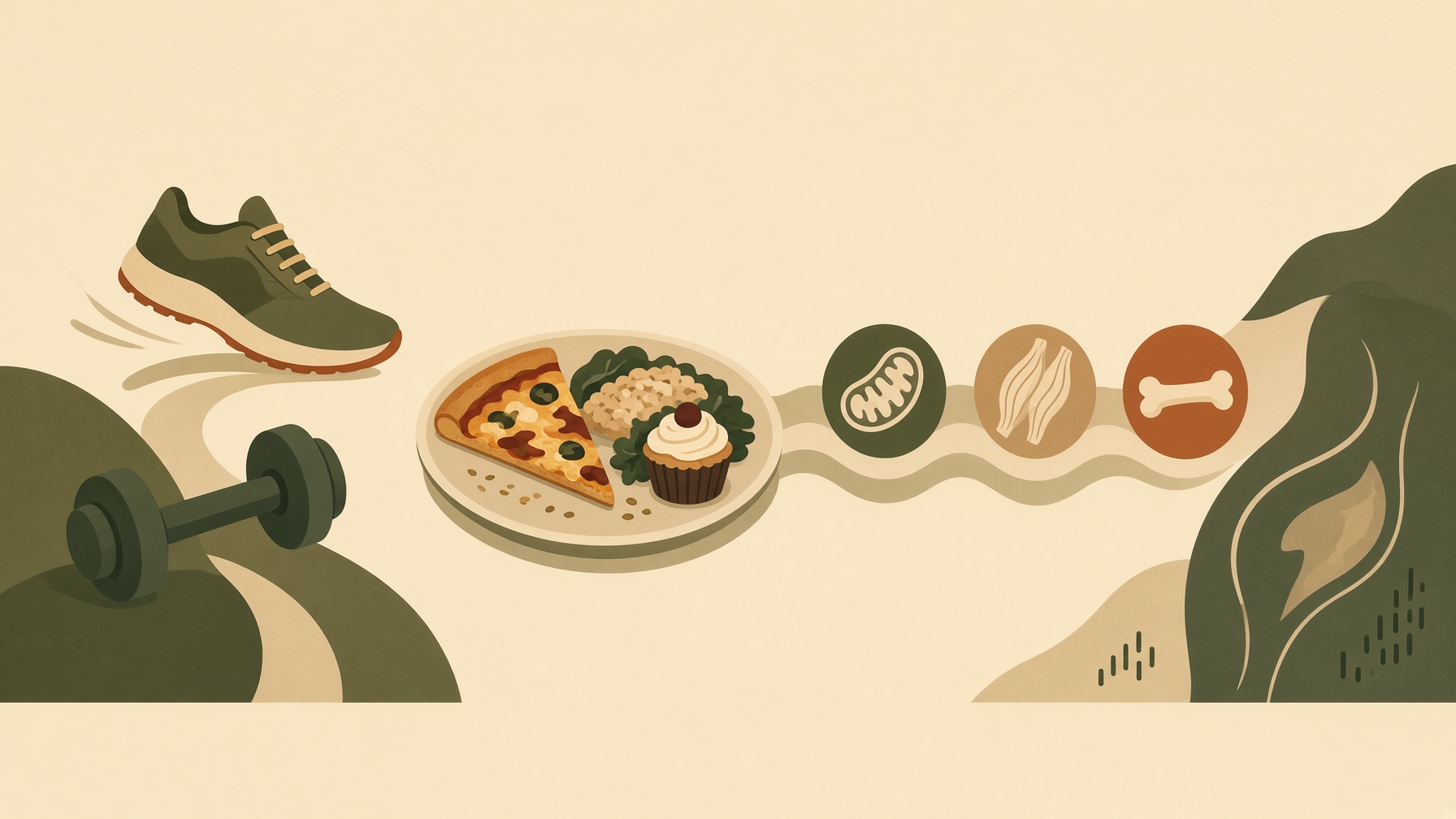
If the Meal after Training Wasn't What You Planned, Did the Workout Still Do Its Job?
Training and nutrition shape outcomes through repeated patterns, and evidence does not support treating one imperfect meal as a workout cancellation.
Wikis
Ultra-processed foods form a NOVA category based on industrial formulation and processing, rather than a single nutrient threshold or all food processing.
Ultra-processed foods are the fourth group in the NOVA food-classification system, which categorizes foods according to the nature, extent, and purpose of industrial processing. They are generally industrial formulations made largely from refined or extracted food substances and often include ingredients or classes of additives rarely used in ordinary home cooking .1
NOVA identifies ultra-processed products by features of their formulation and manufacture rather than by one nutrient threshold. Examples of characteristic ingredients can include protein isolates, modified starches, hydrogenated or interesterified oils, flavorings, colors, emulsifiers, and other additives used to alter sensory properties or physical structure. A food can therefore be high or low in a particular nutrient without that nutrient alone determining its NOVA category .1
The term should be distinguished from processed food in the everyday sense. Many foods undergo processing such as freezing, pasteurization, fermentation, or canning without being classified as ultra-processed by NOVA. The category is widely used in nutrition research but remains a classification framework rather than a direct chemical property of food, and disagreements can occur when products have complex or incomplete ingredient information .1
From this collection
Training and nutrition shape outcomes through repeated patterns, and evidence does not support treating one imperfect meal as a workout cancellation.