
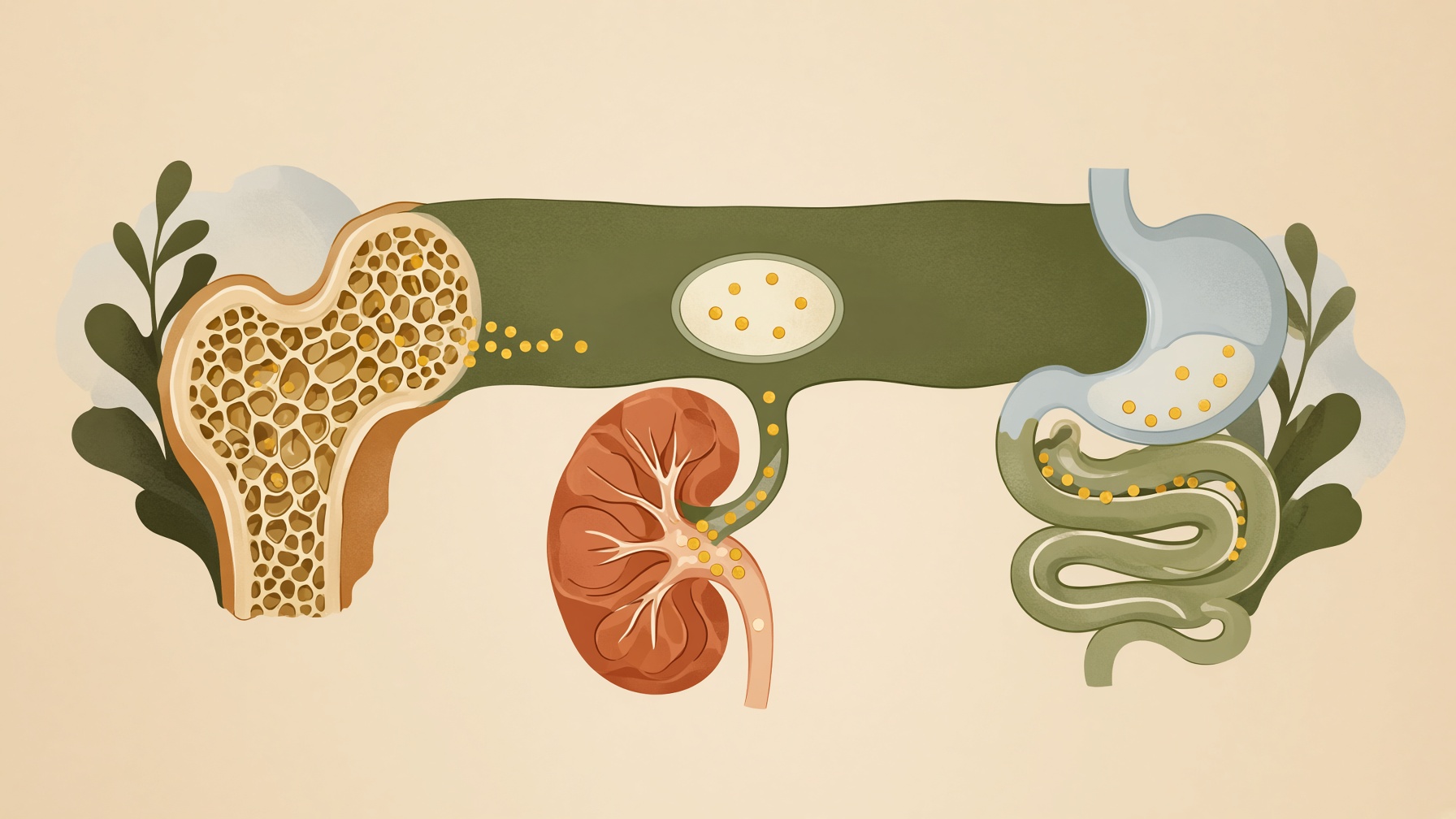
A normal blood-calcium result can seem reassuring, but it does not tell you how much calcium you have been eating or whether your overall calcium status is adequate. That is because circulating calcium is tightly regulated. The body actively protects this small calcium pool by adjusting what happens in bone, the kidneys, and the intestine.
About 99% of the body's calcium is stored in bone and teeth, while less than 1% is found in blood and other soft tissues. Yet calcium in these compartments supports essential functions. Intracellular calcium is required for normal muscle contraction, and calcium ions also act as important cofactors in multiple reactions of the blood-coagulation cascade. Because these processes depend on appropriate calcium availability, the concentration of calcium outside bone is kept under close physiological control .1,2
Bone helps make that regulation possible by acting as a calcium reservoir. When circulating ionized calcium falls, hormonally mediated responses, principally involving PTH-related pathways, can increase bone resorption and release calcium from the skeleton. This helps defend circulating calcium even when calcium entering from the diet is not fully meeting current demands. For that reason, blood calcium concentration does not reliably reflect dietary calcium intake or overall calcium nutritional status. A value within its expected range can coexist with physiological efforts to preserve that range .1,2
Parathyroid hormone, or PTH, is central to this response. A decline in blood calcium stimulates PTH secretion. PTH then raises or conserves circulating calcium through several coordinated actions rather than through bone alone. It promotes skeletal calcium mobilization, increases calcium reabsorption in the kidneys so that less calcium is lost in urine, and stimulates the kidneys to produce calcitriol, the active hormonal form of vitamin D. These actions work together to protect the extracellular calcium pool .2
Calcitriol adds an intestinal component to the system. After its production is stimulated by PTH, calcitriol acts on the intestine to increase calcium absorption. That gives the body another way to support blood calcium alongside renal conservation and skeletal calcium release. Calcitriol therefore provides another mechanism for maintaining circulating calcium by increasing intestinal calcium absorption. Along with reduced renal calcium loss and skeletal calcium mobilization, this coordinated response helps preserve the extracellular calcium pool .2
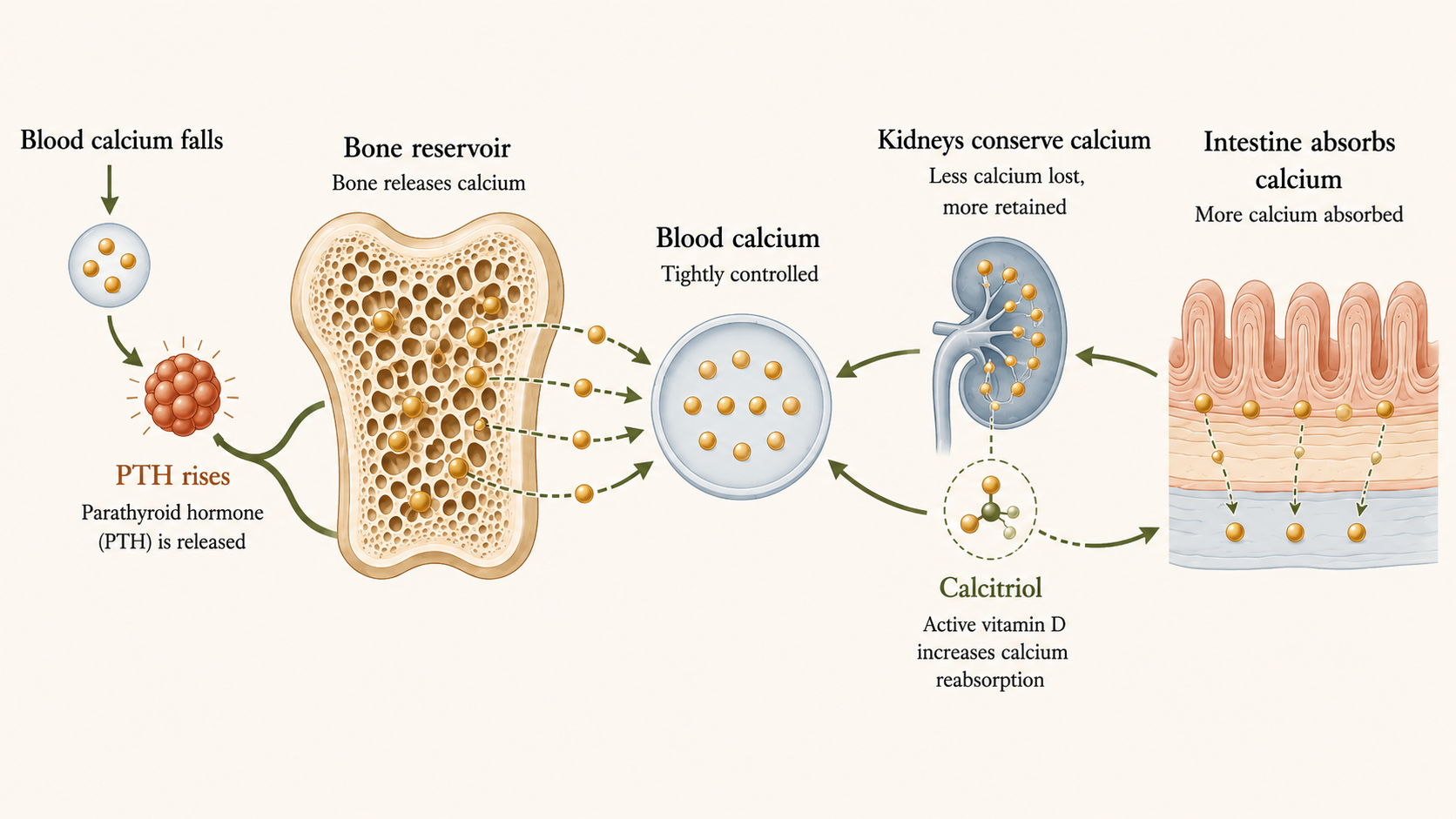
A normal blood-calcium concentration therefore should not be interpreted as proof of adequate calcium intake. It reflects successful regulation of a tightly controlled physiological variable rather than a direct measure of dietary supply. The body can preserve circulating calcium through coordinated hormonal responses involving bone, kidneys, and intestine, even when calcium intake varies.
Join the discussion
No account or email is required. Your display name and comment will be public.