
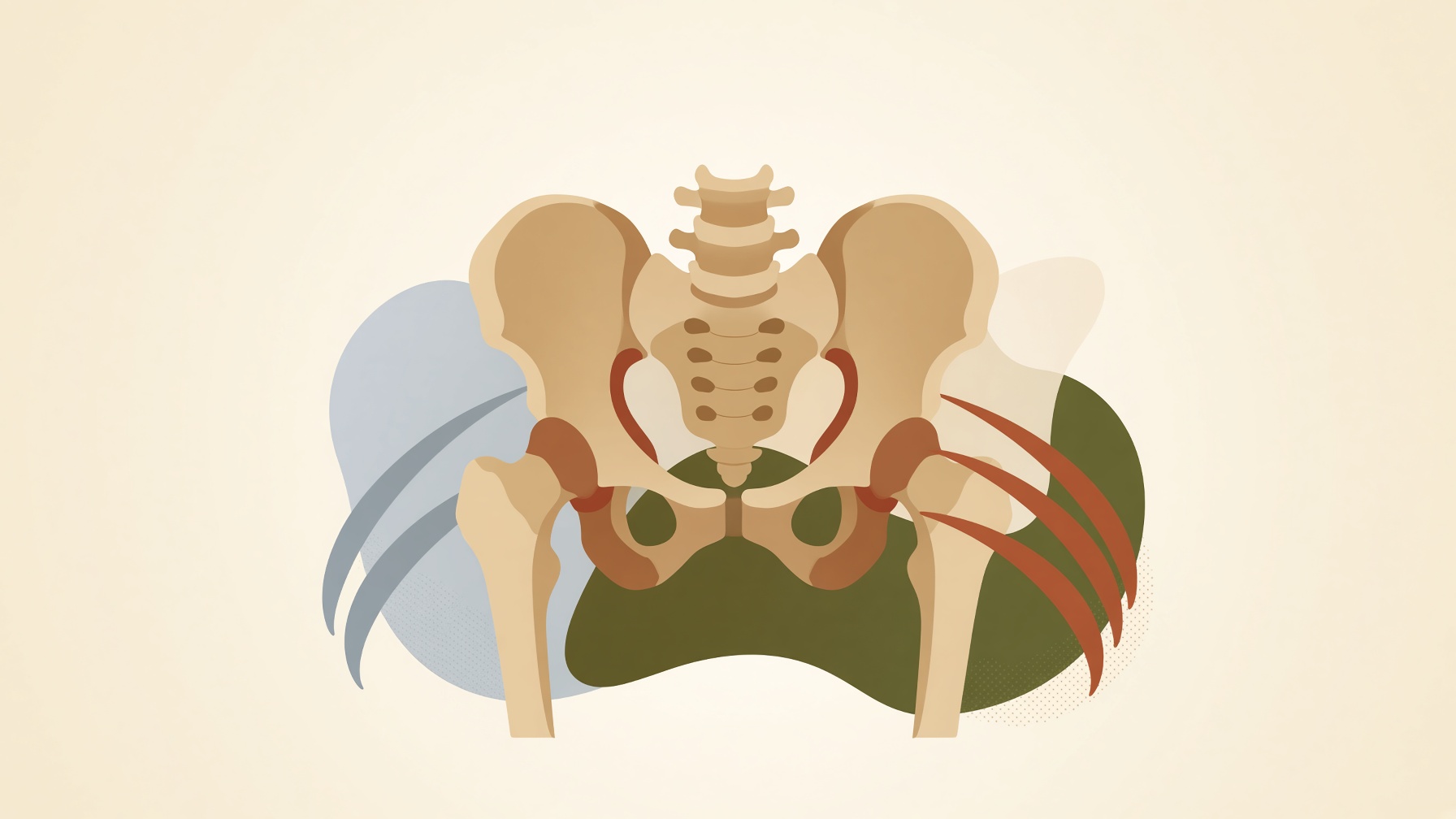
The pelvis is easy to recognize as a single region of the skeleton, but its shape makes more sense when its individual parts are considered separately. Some of its landmarks can even be felt through the skin or noticed indirectly in everyday positions. Looking more closely at those features provides a useful way to connect the names of the pelvic bones with the anatomy we can actually see, feel, and use.
Each adult hip bone is formed from three regions: the ilium, ischium, and pubis. These three parts fuse during adolescence to form the adult hip bone. Some of these features are easy to identify on your own body. The upper curved edge of the ilium, called the iliac crest, can be felt when you place your hands on your waist .1
Lower on the pelvis, the ischium provides another familiar landmark. The ischial tuberosity is a roughened area that bears much of the body’s weight when sitting. Lower on the pelvis, the ischium provides another familiar landmark. The ischial tuberosity is a roughened area that bears much of the body’s weight when sitting .1
The ilium, ischium, and pubis also meet to form the acetabulum, a deep, cup-shaped cavity that forms part of the hip joint. The head of the femur fits within this socket to form the hip joint. The depth of the acetabulum contributes to the joint’s inherent stability while still allowing movement in multiple directions .1,2
The pelvis also serves as an attachment base for many muscles that move the femur. The gluteal muscles are an important example, with several attaching to the pelvis and acting across the hip. Together with other muscles around the hip, they move the thigh in different directions and help control the position of the pelvis during standing and movement .1
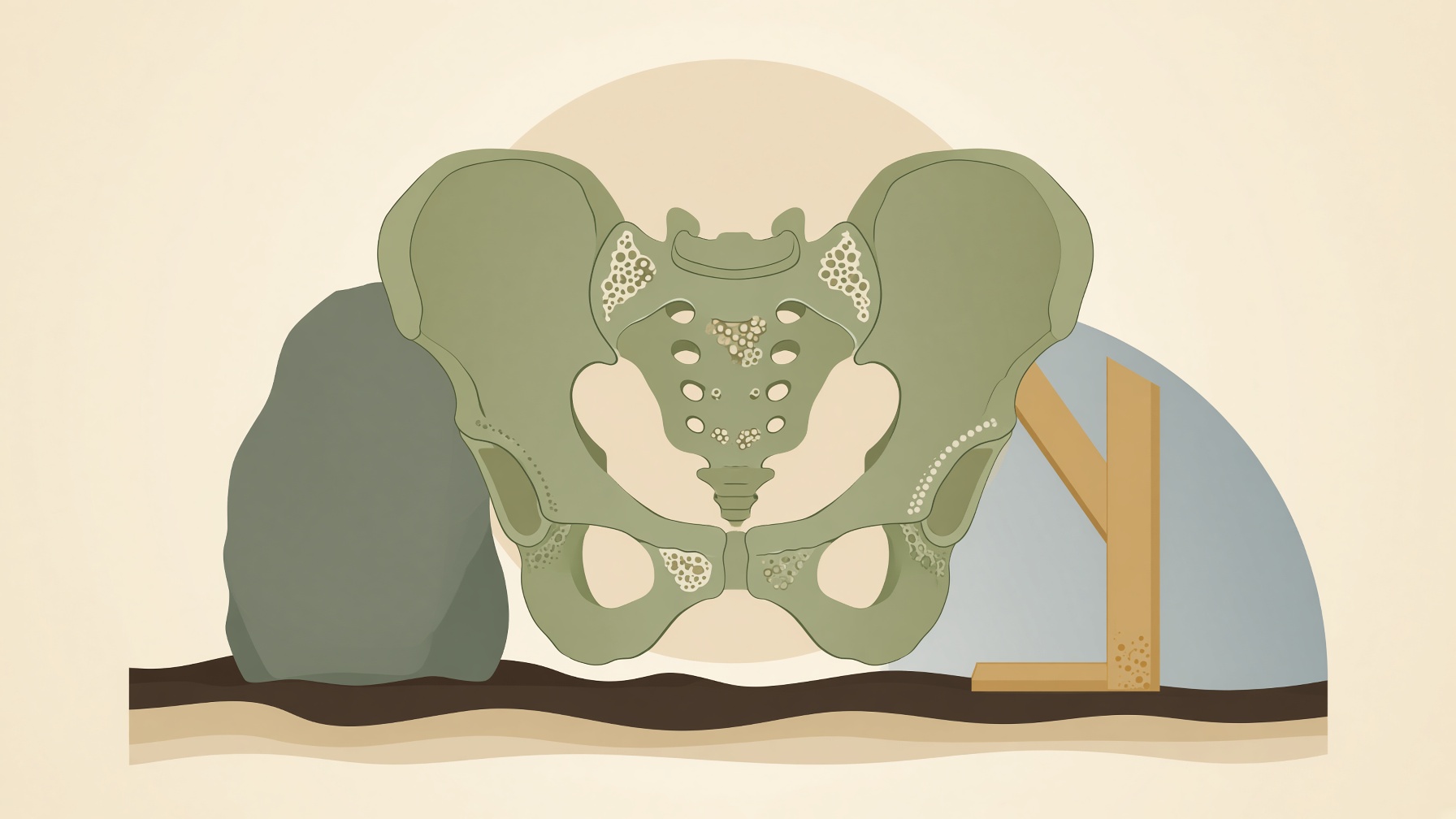
Learning the pelvis by its landmarks makes the region easier to understand than memorizing bone names in isolation. Features such as ridges, projections, and sockets are not random details; their shapes reflect how the pelvis connects with other structures and functions in everyday life. Once those relationships are clear, the ilium, ischium, and pubis begin to look less like three names on a diagram and more like recognizable parts of one continuous anatomical structure.
Join the discussion
No account or email is required. Your display name and comment will be public.