

You have put weeks into a training program, and now you want to know what changed. Suppose the size measurements of a tendon look much the same as before. Would you take that as the whole answer, or would you want to know something else about it? That is where this question begins: what would count as a change in the first place?
A tendon’s mechanical stiffness describes how much additional force is needed for a given amount of lengthening. Its dimensions describe something else. Length and cross-sectional area, the area measured across the tendon, are size measurements. Neither is interchangeable with a measurement of the tendon’s response to force, and mechanical stiffness is distinct from the everyday feeling of being stiff.1
Those separate descriptions were measured in a resistance-training experiment involving 42 young, physically active volunteers: three training groups and a nontraining control group, each with 10 or 11 people. Ultrasound displacement measurements and estimates of tendon force supplied the force–elongation relation used to estimate stiffness in the patellar tendon at the knee. An additional analysis compared stiffness at standardized force. Separate ultrasound measurements assessed tendon length and cross-sectional area, allowing mechanical behavior and dimensions to be considered alongside each other.1
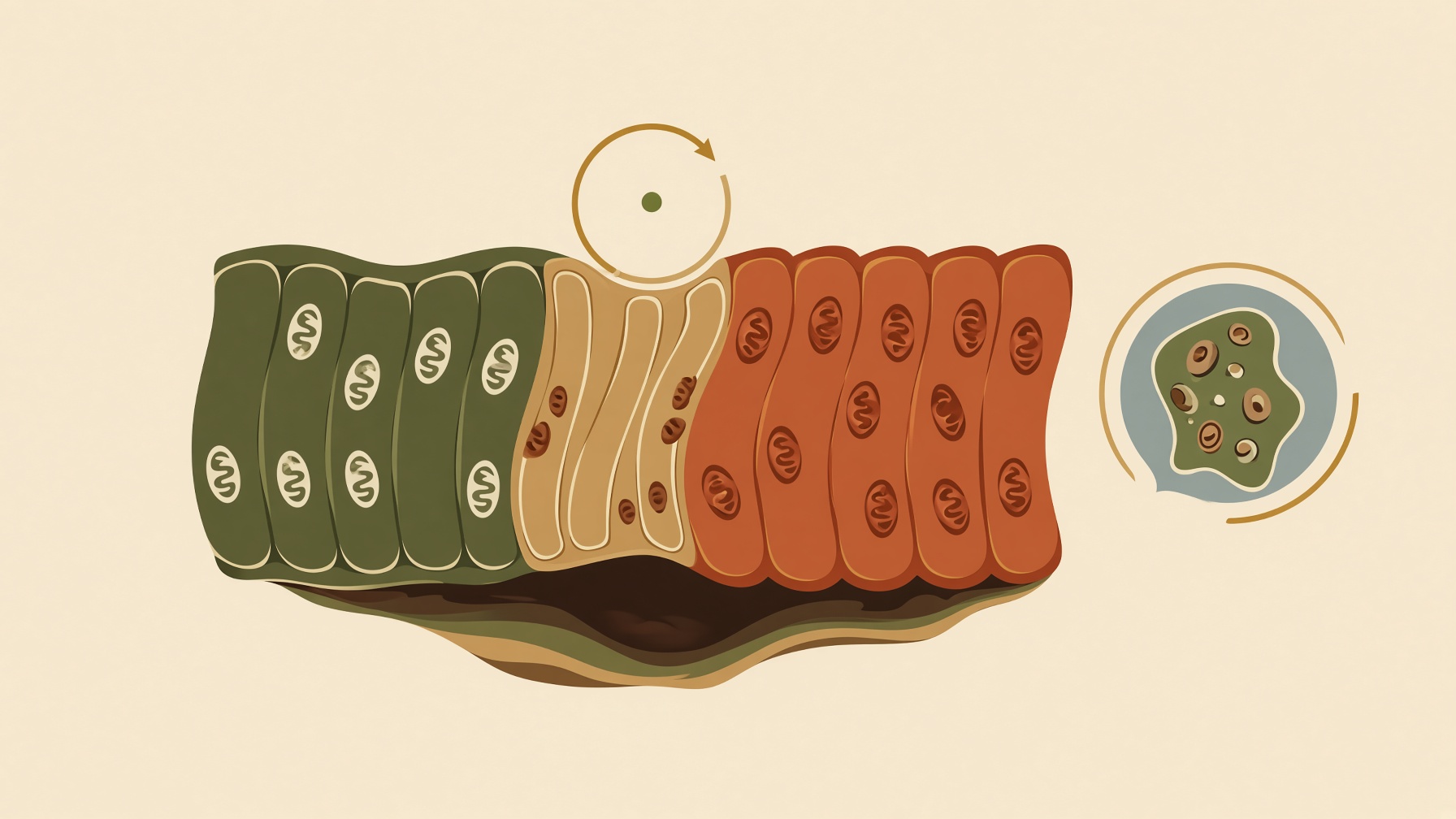
After eight weeks, all three training groups showed increased estimated patellar-tendon stiffness. No statistically significant change in measured tendon length or cross-sectional area at the sampled locations was detected. The findings describe group averages under the particular training protocol; eight weeks is the observation period in this experiment, not an exact timetable for another person or every tendon.1
The absence of a statistically significant size change does not prove that growth was exactly zero. It means the size measurements did not establish a change, while the separate mechanical measurements did. A change in stiffness also does not establish resistance to injury or the force a tendon could withstand before failing. Neither injuries nor tendon failure were tested.1
To interpret a report about tendon adaptation, first identify what was measured. If your interest is in size, look for a size assessment. If you are asking about the response to force, look for that assessment. Keep the interpretation tied to the question, rather than turning the result into a general rating of training progress.


Join the discussion
No account or email is required. Your display name and comment will be public.