
How Your Body Digests and Absorbs Dietary Fat
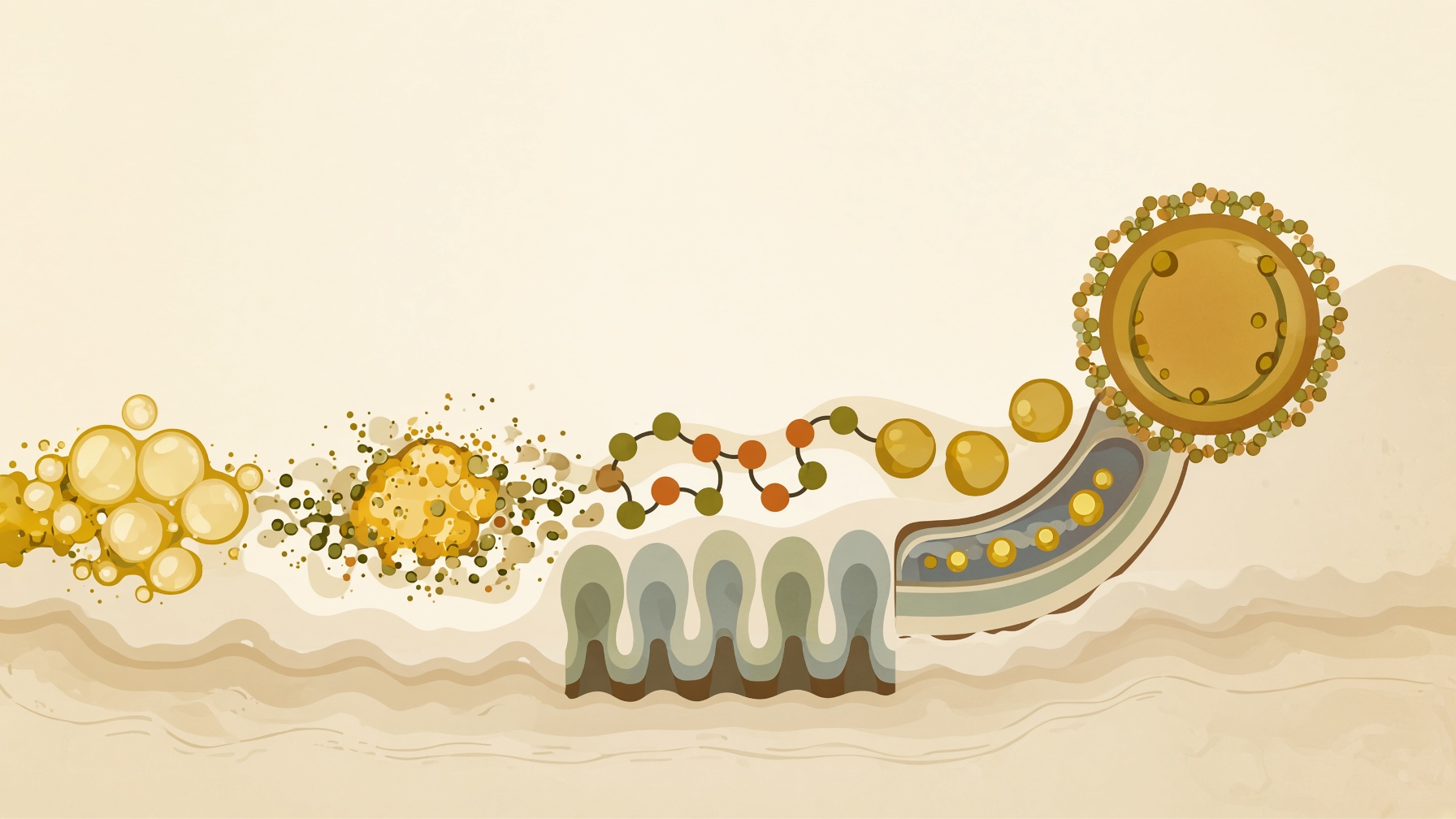
Dietary fat digestion combines physical dispersal by bile salts with enzyme breakdown, producing lipid components that intestinal cells can absorb.
Wikis
Bile salts are amphipathic molecules derived from bile acids that play a central role in the digestion and absorption of dietary lipids. Bile acids are synthesized from cholesterol in the liver and are commonly conjugated with the amino acids glycine or taurine before being secreted into bile. These conjugated bile acids are largely ionized under physiological conditions and are commonly referred to as bile salts .1,2
Bile salts have both water-interacting and lipid-interacting surfaces, giving them detergent-like properties. In the small intestine, they associate with lipid-water interfaces and help keep dietary lipids dispersed during digestion. They also participate in the formation of mixed micelles containing fatty acids, monoacylglycerols, cholesterol, phospholipids, and other poorly water-soluble compounds .1
Mixed micelle formation helps solubilize products of fat digestion in the aqueous intestinal environment and transport them toward the surface of enterocytes for absorption. Bile salts generally remain in the intestinal lumen during this transfer rather than being incorporated into the chylomicrons subsequently assembled inside enterocytes .1
Most bile salts are later reabsorbed, particularly in the terminal ileum, returned to the liver through the portal circulation, and secreted into bile again. This recycling process is called enterohepatic circulation. The terms bile acid and bile salt are sometimes used loosely as overlapping terms, but bile salt commonly refers to the conjugated, ionized forms of bile acids present under physiological conditions .2
From this collection
Dietary fat digestion combines physical dispersal by bile salts with enzyme breakdown, producing lipid components that intestinal cells can absorb.