
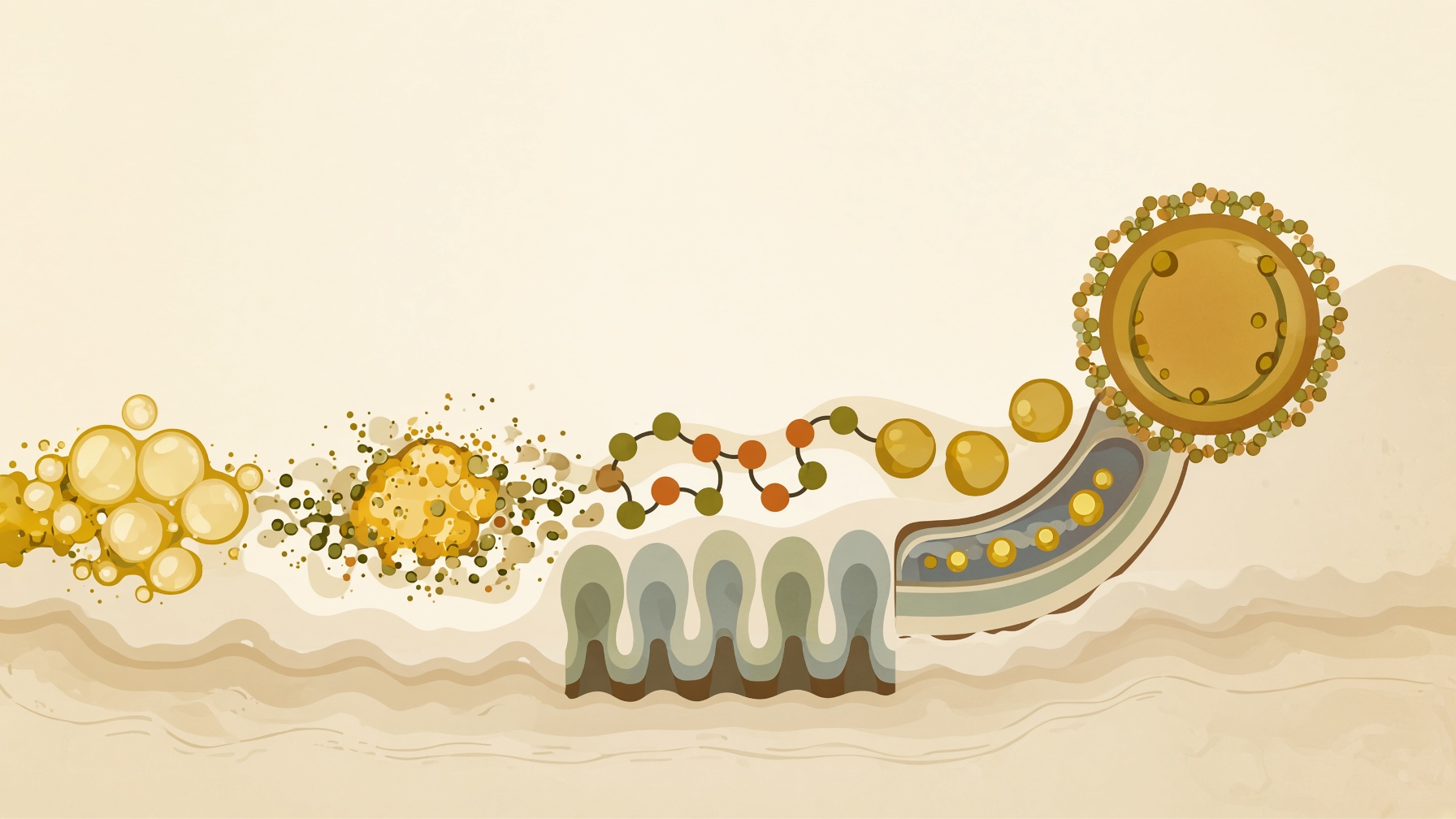
How Your Body Digests and Absorbs Dietary Fat
Dietary fat digestion combines physical dispersal by bile salts with enzyme breakdown, producing lipid components that intestinal cells can absorb.
Wikis
Portal circulation is a vascular arrangement in which blood passes through one capillary bed and then travels through a portal vein to a second capillary bed before returning to the heart. In digestive physiology, the term usually refers to the hepatic portal circulation, which carries venous blood from much of the gastrointestinal tract and several associated abdominal organs to the liver .1,2
In the hepatic portal system, blood draining the stomach and intestines, as well as the pancreas, spleen, and gallbladder, converges into the portal venous system. The hepatic portal vein carries this blood into the liver, where it branches into progressively smaller vessels and ultimately delivers blood to specialized capillary-like channels called hepatic sinusoids .1
This arrangement allows many substances absorbed from the digestive tract to reach the liver before entering the general systemic circulation. Within the hepatic sinusoids, portal venous blood mixes with oxygenated blood supplied by the hepatic artery. Blood then passes into central veins and hepatic veins, which drain into the inferior vena cava and return it toward the heart .1,2
Portal circulation therefore differs from ordinary venous circulation, in which blood leaving a capillary bed generally returns toward the heart without first passing through another capillary bed. The hepatic portal system is one example of a portal system; other specialized portal circulations also exist in the body .1,2
From this collection
Dietary fat digestion combines physical dispersal by bile salts with enzyme breakdown, producing lipid components that intestinal cells can absorb.
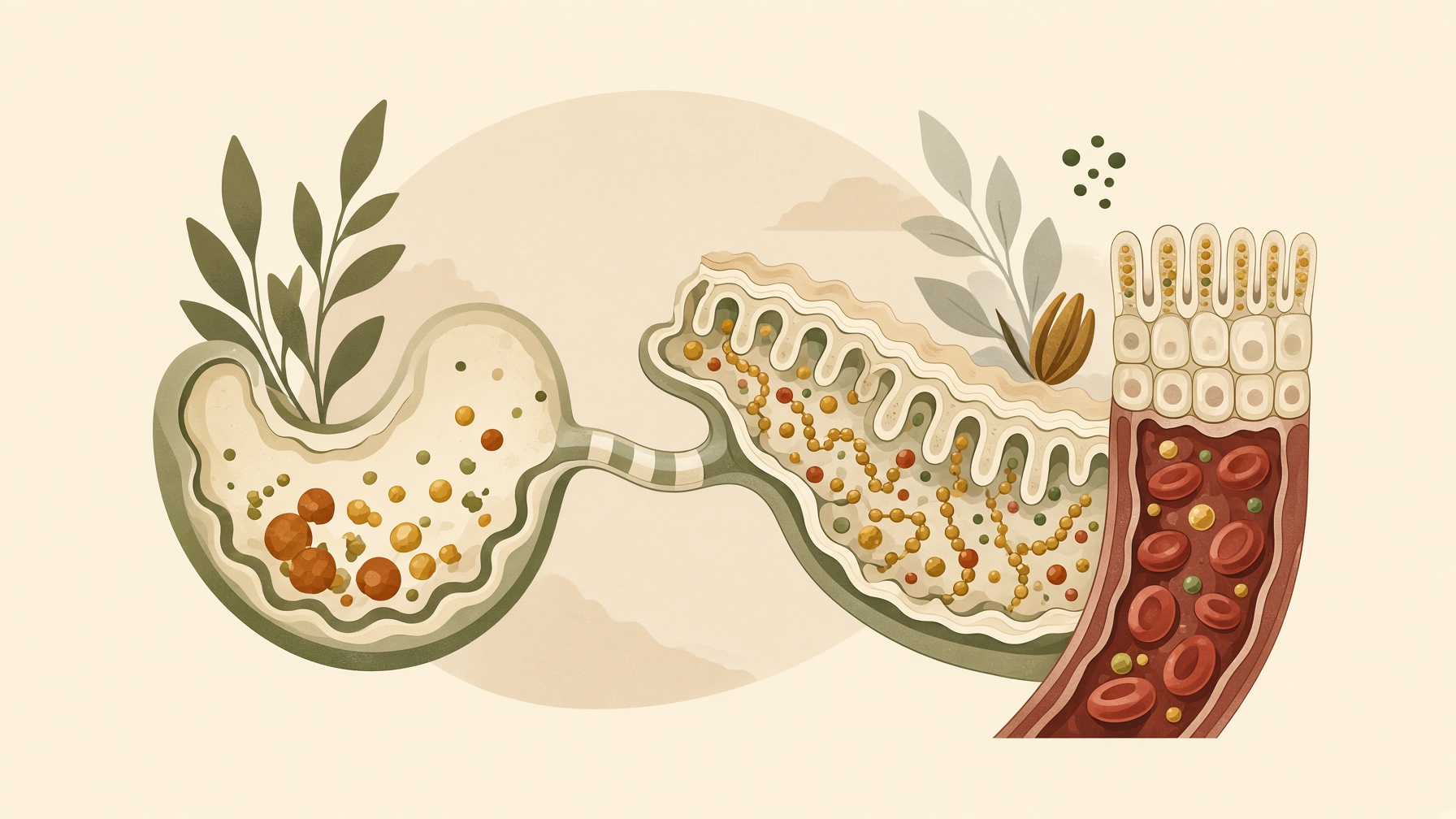
Protein digestion breaks food proteins into amino acids and small peptides that intestinal cells can absorb for the body’s ongoing protein turnover.