
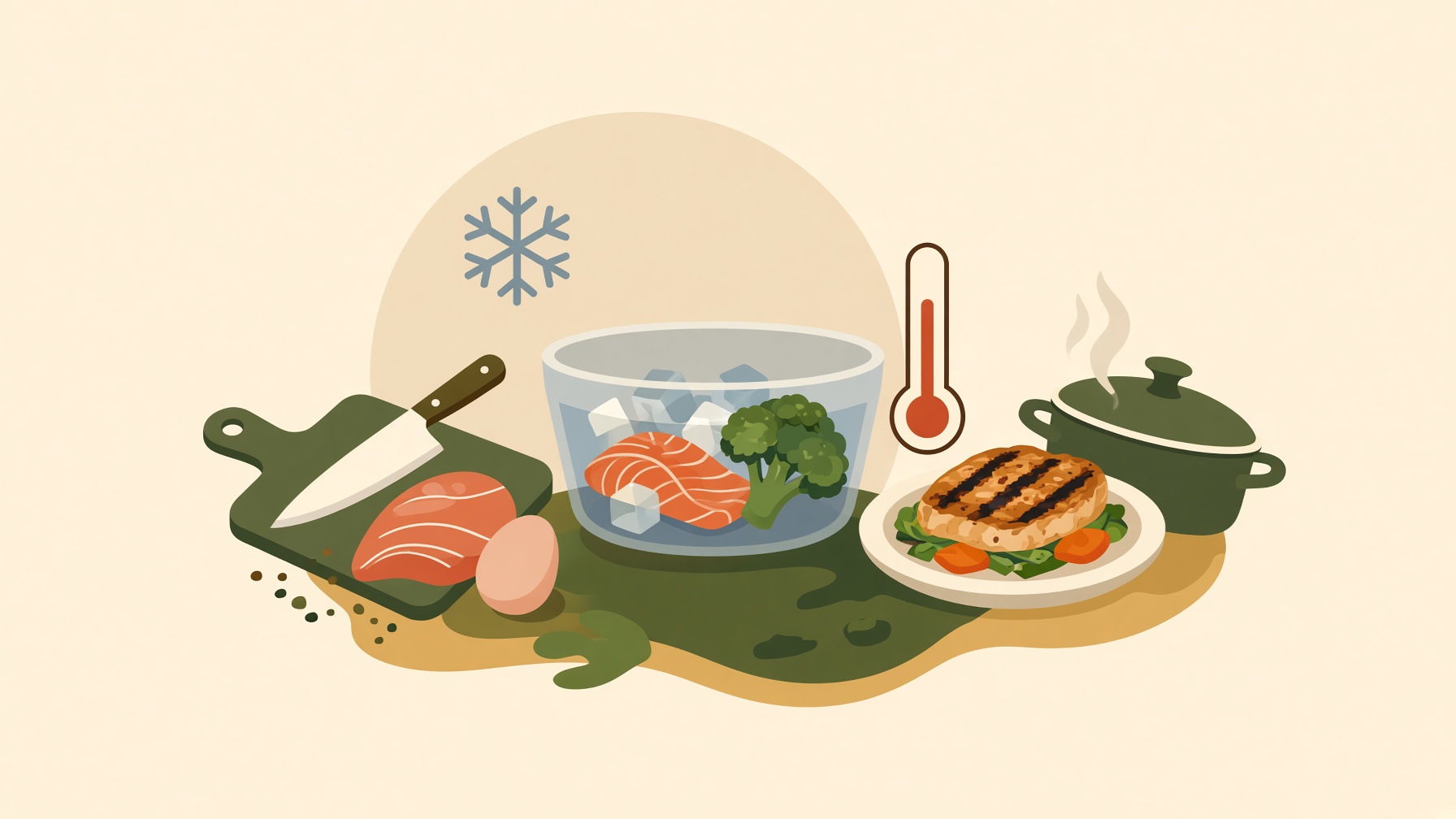
Food that looks, smells, and tastes normal can still carry pathogenic bacteria. That is why food safety is built less around detecting danger with your senses and more around preventing contamination, cooking appropriately, and controlling temperature. The familiar Clean, Separate, Cook, and Chill framework turns those principles into a practical sequence for handling food at home.
Start with Clean. Pathogenic bacteria generally cannot be reliably identified by looking at food or smelling it, and tasting is not a safe way to decide whether food is microbiologically safe. Prevention therefore begins before there is any obvious sign of a problem. Wash your hands with soap and running water for at least 20 seconds before preparing food. Wash them again after handling raw meat, poultry, seafood, eggs, or other foods that may carry pathogens .1
Next comes Separate, which is about limiting cross-contamination. Keeping raw animal foods away from ready-to-eat foods helps prevent bacteria from being transferred to foods that may not undergo further cooking. During preparation, use separate cutting boards for fresh produce or other ready-to-eat foods and for raw meat, poultry, or seafood when possible. Separation matters in the refrigerator too. Store raw meat, poultry, seafood, and eggs apart from ready-to-eat foods, preferably below them, to reduce the chance that dripping juices contaminate other foods .1,2
Cook addresses pathogens that may already be present. Foods that require cooking should reach temperatures sufficient to reduce pathogens to safe levels, but there is no single temperature that applies to every food. The appropriate temperature depends on the type of food being prepared. A food thermometer is the practical way to verify that the required internal temperature has actually been reached .2
Finally, Chill controls the time and temperature conditions that allow bacteria to grow. Keep the refrigerator at 40°F, or 4°C, or below. Leftovers and other perishable foods should normally be refrigerated or frozen within two hours of being cooked or taken out of refrigeration; when the surrounding temperature is above 90°F, or 32°C, that window shortens to one hour. Perishable food should not be thawed on the counter. Safer approaches include thawing in the refrigerator, in cold water, in the microwave, or by another validated method. Perishable foods should also be marinated in the refrigerator rather than at room temperature .2
The most reliable food-safety habits are preventive. Because harmful bacteria may offer no dependable warning through sight, smell, or taste, Clean, Separate, Cook, and Chill provide a more useful framework: reduce contamination, prevent its spread, use appropriate cooking to reduce pathogens, and limit bacterial growth through careful time and temperature control. The goal is not to detect unsafe food after the fact, but to reduce the opportunities for pathogens to enter food, survive, or multiply.
Join the discussion
No account or email is required. Your display name and comment will be public.