
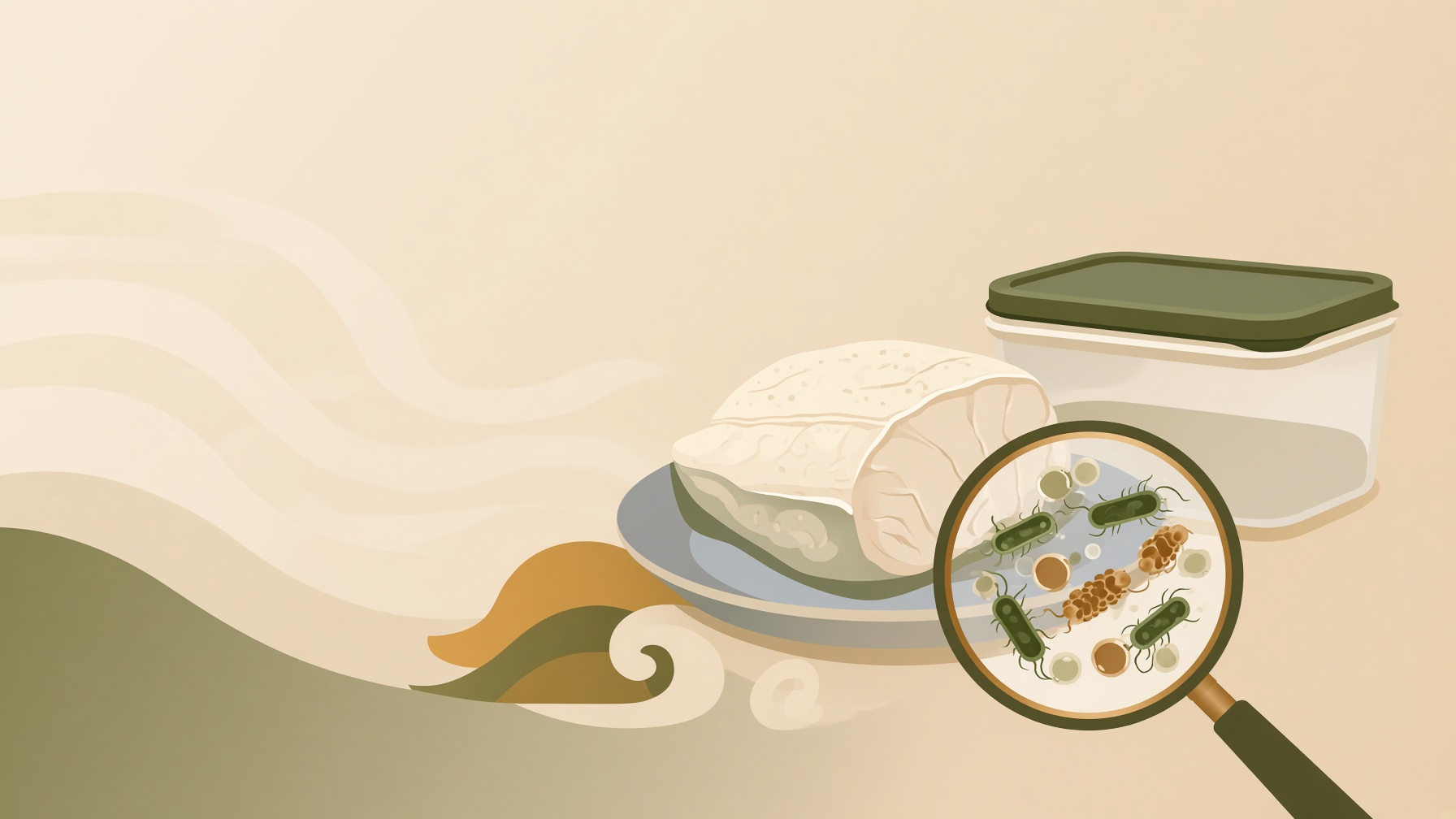
Food safety would be easier if harmful bacteria always announced themselves with a strange color or obvious smell. They often do not. Bacterial risk can develop through several different routes, from contamination during preparation to survival after inadequate cooking or growth during storage, while refrigeration and freezing mainly control bacterial growth.
Poor food handling can contaminate food with harmful bacteria, and unsafe preparation can spread those bacteria from one place to another. Raw foods, hands, equipment, and ready-to-eat foods can all be involved in this kind of cross-contamination. That makes handling and preparation important parts of the food-safety picture before cooking or storage even come into play .1
Cooking and storage affect bacterial risk in different ways. Inadequate cooking can allow pathogens already present in food to survive, potentially causing foodborne illness. Improper storage creates a different problem: it can provide conditions in which harmful bacteria multiply. These are different failure mechanisms: inadequate cooking can leave pathogens alive, while unsuitable storage can allow bacterial populations to increase .1
Appearance and smell offer less reassurance than many people assume. Pathogenic bacteria can be present or multiply without causing an obvious change in a food's color. They can also do so without producing a noticeable bad odor. Food that looks and smells ordinary therefore cannot be assumed to be free of harmful bacteria on that basis alone. Visual and odor checks cannot reliably confirm the absence of bacterial pathogens .2
Cold temperatures help control bacterial growth, but they do not work in exactly the same way. Refrigeration slows the growth of many foodborne bacteria, although some organisms can still grow slowly at refrigerator temperatures. Listeria monocytogenes, for example, can multiply under refrigerated conditions. Freezing generally stops bacterial growth while the food remains frozen, but it does not reliably eliminate bacteria. After thawing, surviving bacteria can resume growth if temperature and food conditions allow, so safe thawing and refrigeration remain important .2,3
Food safety therefore depends less on how food looks and more on how it has been handled, cooked, and stored. Because harmful bacteria may not provide visible warning signs, safe practices have to reduce risk before contamination or growth becomes apparent.
Join the discussion
No account or email is required. Your display name and comment will be public.