

The same group of resistance exercises can produce a very different workout depending on the order in which they are performed. An exercise completed early in a session is encountered under different conditions than one performed after several demanding sets. Exercise order therefore matters not because there is one correct sequence, but because position within the workout can influence how an exercise is performed.
Traditional resistance-training guidelines have often placed large-muscle or multi-joint exercises before smaller-muscle or single-joint movements. A more flexible interpretation is to place exercises with the greatest training priority earlier in the session, since performance and strength development can favor movements performed closer to the beginning of the workout .1,2
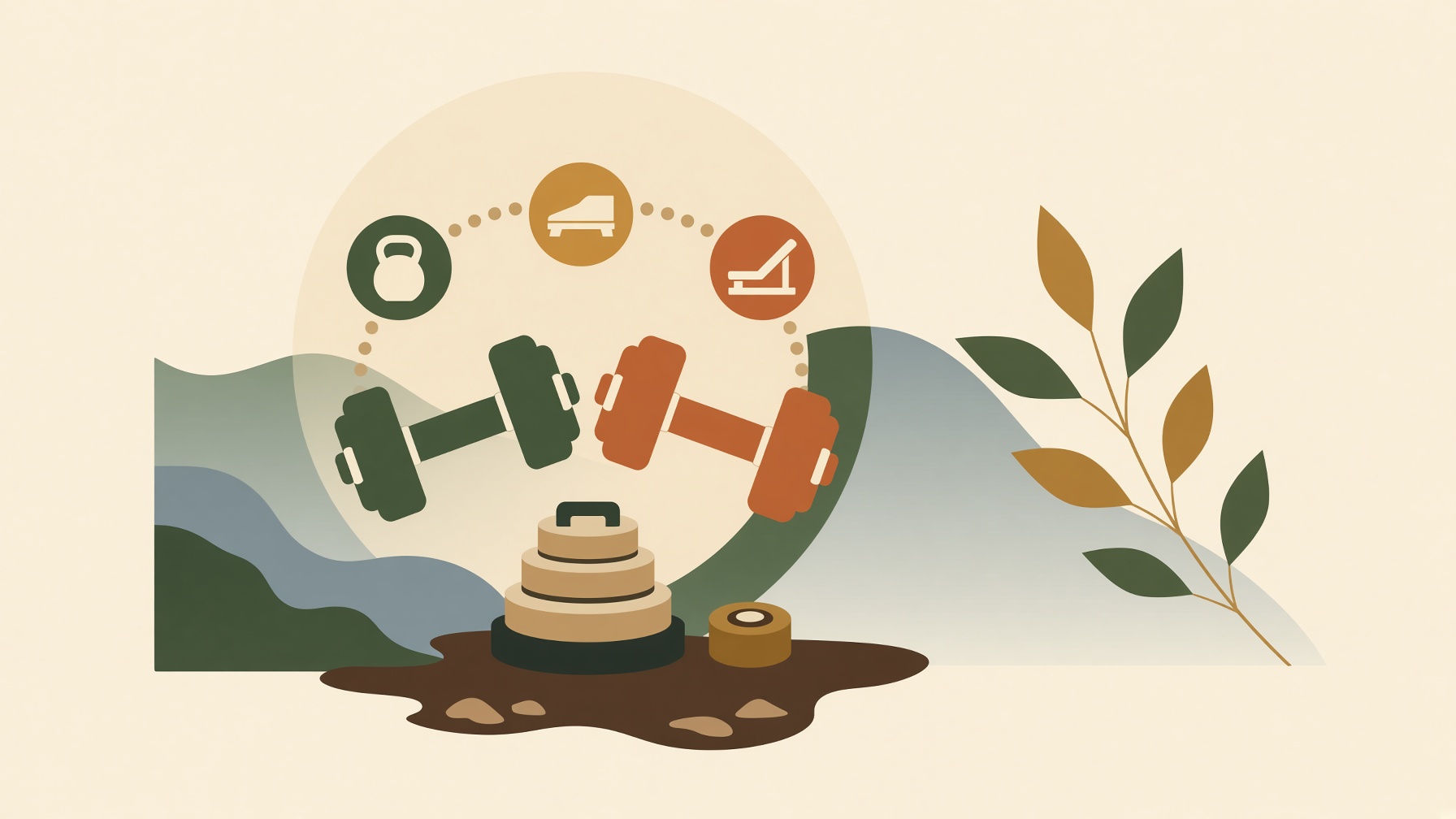
Another option is to alternate exercises that involve different or opposing muscle groups. Upper- and lower-body exercises can be alternated, as can agonist–antagonist movements that train opposing muscle groups. Alternating exercises for different muscle groups can give one area additional time between efforts while another area is being trained. This can reduce local interruption without making the overall session necessarily easier .3
Superset arrangements can also shorten a resistance-training session by placing exercises closer together. The trade-off is that greater time efficiency does not necessarily mean less effort: supersets can increase perceived exertion and metabolic demand compared with more traditional set arrangements .3
Exercise order matters because fatigue accumulates as a workout unfolds. Moving an exercise earlier or later changes the conditions under which it is performed, even when the exercise itself stays exactly the same. Thinking about sequence in this way makes exercise order less about memorizing a traditional hierarchy and more about deciding where each movement belongs within the purpose of the session.
Join the discussion
No account or email is required. Your display name and comment will be public.