
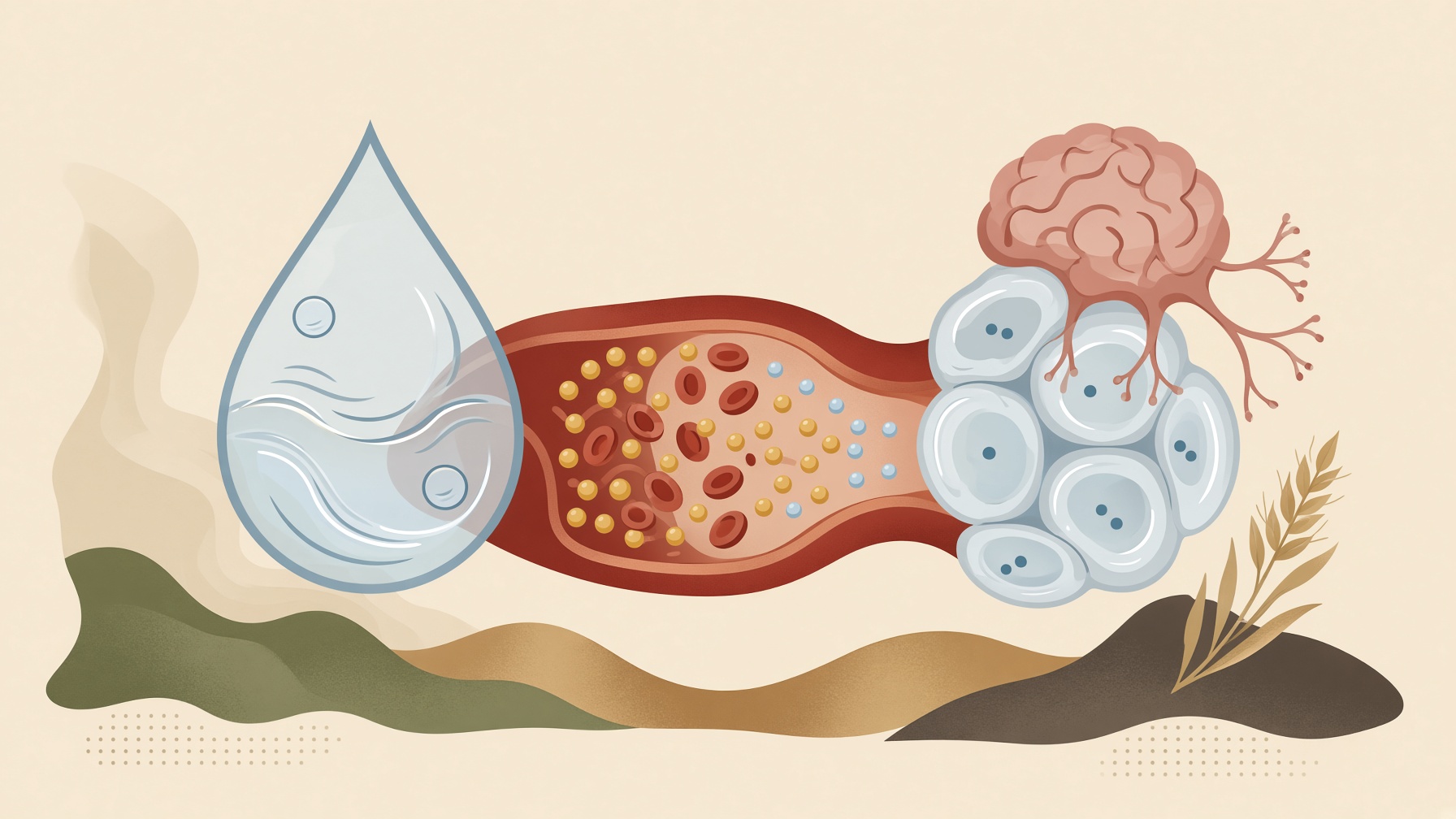
Water is essential, so it can seem strange that drinking too much could become dangerous. The problem is not that water suddenly becomes harmful on its own, but that fluid balance depends on keeping water and dissolved substances within workable proportions. When that balance shifts far enough, the effects can extend well beyond simple overhydration.
Excessive water intake can dilute serum sodium when water intake exceeds the body’s ability to excrete free water, potentially producing hypotonic hyponatremia. The defining laboratory change is a fall in serum sodium concentration relative to the amount of water present. Water intoxication from excessive drinking is uncommon under ordinary circumstances, but it can occur when water intake overwhelms excretory capacity or when water excretion is impaired .1
Hyponatremia is commonly defined as a serum sodium concentration below 135 mmol/L. Not all hyponatremia is hypotonic, but in hypotonic hyponatremia, reduced extracellular tonicity creates an osmotic gradient that drives water into cells. This is particularly important in the brain, where cellular swelling can contribute to cerebral edema and neurological symptoms. The danger therefore arises from the accompanying osmotic disturbance rather than from a low sodium number acting independently .2
When hypotonic hyponatremia develops rapidly and becomes severe, cerebral edema can produce serious neurological consequences. Seizures and coma may occur, and the most severe cases can be fatal .1,2
The lesson is not that water should be viewed as inherently dangerous, but that even an essential substance has to remain in balance with the body’s ability to handle it. Water intake becomes a problem when it outpaces regulation enough to disturb the concentration of body fluids. In that sense, the risk comes from loss of physiological balance rather than from water itself.
Join the discussion
No account or email is required. Your display name and comment will be public.