
Suppose you're reading about two workouts and their effects on the immune system. The report includes a blood count, and you want to know what it means for you. Would similar numbers make you regard the workouts as much the same? What would you want to know before choosing one for its supposed immune benefits? These are reasonable questions to bring to the research. We can begin with something more specific than "better immunity": what was actually measured after each workout?
Lymphocytes are one group of immune cells. Their blood counts estimate how many are present, while subset proportions describe the shares belonging to different lymphocyte types. These readouts showed similar reported patterns after two treadmill protocols in young, fit recreational runners: continuous running and intervals. Samples were collected before exercise, immediately afterward and one hour later. The comparison involved 23 runners, with 22 included in the count models. Similarity at those times did not demonstrate exact equivalence, and the measurements did not track cells moving between tissues.1
The workouts differed in how their intensity was distributed. Each runner completed both 50-minute protocols in a randomized comparison, with prescribed average workload and time matched. That matching did not make every physiological exposure identical.1
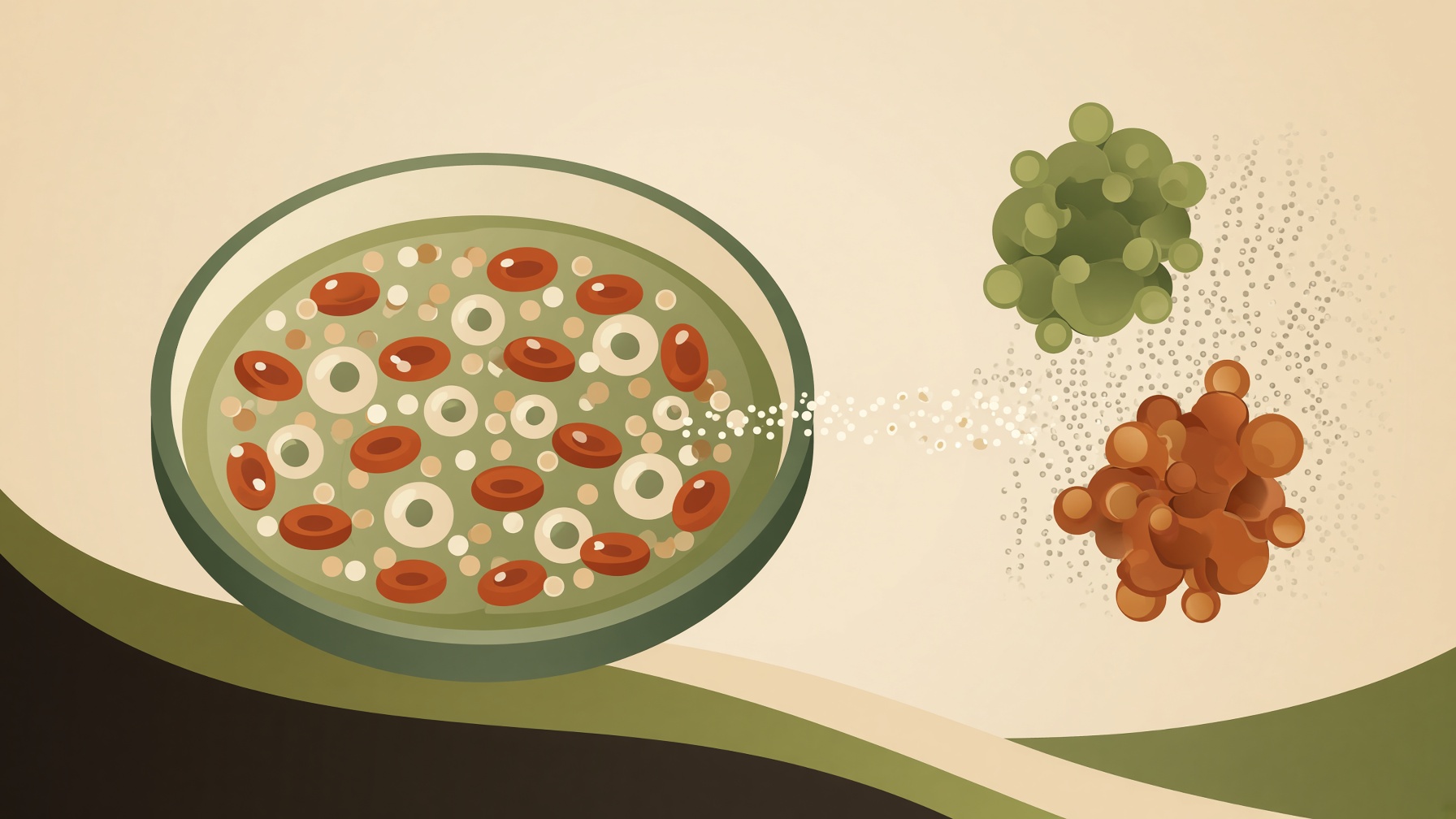
Relative protein abundance adds a different description of the sampled cells. The collected material consisted of peripheral blood mononuclear cells, or PBMCs, a mixture including lymphocytes and monocytes. Selected proteins in those mixed samples followed different abundance trajectories after interval and continuous running. Direct comparisons of how the two conditions changed over time supported that contrast. Counting cells and measuring relative protein amounts in a cell mixture therefore supplied different information about the response.1
The mixture matters when interpreting those protein changes. The assay did not follow the same individual cells or measure separately sorted cell subsets. Similarities in broad cell proportions could not rule out every contribution from sample composition. The results therefore could not establish that every cell changed in a particular way.1
A computational analysis linked the altered protein set to labels for biological processes, including immune activation. Those links suggest processes worth testing, rather than directly showing how well the cells performed. No direct test of immune-cell performance or protection against infection was conducted. This exploratory comparison can distinguish aspects of the acute molecular response without establishing a functional advantage for either workout.1
In an exercise article, "better immunity" should come with a clear description of the benefit being discussed. As a reader, you can look for that description before deciding what the finding means for your routine. The question is whether the explanation addresses the outcome you care about. That provides a practical way to evaluate the claim without turning a laboratory result into a personal exercise recommendation.


Join the discussion
No account or email is required. Your display name and comment will be public.