
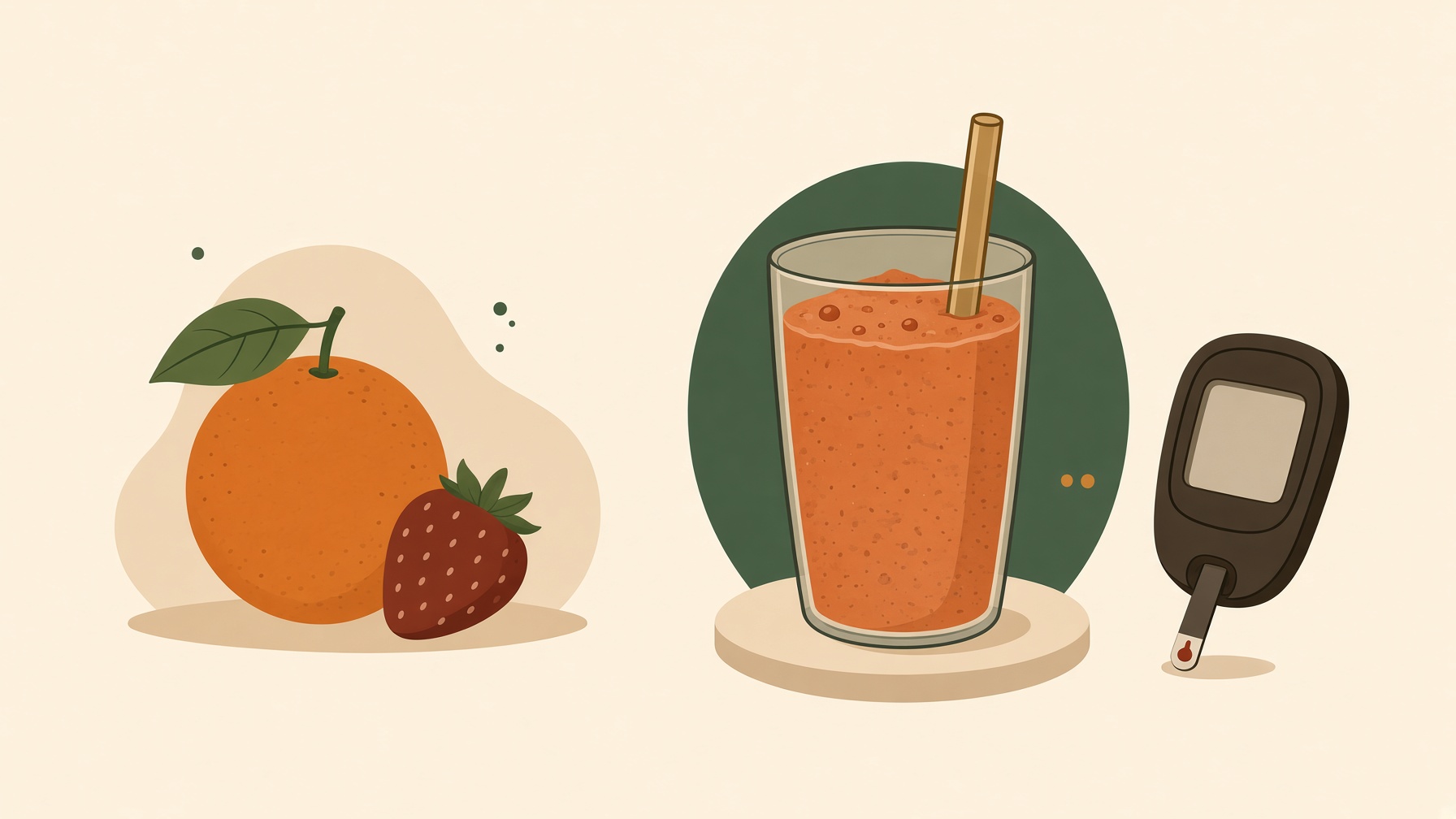
When you blend a portion of fruit, it can be tempting to expect a bigger blood-glucose rise than if you ate it in pieces. Is the change in texture enough to justify that expectation when the fruit and quantity stay the same?
Direct comparisons do not establish that blending a matched fruit portion reliably produces a larger short-term glucose response in healthy adults. A fair comparison keeps the fruit ingredients and portion matched, with all the fruit material retained after blending. Extracting or straining juice, adding ingredients or changing the quantity asks a different question. The direct comparisons here concern particular whole and blended fruit portions in healthy adults, with glucose measured over a short period after eating.1,2
In a 2022 experiment, 20 healthy students aged 19–21 ate the same quantities of apple and blackberries whole on one day and blended on another. Each participant therefore served as their own comparison, rather than being assigned to just one form of the fruit. After the blended portion, both the highest recorded rise above the starting glucose level and the accumulated rise over the hour were smaller. The accumulated measure accounts for both how high glucose rose and how long it remained above the starting level within that hour. Blood glucose was checked with fingerstick readings every ten minutes for one hour. The intended amount of water was matched too, whether it was drunk with the whole fruit or blended into the drink. The apple–blackberry test took place in the afternoon, about three to four hours after lunch. Everyone ate the whole fruit first, and preceding lunches were not standardized. Those features make it difficult to separate blending from differences between test days.1
A smaller response cannot be assumed either. In a 2025 trial, 15 healthy adults received matched whole and blended portions of a mixture containing apple, mango, banana, orange, passionfruit, peach and lime. Participants received the preparations in a randomized order after an overnight fast. No statistically significant difference in glycemic index was detected between the whole and blended preparations. The two-hour rise above baseline was used to calculate glycemic index: the accumulated response expressed relative to a glucose drink taken on a separate visit. That measure uses a reference comparison the one-hour apple–blackberry measurements did not include. That finding did not establish that the preparations were equivalent.2
Small studies of specific portions cannot predict every smoothie or an individual’s response. The glucose measurements do not establish which preparation is healthier overall. They record a short response to one fruit portion, rather than what happens to someone’s health over months or years.1,2
If you're thinking about a smoothie, it helps to be clear about the fruit and the portion you mean. Those details are easy to lose when the whole discussion is reduced to whether fruit should be blended. With those details included, you're talking about a particular serving of fruit, rather than every drink that happens to be called a smoothie.

Join the discussion
No account or email is required. Your display name and comment will be public.