
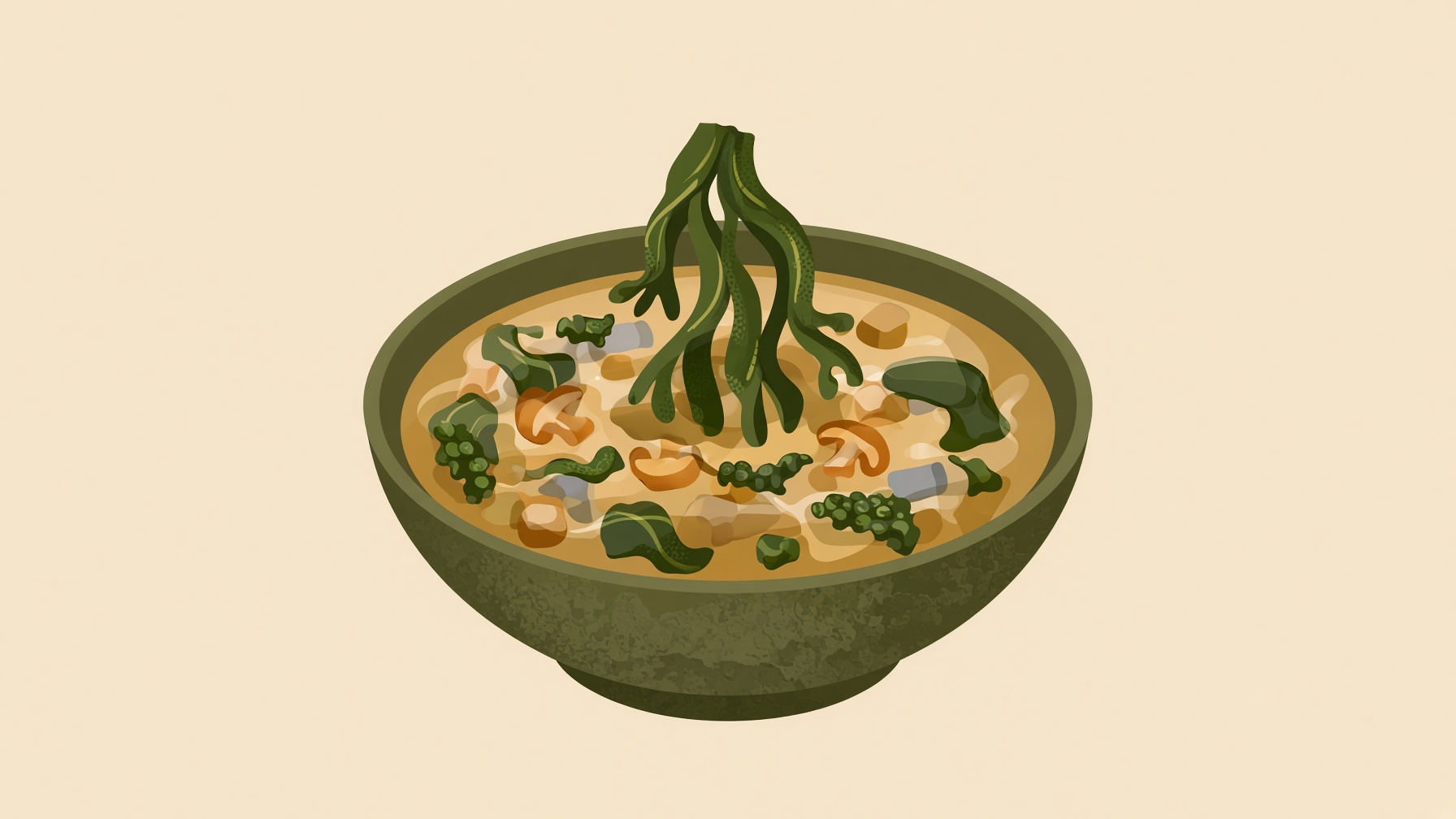
Does boiling seaweed lower the iodine in a meal? Before interpreting a reduction percentage, the meal itself needs a clearer description. Which seaweed is being used, and will the seaweed, the broth, or both be eaten?
The starting concentration depends on which seaweed is being described. Among sampled dehydrated species, mean iodine concentrations were 238 micrograms per gram of dry weight for Undaria pinnatifida and 4,228 for Laminaria digitata. The shared dry-weight basis makes that comparison interpretable. It does not give either species a fixed value across every product or lot; measurements of commercial products also show why the ingredient name alone is insufficient.1,2
Preparation changes the comparison further. Hydration or boiling can lower iodine concentration in tested, drained seaweed solids, but some preparations did not lower dry-weight concentration, and longer boiling did not always produce progressively lower values. Water uptake can dilute a wet-weight concentration without establishing iodine loss. Comparing dry-weight values avoids that particular confusion, but a change in concentration still need not equal the percentage change in total iodine mass.1,2
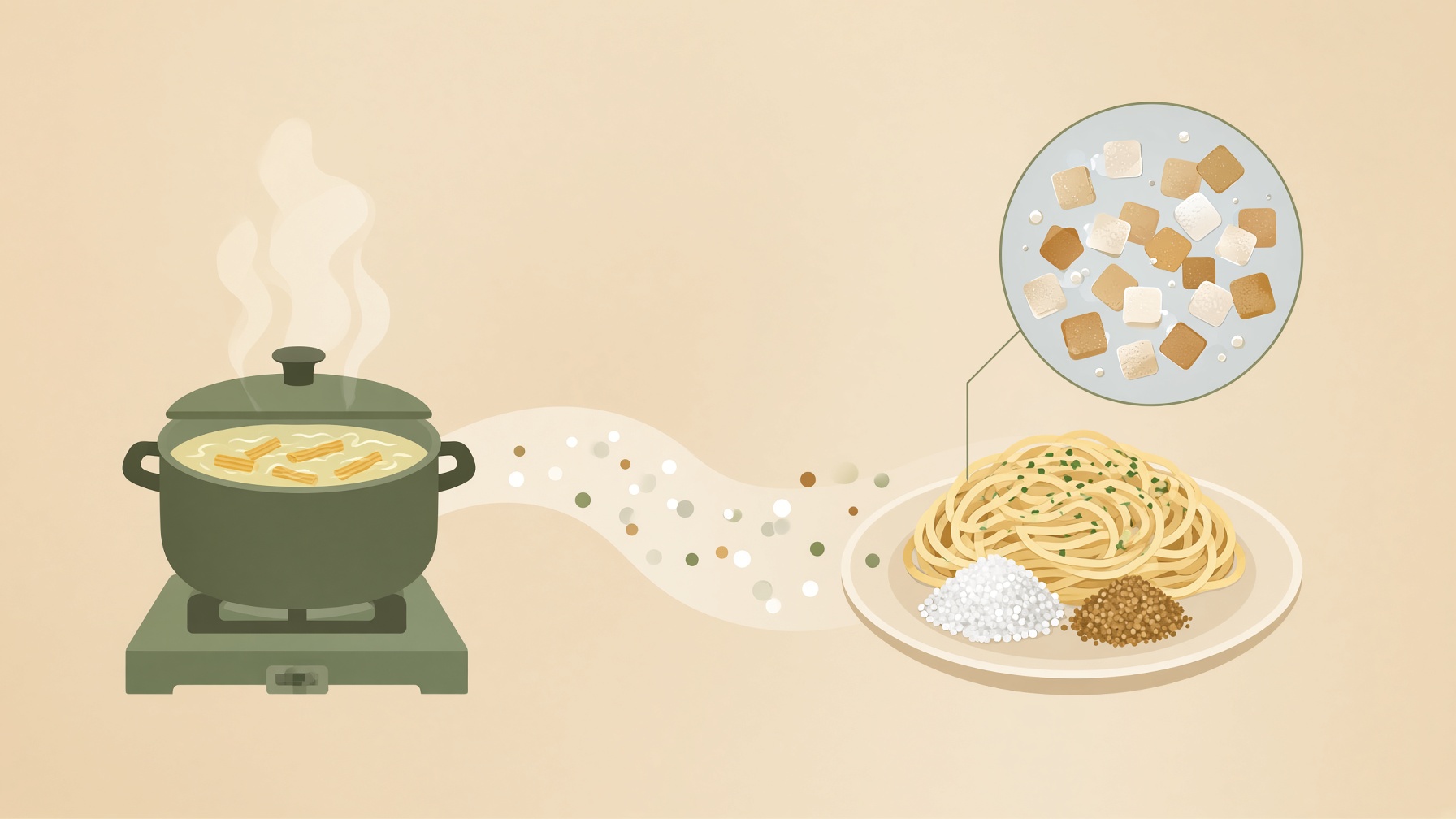
Transfer into water, called leaching, helps explain some preparation-related changes. In the species comparison, the reported leachable fraction was calculated from solid concentrations rather than measured as recovered iodine. Direct assays in the commercial-product work detected iodine in selected preparation liquids. Neither investigation supplied a complete accounting of iodine recovered from both solids and liquid or a removal fraction that applies to every preparation.1,2
To establish the amount remaining, a reduction percentage needs a starting value and a matching final measurement basis. The prepared food's iodine concentration must be paired with its mass. If the liquid is eaten too, its iodine concentration and consumed volume also count, using compatible units from the same preparation. Iodine transferred out of the solid may therefore remain in the meal. Even a large concentration reduction, by itself, establishes neither a small residual amount nor a safe portion.1,2
Picture the meal you plan to serve, with the seaweed and broth accounted for. Then return to the reduction claim: does it answer your question about that meal? Keep the whole bowl in view, rather than letting a percentage make the decision for you.
Join the discussion
No account or email is required. Your display name and comment will be public.