
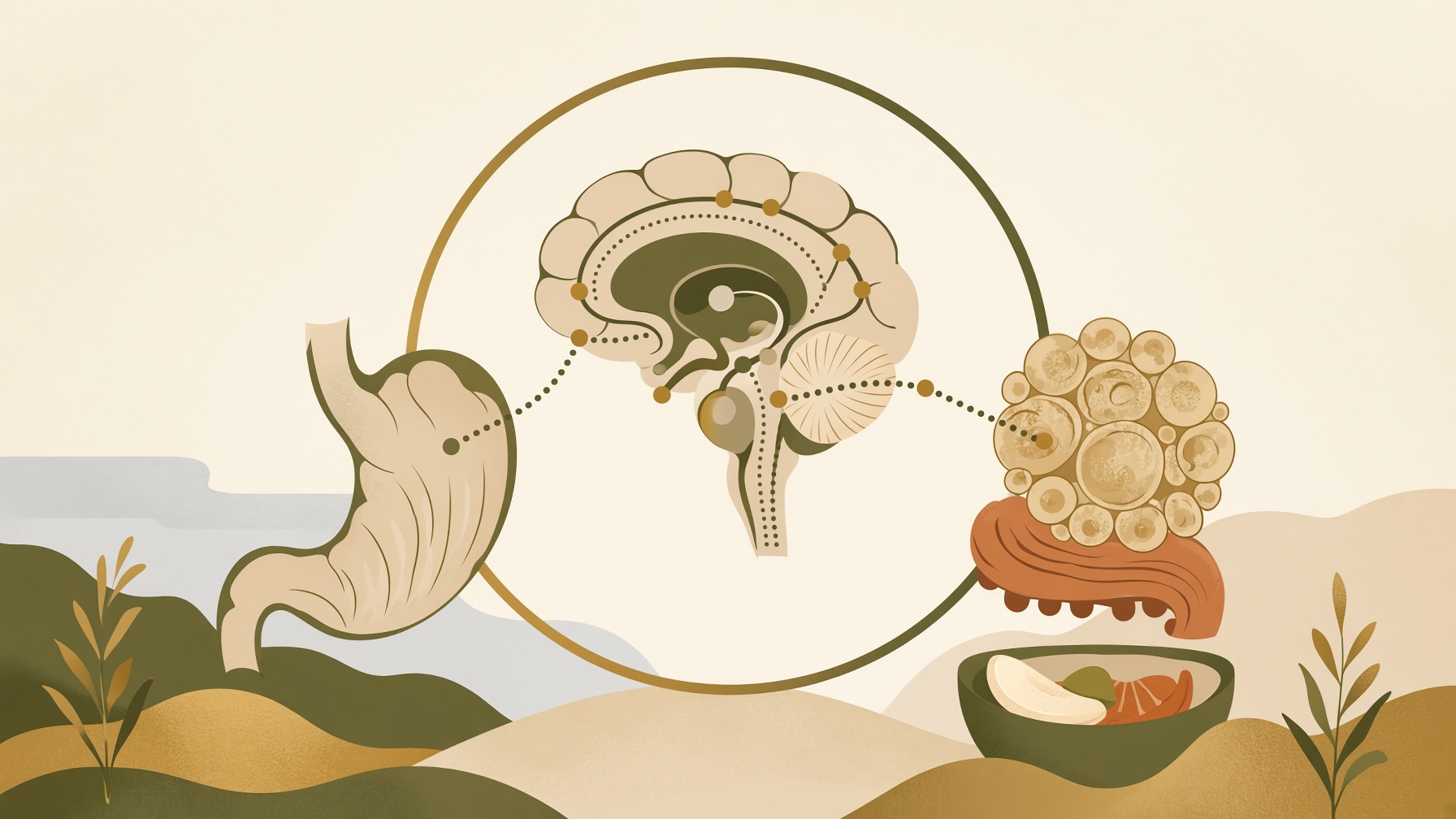
Hunger and fullness can feel like simple opposites, but the physiology behind them is more layered. Signals arise from several parts of the body and interact with brain systems involved in appetite, helping shape the likelihood that eating continues or comes to an end.
Hormonal and neural signals contribute importantly to feelings of hunger and fullness. The hypothalamus is one central hub in this regulation, but it is not a lone appetite-control center. Other brain systems, including brainstem, reward, limbic, and cortical circuits, also contribute. Appetite is not determined by physiology alone, either. Cognitive, sensory, learned, and environmental influences also help shape hunger, fullness, and eating behavior. The result is an integrated system rather than a simple switch between “hungry” and “full” .1,2
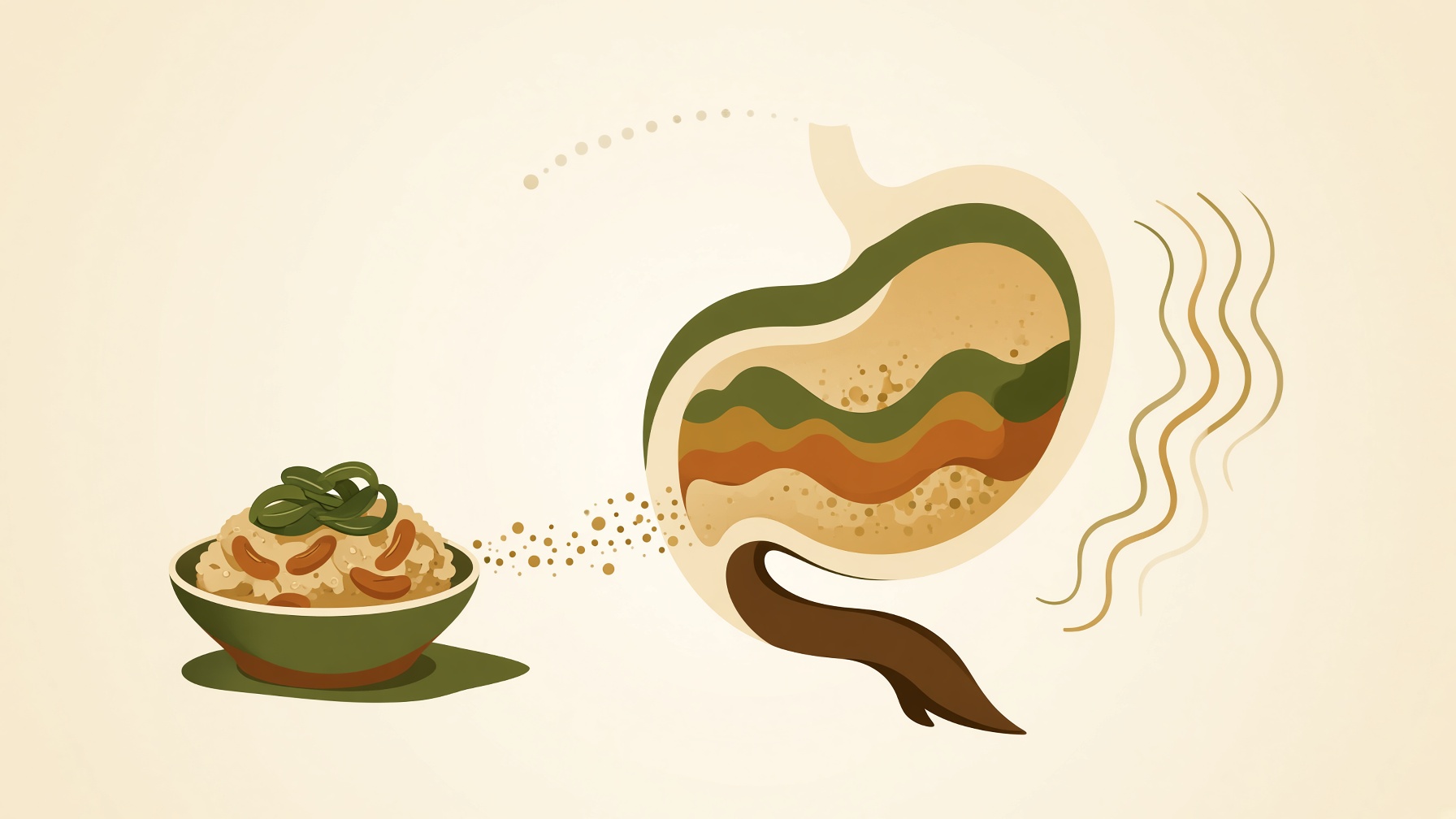
Signals from the stomach provide one part of that system during a meal. As the stomach distends, or stretches, that physical change contributes to fullness and satiation. Neural signals generated by gastric distension also contribute to meal termination. But stomach stretch is not a single sufficient command to stop eating. It is one source of information within a broader satiation system in which several signals are being integrated at once .1
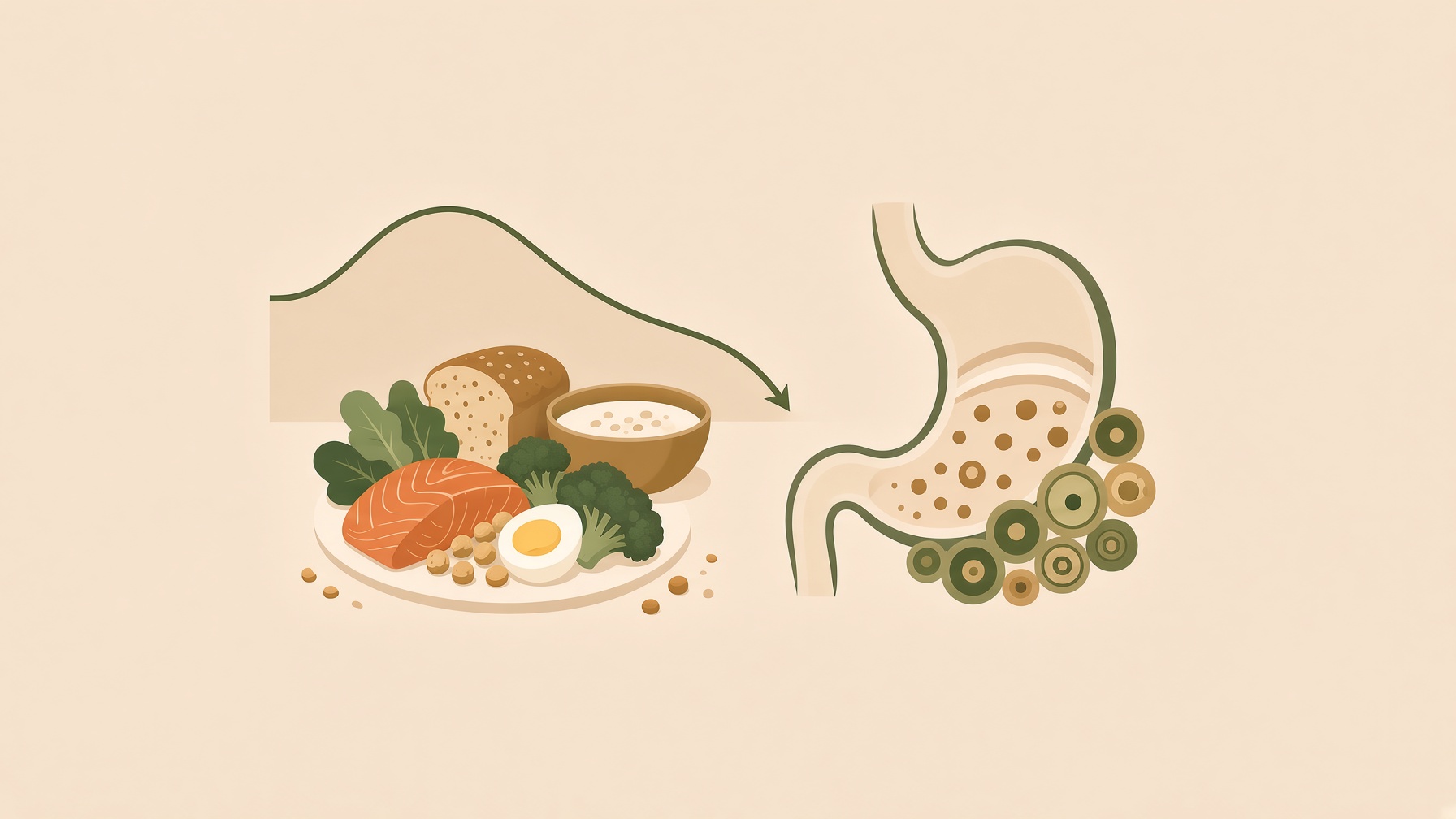
Hormonal signals add another layer. Gut hormones can influence appetite-related circuits in ways that promote or reduce food intake, depending on the hormone and physiological context. Their effects are probabilistic and integrated with neural, sensory, and cognitive signals rather than acting as automatic commands. Adipose tissue also contributes endocrine information through signals such as leptin. Leptin provides information about longer-term energy stores and helps regulate appetite-related pathways over time. It should not be understood as a simple on-or-off signal showing the body’s current energy balance .1,2
What feels like a simple shift from hungry to full is therefore the product of an integrated brain-and-body system rather than a single appetite switch. Signals from the gut, adipose tissue, and nervous system are combined with sensory, cognitive, and environmental information to shape eating behavior.
Join the discussion
No account or email is required. Your display name and comment will be public.