

Caffeine can create an apparent contradiction. The same cup that makes you feel more awake can become a problem when you later want to sleep. Those two effects are closely related, and understanding the connection starts with what caffeine does to signaling in the brain.
Caffeine acts primarily as an antagonist at adenosine receptors in the brain, including A1 and A2A receptors involved in sleep–wake regulation. By occupying these receptors without activating them in the same way as adenosine, caffeine reduces adenosine signaling and alters the activity of neural systems involved in arousal. This receptor-level action is central to caffeine’s wakefulness-promoting effects .1
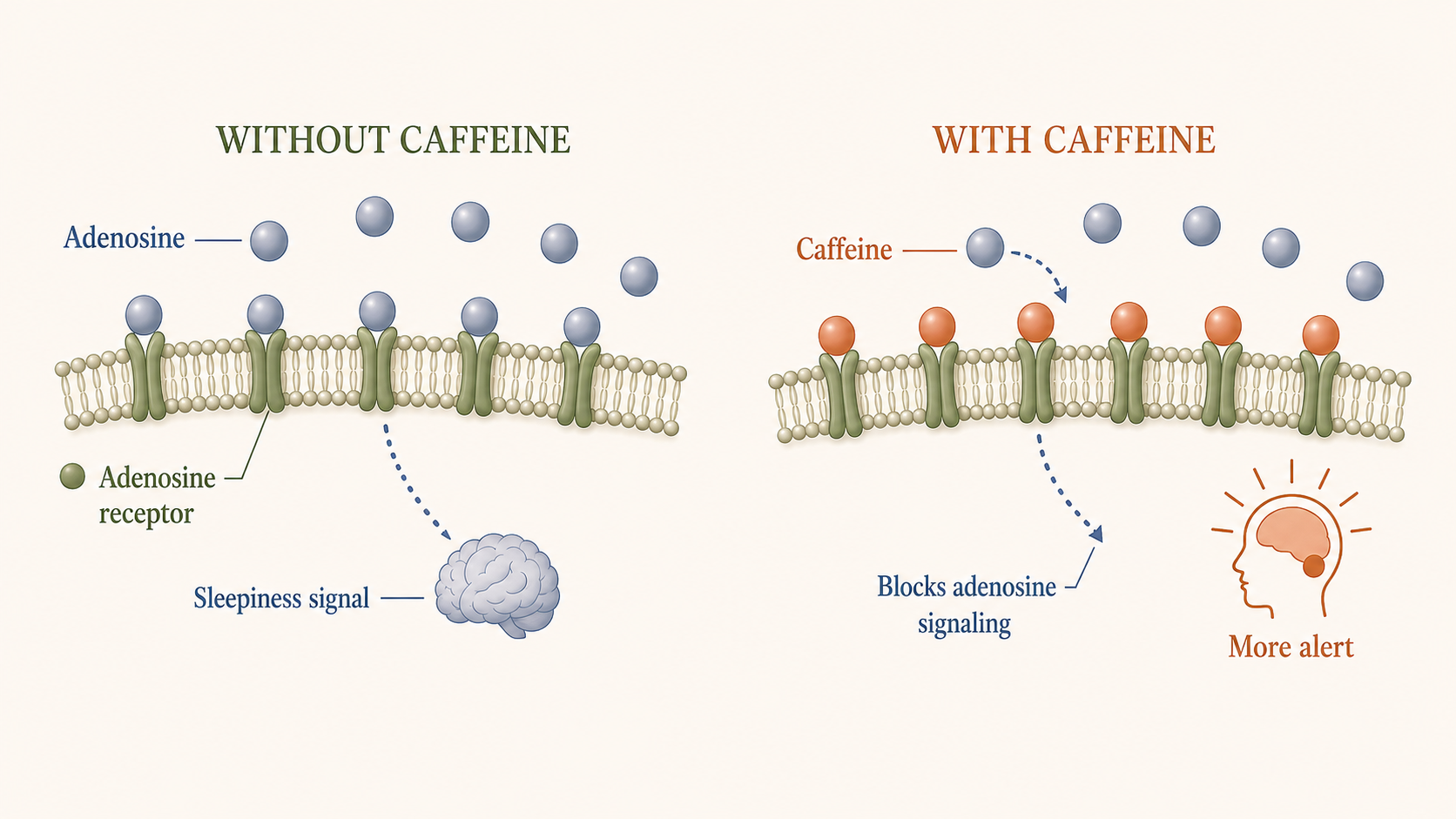
One result is greater alertness. Caffeine can reduce subjective sleepiness and fatigue and help sustain wakefulness, which helps explain why people often use it when they need to remain attentive. These effects can be useful in the short term, but feeling less sleepy is not the same as eliminating the underlying need for sleep .1,2
That same promotion of wakefulness can become a drawback when sleep is the goal. Caffeine consumed at night can increase wakefulness and reduce sleepiness. Higher doses can interfere with sleep, particularly when they are consumed near bedtime, and caffeine can cause insomnia or other sleep disturbance. Someone using caffeine to remain awake while studying at night, for example, is relying on the same wakefulness-promoting effect that may later make sleep more difficult. Because caffeine is cleared gradually rather than immediately, some of a dose can remain in the body for hours after it is consumed, although the rate of clearance varies considerably among individuals .1,2
Other adverse effects also vary with exposure and individual sensitivity. Caffeine can cause shakiness or tremor, especially at higher doses, and it can increase anxiety, particularly when doses are higher or when a person is especially susceptible. Sensitivity differs substantially from one individual to another. A dose that one person tolerates without difficulty may produce noticeable adverse effects in someone else. That variability is one reason caffeine’s effects cannot be predicted from dose alone; timing and individual caffeine metabolism also matter. Even when caffeine successfully increases alertness, adequate sleep remains important .1,2,3
Caffeine does not create wakefulness by removing the biological need for sleep. Instead, it changes how strongly some of the brain’s sleep-related signaling is expressed for a period of time. That distinction helps explain why feeling temporarily more alert and being fully rested are not the same thing, and why the timing and intensity of caffeine’s effects can matter long after the initial boost is noticed.

Join the discussion
No account or email is required. Your display name and comment will be public.