
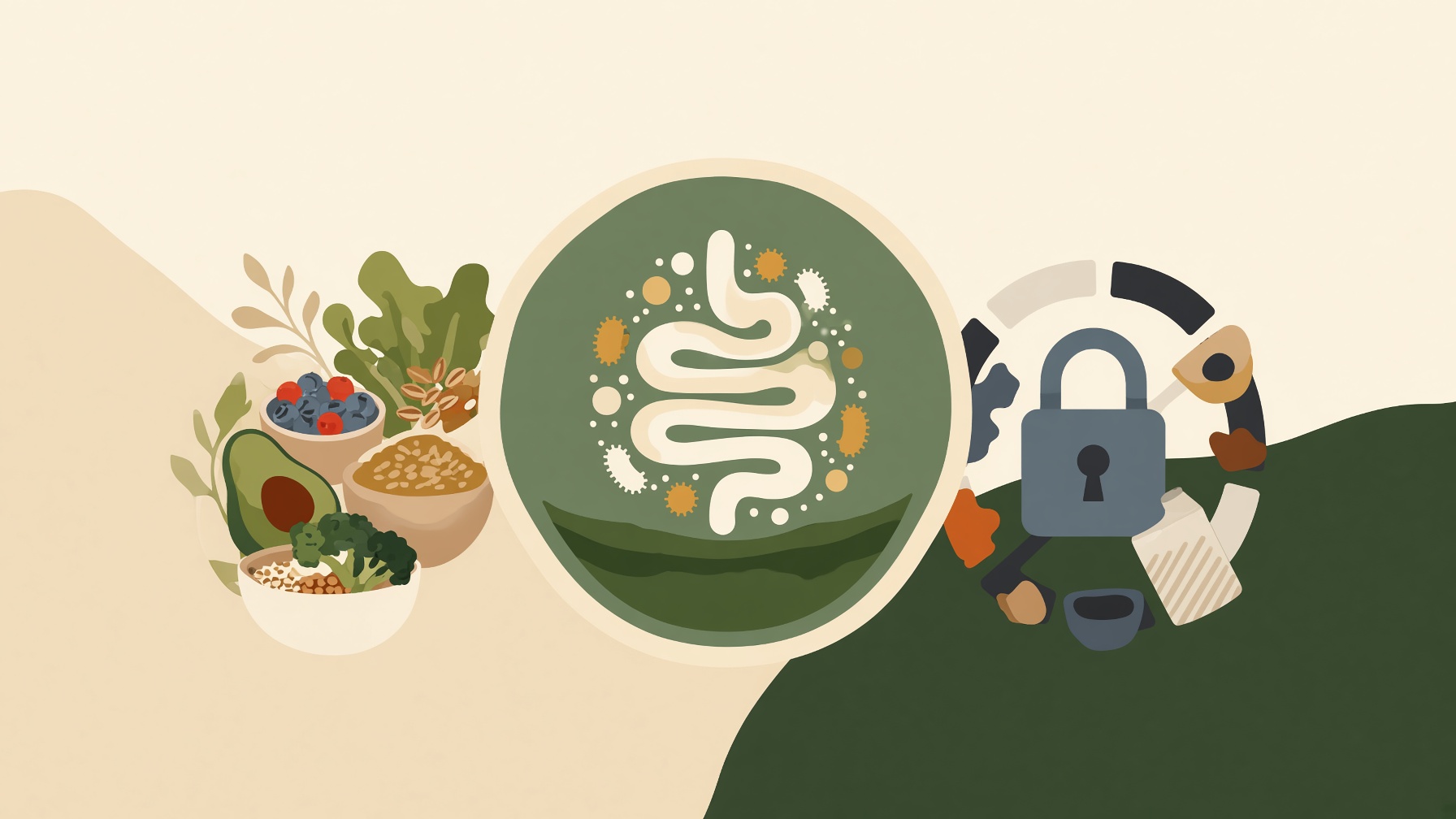
Calling food “clean” can feel like a shortcut. Instead of comparing nutrients, portions, habits, and context, a single word seems to sort the grocery store into two tidy piles. That simplicity is part of the appeal, and also where the idea starts to become difficult to define.
There is no single standardized scientific definition of “clean eating.” In a 2020 study of 1,266 U.S. adolescents and emerging adults, participants described it in markedly different ways: about 40% referred to unprocessed or whole foods, while roughly 30% included some form of dietary avoidance or restriction. Most viewed the concept positively, and 71% characterized it as healthy. The study did not test whether people who endorsed clean eating were healthier. Instead, it showed how differently the same label can be understood.1
Some of those interpretations overlap with established nutrition guidance. The FAO and WHO describe a healthy diet through four broad principles: adequacy, balance, moderation, and diversity. They also emphasize that healthy diets can take different forms depending on individual needs and preferences, cultural context, and locally available foods. That leaves plenty of room for eating more vegetables, fruits, legumes, whole grains, and other nutritious foods without first dividing everything on the plate into “clean” and “unclean.”2
The ambiguity matters more when “clean” begins to imply increasingly rigid rules. In a 2019 study of 148 U.S. undergraduates, definitions of clean eating varied widely but were generally positive. Participants also evaluated several clean-eating scenarios in which the fictional person’s diet was interfering with social, academic, or emotional functioning. More favorable ratings of these scenarios were associated with eating-disorder and orthorexia symptoms, as well as greater preoccupation with body weight and fat. Because the study was cross-sectional and involved a relatively small student sample, it cannot show that clean eating causes disordered eating. But it illustrates how a label associated with health can also encompass patterns that have become restrictive or impairing.3
At the more rigid end of that spectrum is orthorexia nervosa, a term used in research to describe an excessive preoccupation with eating in a self-defined healthy or pure way. A 2025 review of meta-analyses found associations between orthorexic symptoms and eating-disorder symptoms, obsessive-compulsive tendencies, perfectionism, and compulsive exercise. These relationships should not be treated as evidence of cause and effect: much of the underlying research is cross-sectional, study results are highly heterogeneous, and researchers have used multiple assessment tools with differing properties. Orthorexia also remains outside the major psychiatric diagnostic classification systems as a distinct diagnosis.4
That does not mean that every behavior associated with clean eating is misguided. Choosing a varied diet built around nutritious foods can fit comfortably within evidence-based guidance. The difficulty is that the word “clean” does not tell you whether a diet is adequate, balanced, moderate, or diverse. It can describe an ordinary effort to eat well, but it can also blur the line between thoughtful food choices and increasingly rigid rules.1,2,3,4
Food does not need a moral category before it can have a place on a plate. A clearer conversation starts when “clean” stops being the main question and the diet itself becomes visible again: what it includes, what it excludes, and how those choices fit into an ordinary life.
Join the discussion
No account or email is required. Your display name and comment will be public.