
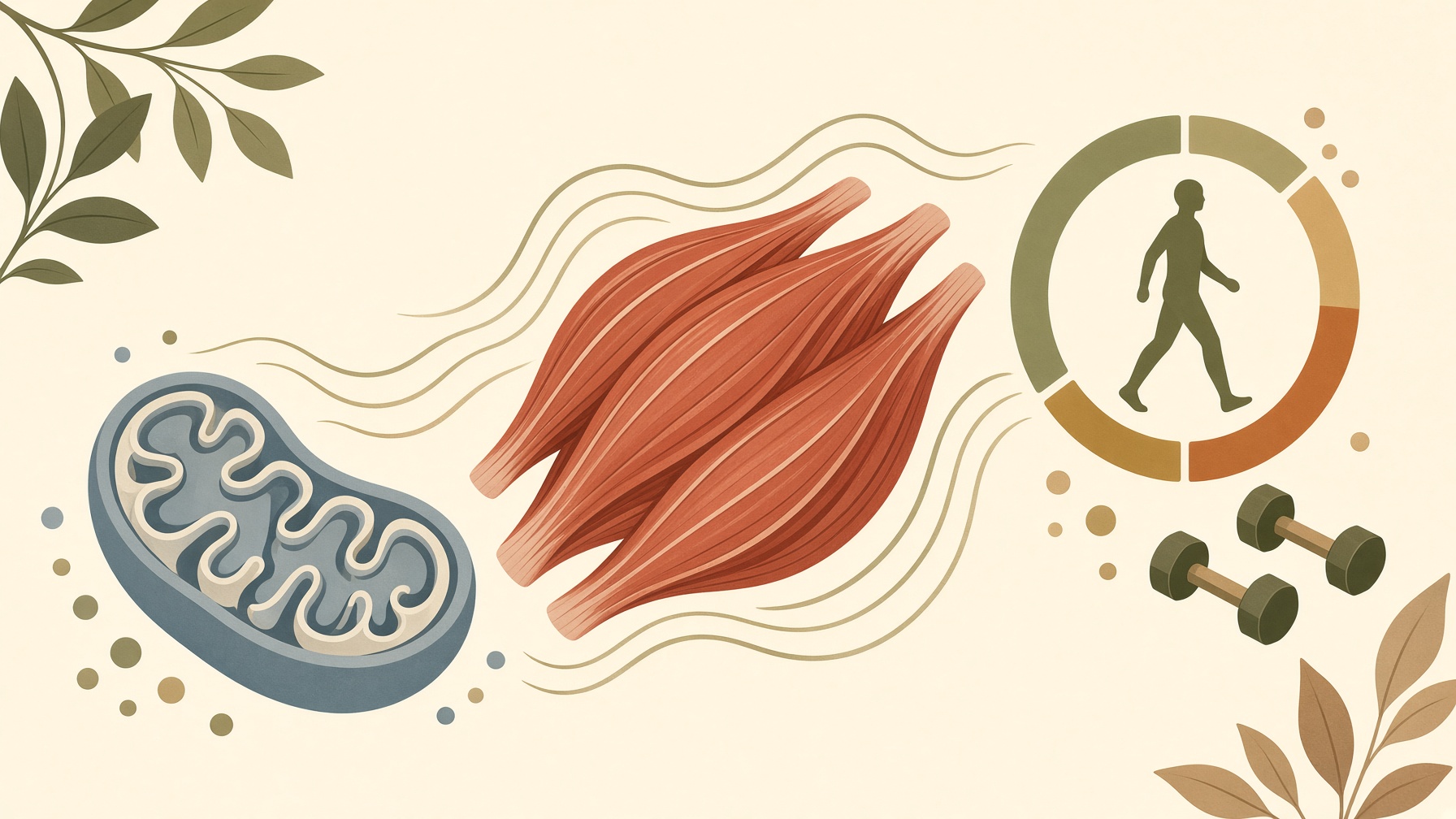
Resting metabolic rate often changes with age, but the reason is more complicated than simply saying that older adults have less muscle. Changes in body composition, physical function, and activity can occur together, and their relationships do not always run in only one direction. Looking at those connections helps explain why age-related metabolic change is more complex than a single cause-and-effect pathway.
Age-related loss of fat-free mass can contribute to a lower resting metabolic rate, but changes in fat-free mass do not fully explain the decline that can occur with aging. Skeletal muscle is one component of fat-free mass, alongside organs and other non-fat tissues that also contribute to resting energy expenditure .1
Muscle function and physical activity can also influence one another. Declining muscle strength or physical function can make some forms of activity more difficult. At the same time, prolonged physical inactivity can contribute to further losses in muscle mass and function, creating the possibility of a reinforcing cycle. This pattern is not an inevitable consequence of aging, and many other factors can influence both activity levels and muscle function .2,3
If additional fat-free mass is lost, resting metabolic rate may decline further, although the size of that change depends on which tissues are lost and other metabolic factors. This creates a chain of related changes rather than a simple metabolic feedback loop: declining muscle function may reduce activity, lower activity can contribute to further muscle loss, and changes in body composition can in turn influence resting metabolic rate .1,2,3
Resting metabolic rate should not be treated as a direct measure of how much muscle a person has or how physically capable they are. Aging can affect muscle mass, function, activity, and energy expenditure at the same time, but those changes do not move in perfect lockstep. Separating them makes it easier to understand why two people of the same age can show very different patterns of physical function and resting metabolism.

Join the discussion
No account or email is required. Your display name and comment will be public.