
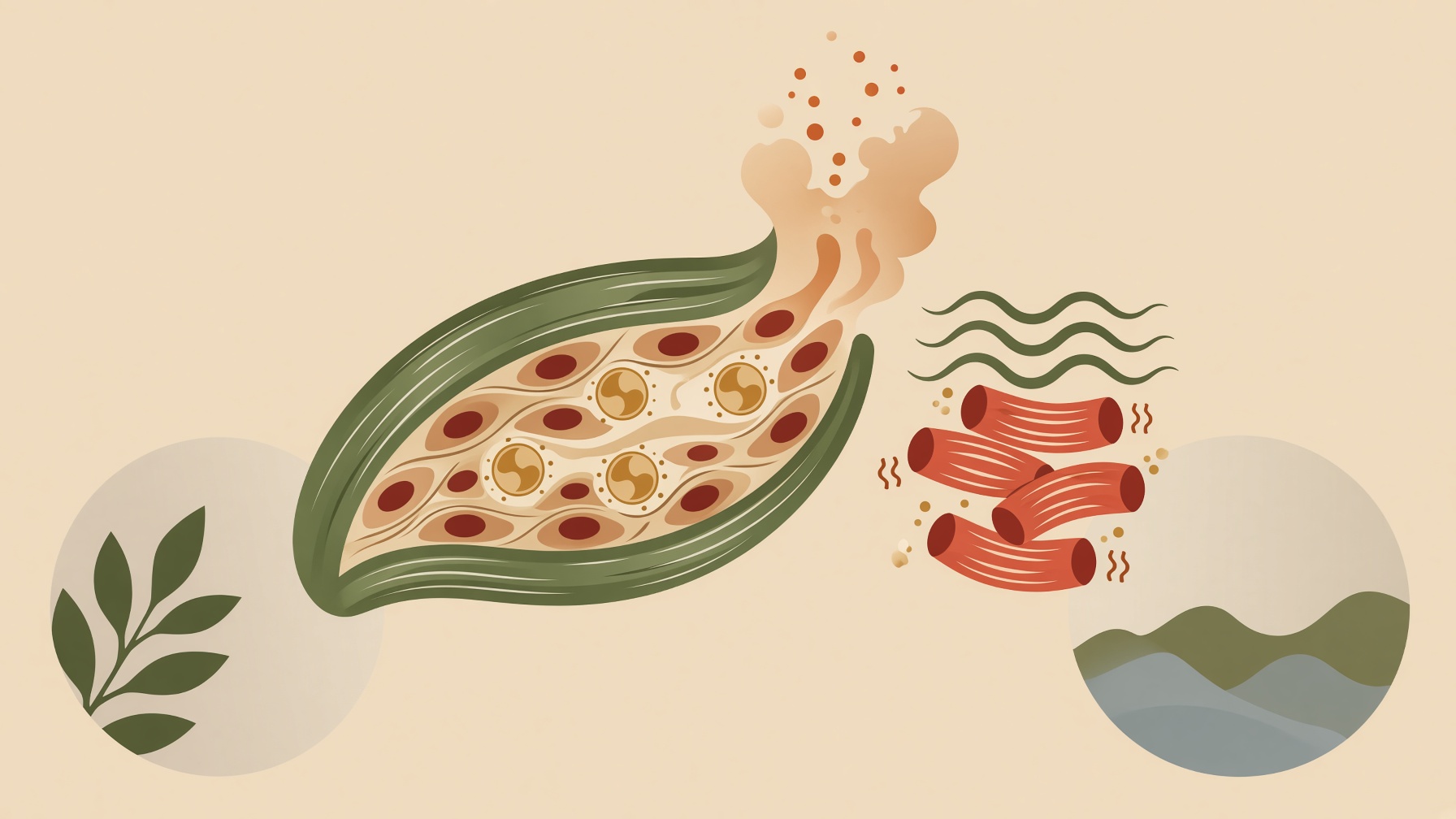
A workout and a shiver may not seem to have much in common. One happens when you are deliberately moving your body; the other can appear when you are extremely cold. But both reveal a less obvious job of skeletal muscle: when these muscles contract, they also produce heat.
Movement is the best-known role of skeletal muscle. These muscles allow you to walk, lift, hold a position, and make the small adjustments needed to stay upright and balanced. They also help maintain stability by limiting excessive movement of bones and joints. Heat production adds another function and contributes to maintaining homeostasis .1
That thermal effect begins with the energy required for muscle contraction. ATP supplies part of this energy, and when it is broken down during muscle activity, some of the released energy appears as heat .1
Exercise makes this effect easy to notice. During sustained muscle activity, heat production increases and body temperature can rise. The warmth that accompanies exercise is therefore one consequence of the energy being used as skeletal muscles continue to contract .1
Cold exposure provides a different context for the same basic ability of skeletal muscle to generate heat. In cold conditions, shivering produces random contractions of skeletal muscles. Those contractions generate heat, giving skeletal muscle a direct role in the body’s response to cold .1
The same type of muscle involved in voluntary movement, posture, and joint stability is also active in these two situations. During both exercise and shivering, skeletal muscle uses energy as it contracts, with heat produced alongside that activity.
Exercise and shivering put skeletal muscle to work for different reasons, but both reveal the same thermal consequence of muscle activity. Whether the body is moving through a workout or responding to cold, active muscle is doing more than producing force; it is producing heat as well.
Join the discussion
No account or email is required. Your display name and comment will be public.