
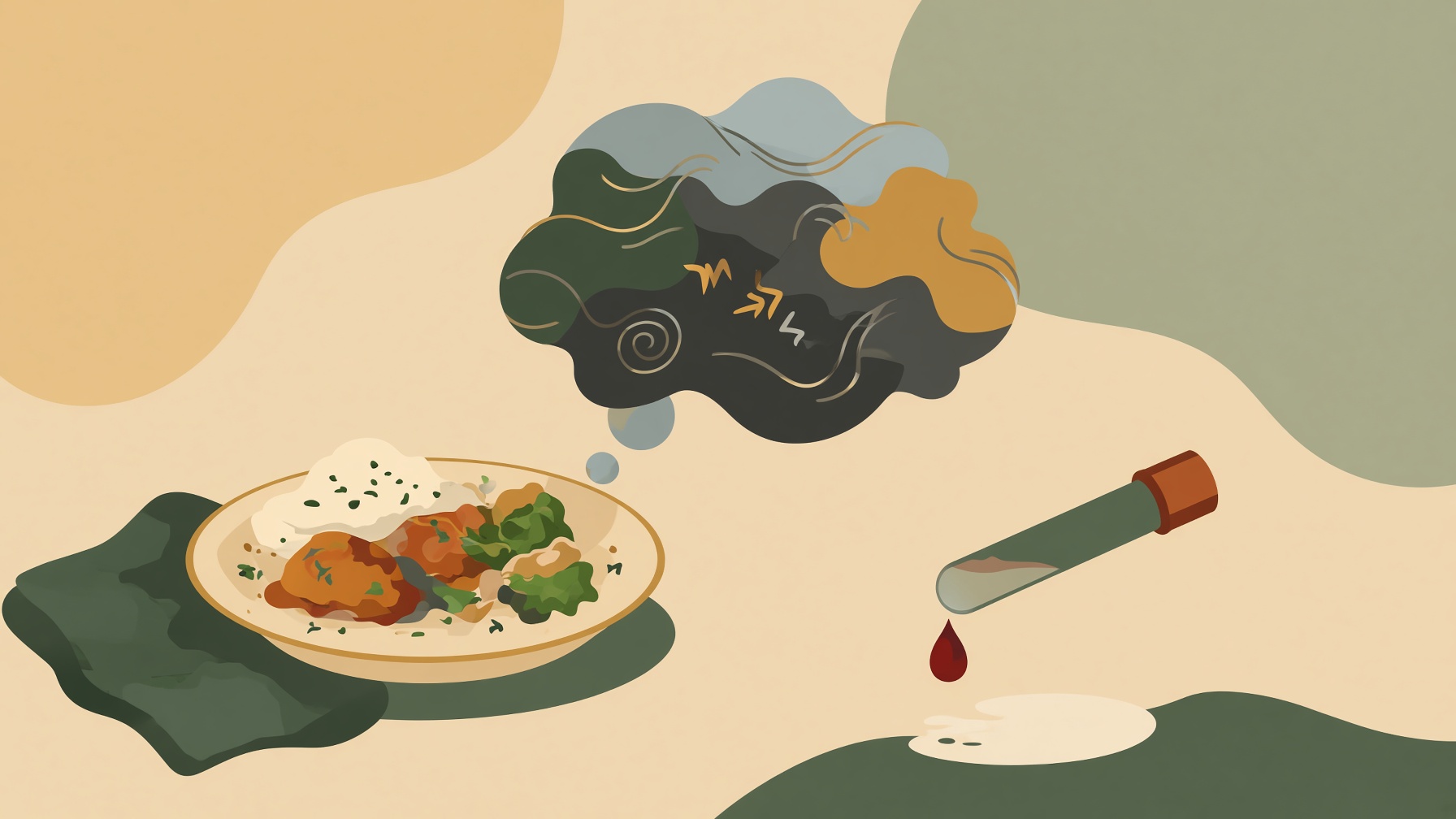
The lunch is the same on two different afternoons. What follows it is not: a quiet break on one day and a stressful task on the other. Could that difference show up in blood sugar after eating?
A small laboratory experiment compared those two situations in adults with overweight or obesity who had no diagnosed diabetes. Participants ate a prepared 1,000-calorie mixed meal on four visits. For each person, the order of visits was assigned at random. The meal was tested with and without a spice blend, and each version was followed by either stress or rest. Because the same people returned for the different conditions, researchers could compare their responses while keeping the food matched within each meal type.1
The stressful task began after eating. It involved preparing and delivering a speech under evaluation, followed by mental arithmetic with negative feedback. On the comparison visits, participants rested instead. This gave the experiment a defined period of pressure after the meal, rather than relying on people to describe how stressful their day had been.1
The modeled average glucose increase from the pre-meal level was larger during stress visits: 1.02 mmol/L, compared with 0.53 mmol/L during rest. These were statistical estimates of the change across the sampled period. They describe how far glucose was above the starting measurement on average, rather than the total concentration in the blood or any individual's highest reading. The researchers combined both meal versions when calculating this overall stress-versus-rest result.1
Blood collection began late enough to leave part of the story unmeasured. The first post-meal sample was taken 105 minutes after the pre-meal measurement, with further samples at 140, 180 and 210 minutes. That schedule could track later concentrations, but could not map the early rise or establish the size of a glucose peak. Glucose was also a secondary outcome, rather than the main question the trial was designed around.1
Moving the stressful task to before lunch raises a different question. A separate experiment in 17 inactive older adults did place stress earlier, but a glucose-tolerance test involving a 75-gram glucose drink came between the stress task and lunch. Its sensors measured glucose in fluid between the cells, rather than blood samples. The average over two hours after lunch did not show a clearly established difference between stress and rest. That uncertain result cannot establish that pre-meal stress has no effect, and the intervening glucose drink prevents a clean test of lunch alone.2
The direct finding remains specific to a brief stress task after a substantial meal in a small, selected group. It does not supply an expected glucose change for an ordinary lunch, or establish a lasting health consequence from a temporary difference.1
When you think back to lunch, the food may be the easiest part to describe. What happened afterward can take a little more explaining, especially if the afternoon was stressful. If you're trying to understand that particular meal, it makes sense to include what was going on around it as well as what you ate.

Join the discussion
No account or email is required. Your display name and comment will be public.