

A plate of food seems like a finished equation. The vegetables, protein, rice, bread, or dessert are already there, and changing the order in which they are eaten should not seem capable of changing very much. Yet researchers have been asking exactly that question: can the same meal produce a different glucose response when its components are eaten in a different sequence?
In the hours immediately after eating, the answer appears to be yes. The best-studied approach is often described as carbohydrate last: vegetables and/or protein are eaten before the more concentrated carbohydrate portion of the meal. A 2026 systematic review in healthy adults found that most included studies reported lower post-meal glucose responses with this sequence. The studies were small and used different meals and protocols, so the evidence is promising rather than a precise rule for how every meal should be eaten.1
Small crossover experiments help show the size of the possible acute effect. In one study of 11 adults with type 2 diabetes, the same meal produced a markedly lower glucose excursion when vegetables and protein were eaten before bread and juice rather than after them. The two-hour area under the glucose curve fell much more than the glucose concentration at any one time point, which is an important distinction: a smaller area under the curve does not mean the same percentage of carbohydrate failed to be absorbed.2
A later trial found the same general pattern when carbohydrate was eaten last instead of first, with eating all components together producing intermediate results. These experiments also used structured timing between meal components, so the effect cannot be reduced to the first forkful alone.3
Several mechanisms may contribute. Protein and fat can slow gastric emptying, while meal sequence may alter incretin and insulin responses. The practical result is better described as slowing and reshaping the appearance of glucose in the bloodstream than as blocking carbohydrate absorption. The relative contribution of each mechanism is still being worked out.3,4
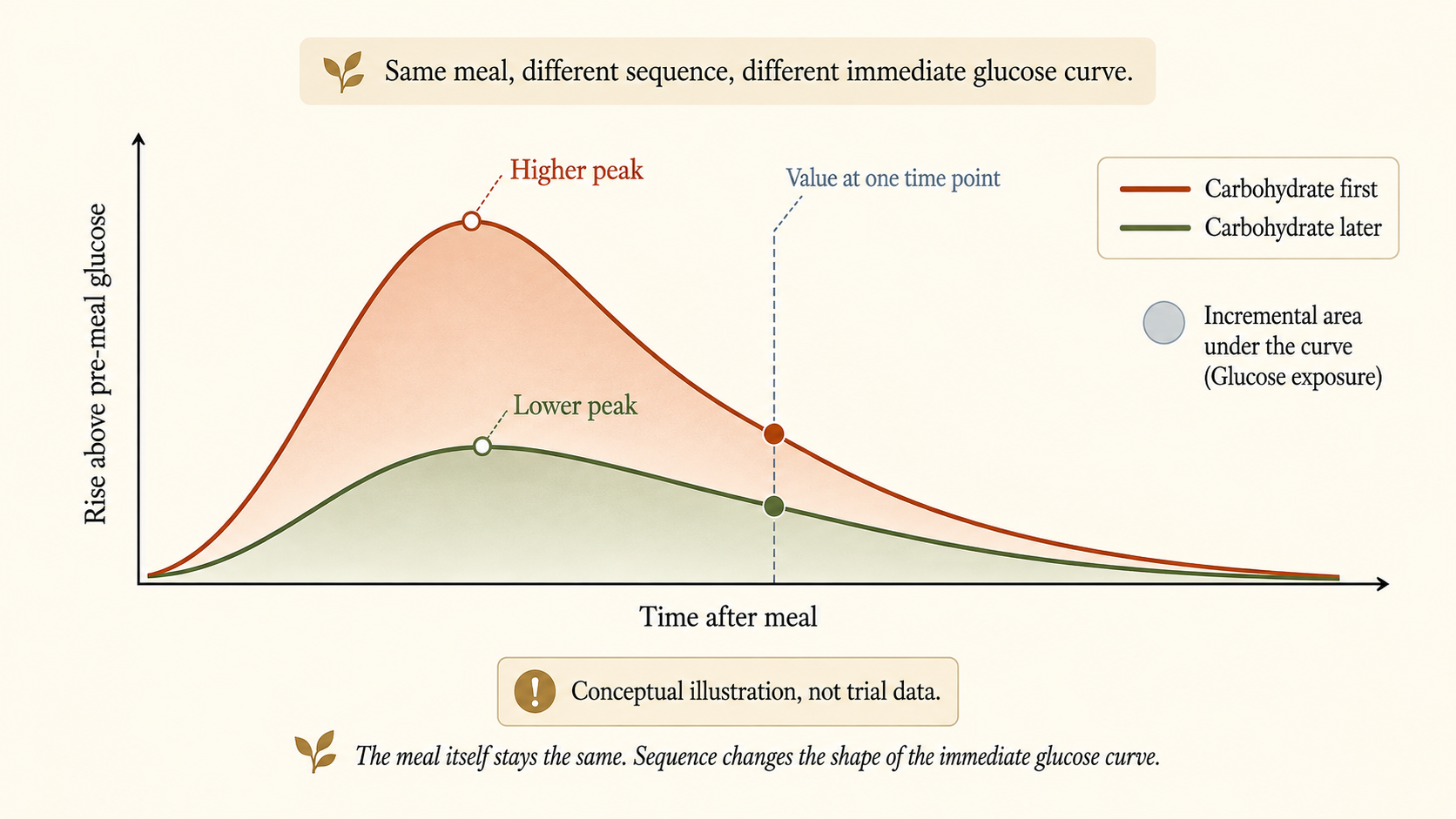
The effect is not limited to people with diabetes. In a randomized crossover study of healthy adults, eating vegetables and protein before carbohydrate also reduced two-hour glucose exposure compared with eating the meal components together. That result fits the direction of the recent systematic review, but the evidence still comes from relatively small samples and controlled meal protocols.1,5
What is less certain is whether repeating the strategy produces a meaningful long-term change in diabetes control. Reviews in people with type 2 diabetes find a more consistent effect on acute glucose excursions than on HbA1c, and the certainty of the long-term evidence remains low. A meal sequence can change the peak or shape of a glucose curve without necessarily producing a large difference in an average measured over months.4,6
So the useful version of the idea is fairly modest. When a meal naturally contains vegetables, protein, and a concentrated carbohydrate source, eating the carbohydrate portion later may flatten the immediate glucose rise. But many experiments changed not only the order of the foods but also the spacing between them, and the evidence for long-term glycemic control is much less certain than the evidence for an acute effect.1,2,3,4,6
The plate can remain familiar without becoming a set of eating instructions. Meal order is a question worth understanding, without making every dinner feel like an experiment to get right.
Join the discussion
No account or email is required. Your display name and comment will be public.