

“But I do not eat huge meals” is an understandable response to an unexpected change on the scale. The plate is the part of eating that you can see, remember and compare. A modest lunch or an ordinary dinner can make the rest of the story difficult to picture.
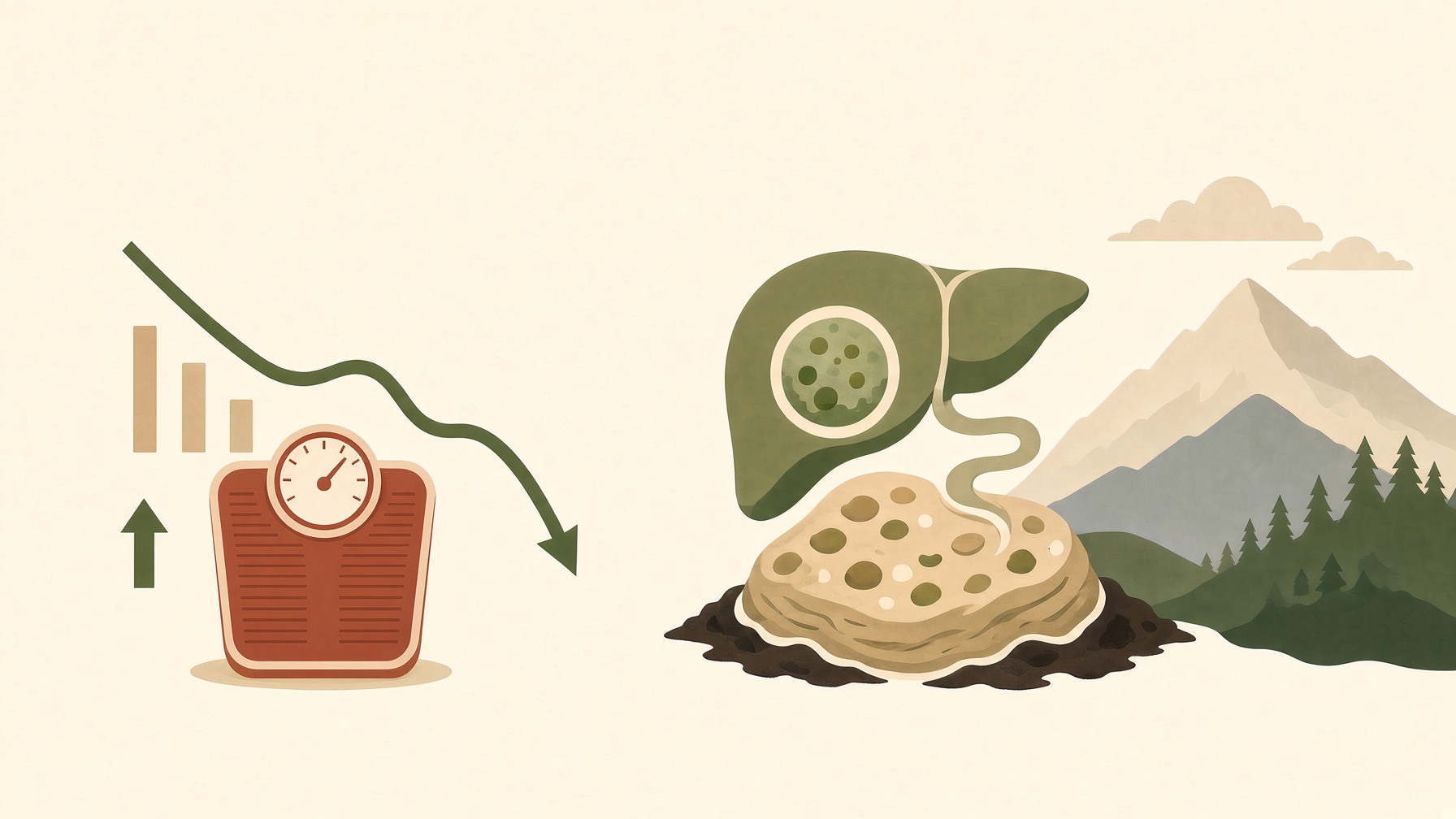
The visible size of a meal does not reveal its energy density: the calories it contains for a given weight of food. In a meta-analysis of 38 randomized studies, people generally consumed less energy in lower-energy-density conditions even though the weight of food eaten did not differ significantly overall. Similar amounts of food could deliver different calorie totals without looking like obviously different quantities. 1
For a simple illustration, imagine two 300-gram meals. At one calorie per gram, the first contains 300 calories; at two calories per gram, the second contains 600. These are invented meals for arithmetic, not recommended portions or calorie targets. They show why weighing the food, looking at its volume and estimating its energy are different tasks. Energy density describes one relationship between them. 1
Feeling full does not settle the calculation. Stretch in the stomach, nutrients arriving in the gut, hormone signals and communication with the brain all contribute to the eating experience. Researchers distinguish satiation, the processes that help end a meal, from satiety, which concerns the period afterward. Neither is a simple reading of the calories consumed. 2
The boundaries of a “meal” can also obscure the daily total. A drink alongside lunch and a snack later in the afternoon contribute energy even if neither changes the size of the lunch plate. That observation does not make snacks or calorie-containing drinks inherently problematic. It means that a description of three main meals is not necessarily a description of everything consumed that day. Energy balance concerns the whole pattern of intake and expenditure over time. 3
Recurring additions can matter when they leave intake above expenditure, but their long-term effect cannot be calculated by endlessly multiplying a fixed daily surplus. As body weight changes, energy needs change too. Dynamic models account for those adjustments, so a small recurring difference is neither automatically cancelled out nor guaranteed to produce the same amount of weight gain every month. 3
There is no need to reconstruct an imagined giant dinner to take someone's experience seriously. “My meals look ordinary” can be an honest starting point for a conversation. It deserves curiosity about the everyday pattern, rather than an argument about what a person must have eaten.


Join the discussion
No account or email is required. Your display name and comment will be public.