
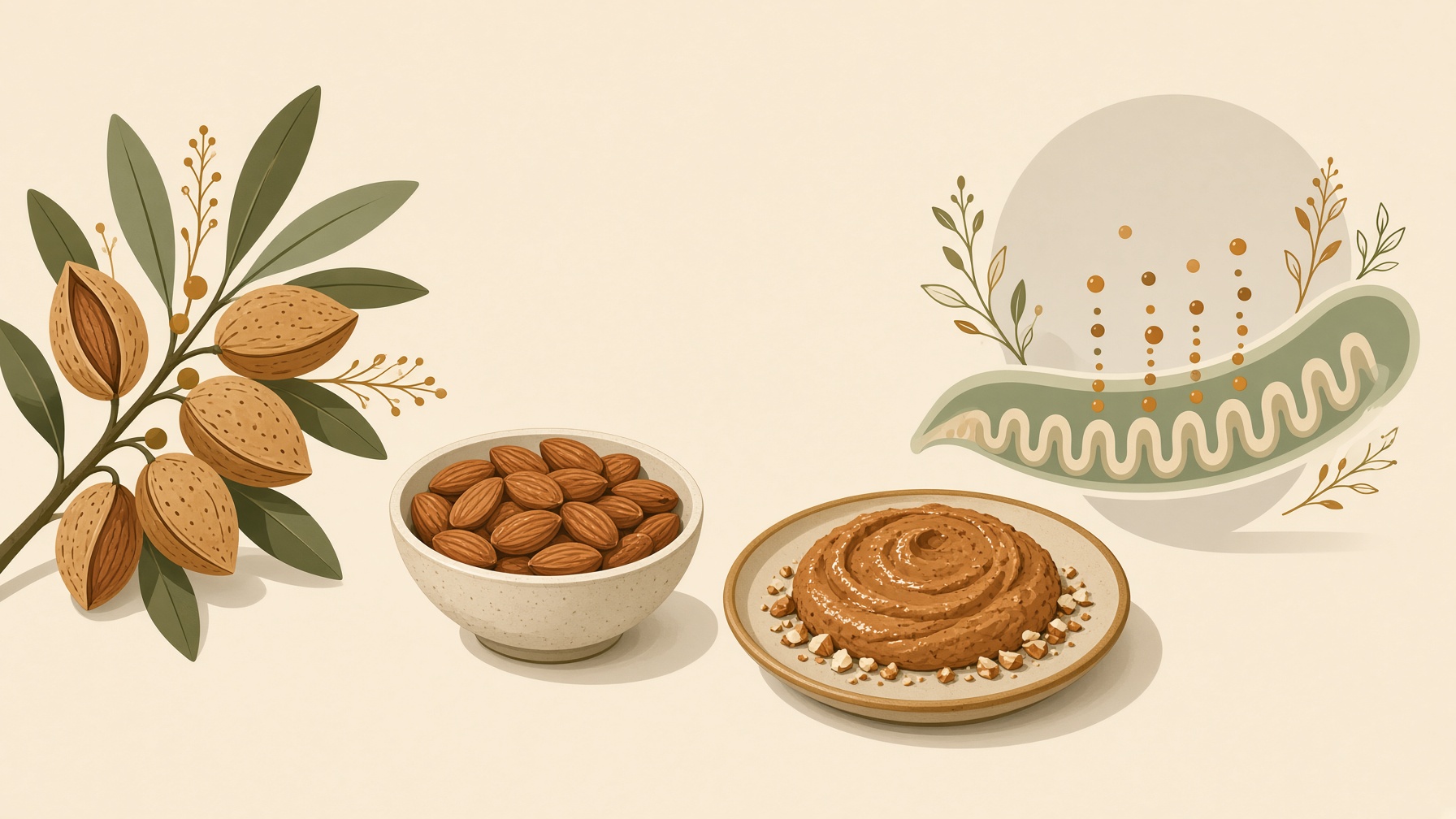
A jar of almond butter can look like a straightforward swap for a bowl of almonds. If the ingredient list contains nothing else, it is tempting to think that only the texture has changed. Would equal weights give your body the same calories?
Whole dry-roasted almonds yielded less metabolizable energy per gram than additive-free roasted almond butter in a small randomized feeding trial involving 18 generally healthy adults. Each person ate 42 grams daily of each form during separate feeding periods. The averages were about 4.9 kilocalories per gram for the whole almonds and 6.5 for the butter. Both came from the same batch, and the butter contained no added oil or sugar. Their measured nutrient composition was similar, though not identical. These figures describe averages for the products tested, rather than a personal calorie value.1
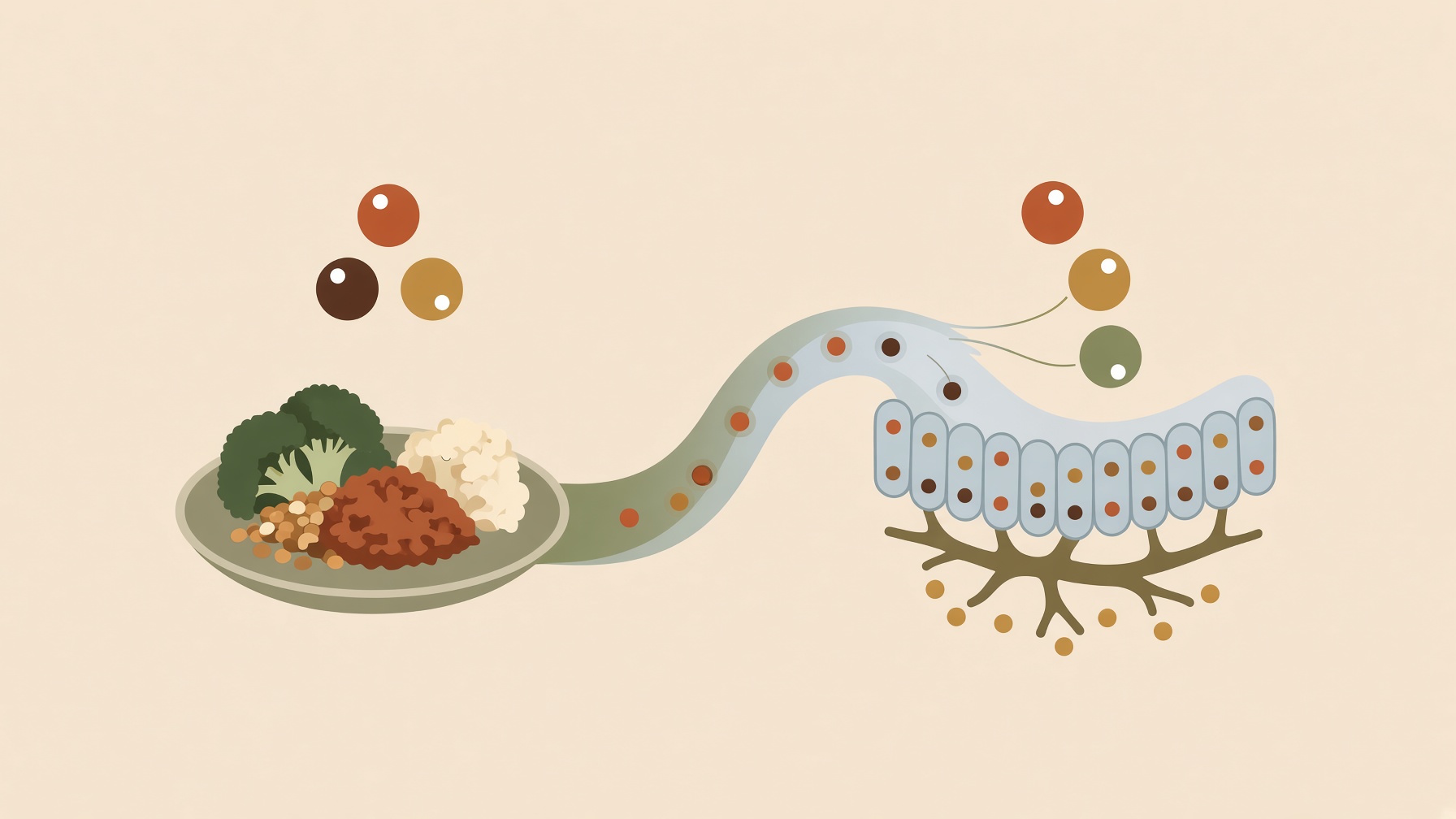
To obtain those values, the researchers measured the energy in the food and the energy lost in feces and urine. What remained was the estimate of metabolizable energy. The almonds had also replaced some other foods in the controlled diet. Accounting for that substitution let the researchers estimate how much of the remaining food energy was attributable to each almond form.1
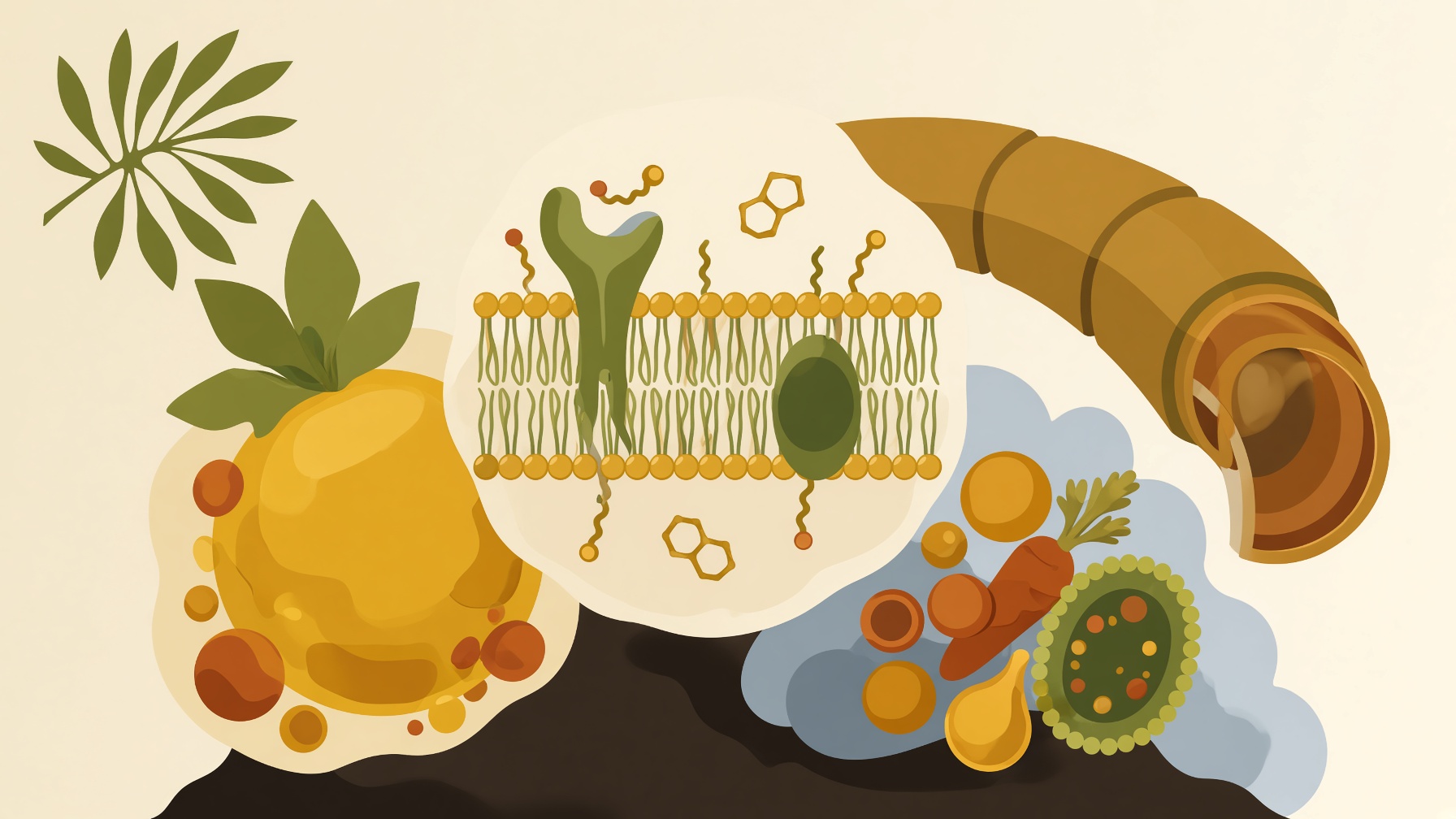
The cell walls of whole almond tissue can keep some fat enclosed during digestion. In microscopic images of selected fecal samples from the feeding trial, some fat was still visible inside surviving pieces of that tissue. Almond butter showed a much more disrupted structure, with more fat exposed to digestion. Alongside laboratory work, these observations support greater access to fat as one plausible contributor to the measured energy difference.2
The numbers alone cannot establish which form is healthier overall. During the trial, participants’ food intake was adjusted to keep their weight stable, so these measurements cannot predict how eating either form would change an individual’s weight.1
It's easy to see “just almonds” on the jar and expect a straightforward swap. Whole almonds and almond butter do share an ingredient, but the form is still part of what you're comparing. Being clear about both gives you a better way to ask the calorie question than stopping at the ingredient list.

Join the discussion
No account or email is required. Your display name and comment will be public.