
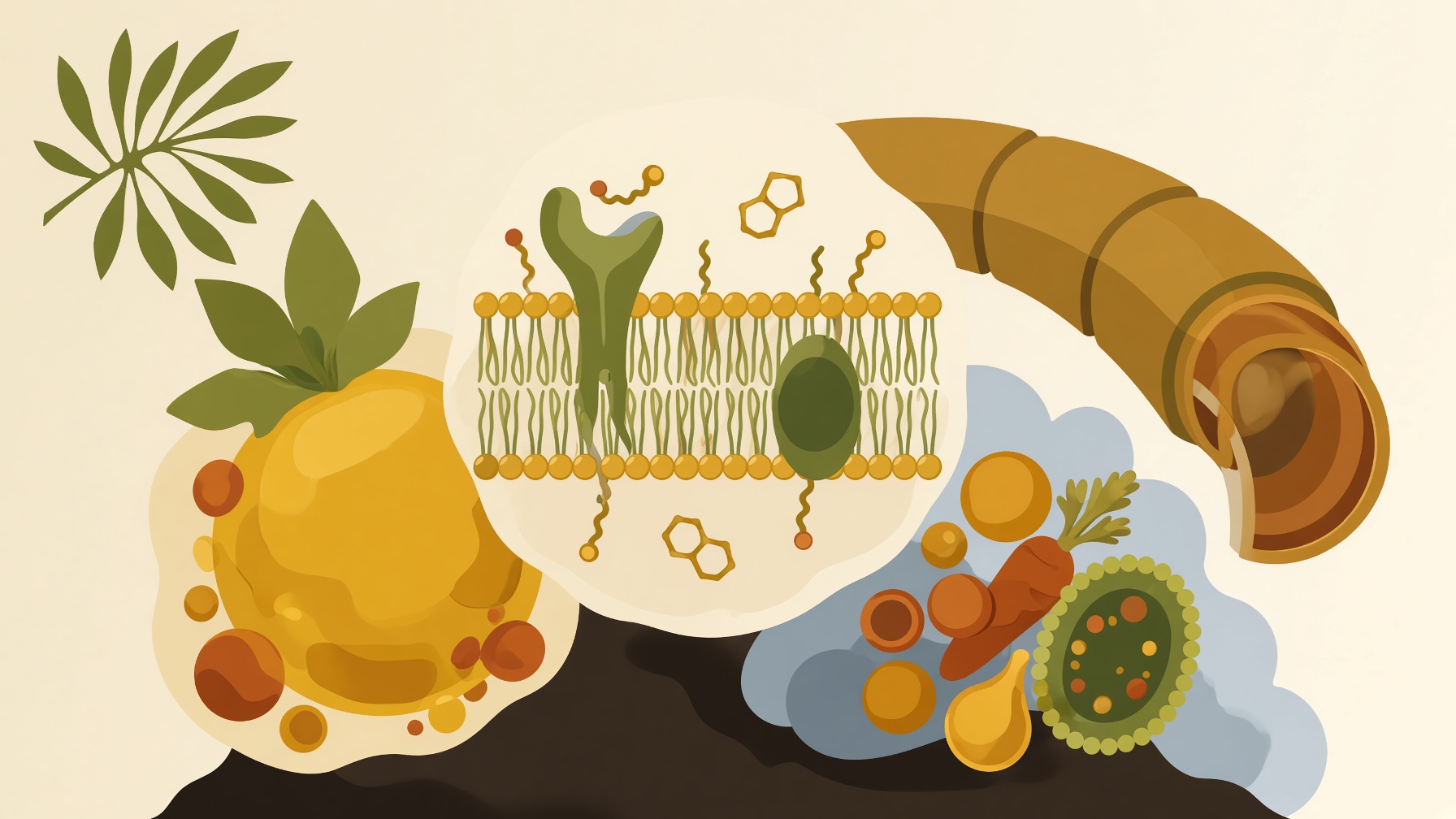
Lipids are often introduced as the body’s concentrated energy store. That is an important role, but it is only one part of the picture. Different lipid forms and lipid-containing tissues also participate in signaling, provide structural and electrical functions, and help the body absorb selected nutrients.
Stored triglyceride is a major long-term energy reserve, and its physical properties make it a compact one. Glycogen is stored in a highly hydrated form and is associated with substantial water. Stored triglyceride, by contrast, contains little associated water. Dietary fat is also energy dense, providing about 9 kilocalories per gram compared with approximately 4 kilocalories per gram for carbohydrate. Together, the higher energy density of fat and the relatively small amount of associated water make triglyceride a more compact energy store than glycogen .1
Adipose tissue is also more than a passive place to store triglyceride. It secretes signaling molecules such as leptin, which participates in the regulation of appetite and energy balance. This signaling role means adipose tissue contributes physiological information as well as stored energy .2
Elsewhere in the body, lipids serve important structural roles. They are components of cell membranes and of myelin in the nervous system. Myelin contains substantial lipid and electrically insulates many axons, allowing efficient nerve conduction. Other membrane lipids also influence properties such as membrane structure and signaling. These functions are distinct from triglyceride storage because they depend on specialized lipid molecules incorporated into biological structures .3,4
Dietary fat has another role during nutrient absorption. It can improve intestinal absorption of fat-soluble vitamins and other lipid-soluble compounds. Vitamins A, D, E, and K belong to the fat-soluble vitamin group, and dietary fat can also increase the bioavailability of lipid-soluble carotenoids such as lycopene and beta-carotene. The size of this effect is not fixed. It can vary with the nutrient, dose, food matrix, and the amount and type of fat present .5,6
The broader lesson is that lipid biology depends on context. The same broad nutrient category includes molecules specialized for long-term energy storage, membrane structure, signaling, nervous-system function, and nutrient handling. Understanding these different roles prevents the common mistake of treating all lipids as simply stored fuel.
Join the discussion
No account or email is required. Your display name and comment will be public.