
How Your Body Digests and Absorbs Dietary Fat
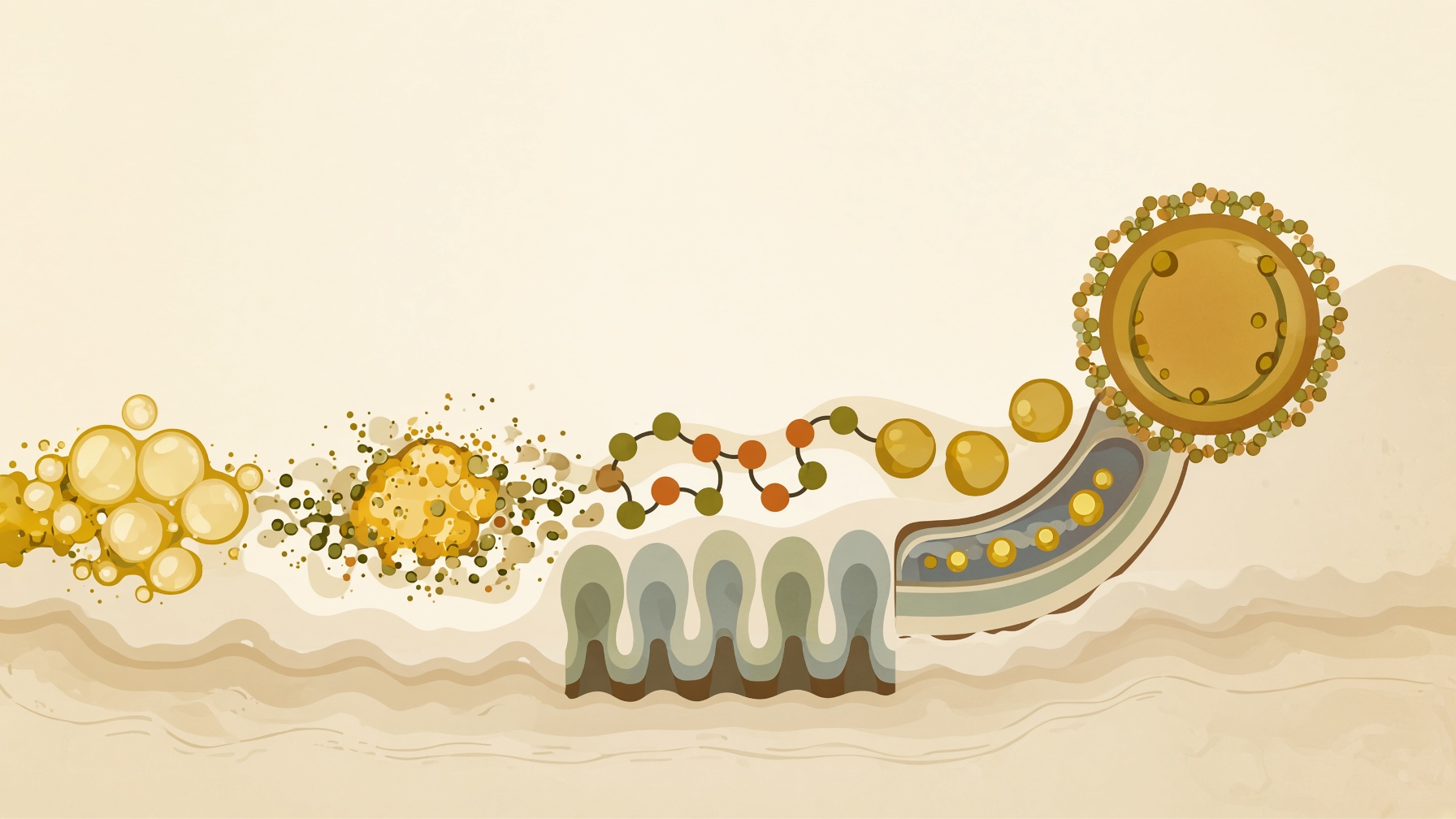
Dietary fat digestion combines physical dispersal by bile salts with enzyme breakdown, producing lipid components that intestinal cells can absorb.
Wikis
Lipids are a broad and chemically diverse group of biological molecules characterized by hydrophobic or amphipathic properties. Some lipids are predominantly hydrophobic, while others are amphipathic, meaning that they contain both water-attracting and water-repelling regions. Unlike proteins or nucleic acids, lipids are not defined by one common molecular structure. Major lipid classes include fatty acyls, glycerolipids, glycerophospholipids, sphingolipids, sterol lipids, and several others .1,2
Lipids perform several fundamental biological roles. Triacylglycerols, commonly called triglycerides, provide a concentrated form of energy storage. Other lipids, particularly glycerophospholipids, sphingolipids, and cholesterol, are important structural components of cell membranes. Lipids and lipid-derived molecules can also participate in cell signaling and serve as precursors for biologically active compounds .2
Many membrane lipids are amphipathic. Their hydrophilic regions can interact with water, while their hydrophobic regions associate with one another away from water. This property allows molecules such as phospholipids to organize into lipid bilayers, which form the basic structural framework of cellular membranes .2
The terms lipid and fat are therefore not interchangeable. Fat commonly refers to triacylglycerols, particularly those used for energy storage, whereas lipid is the broader biochemical category that also includes membrane phospholipids, sterols such as cholesterol, and many signaling molecules .1,2
From this collection
Dietary fat digestion combines physical dispersal by bile salts with enzyme breakdown, producing lipid components that intestinal cells can absorb.