
Calling vitamin E an antioxidant can make a larger dose sound automatically more protective. But “antioxidant” describes a specific physiological function, not a guarantee that progressively higher supplemental intake will prevent disease. Understanding vitamin E means separating what alpha-tocopherol does in the body from what higher-dose supplements have actually been shown to accomplish.
Vitamin E refers to eight naturally occurring forms, including four tocopherols and four tocotrienols, but alpha-tocopherol is the form currently recognized to meet human vitamin E requirements. Alpha-tocopherol acts as a lipid-soluble antioxidant, helping protect membrane lipids from free-radical chain reactions. That does not mean all eight forms are retained or function with equal physiological importance in humans. The antioxidant role relevant here is specifically that of alpha-tocopherol, rather than a blanket property that can be assigned equally to every form called vitamin E .1,2
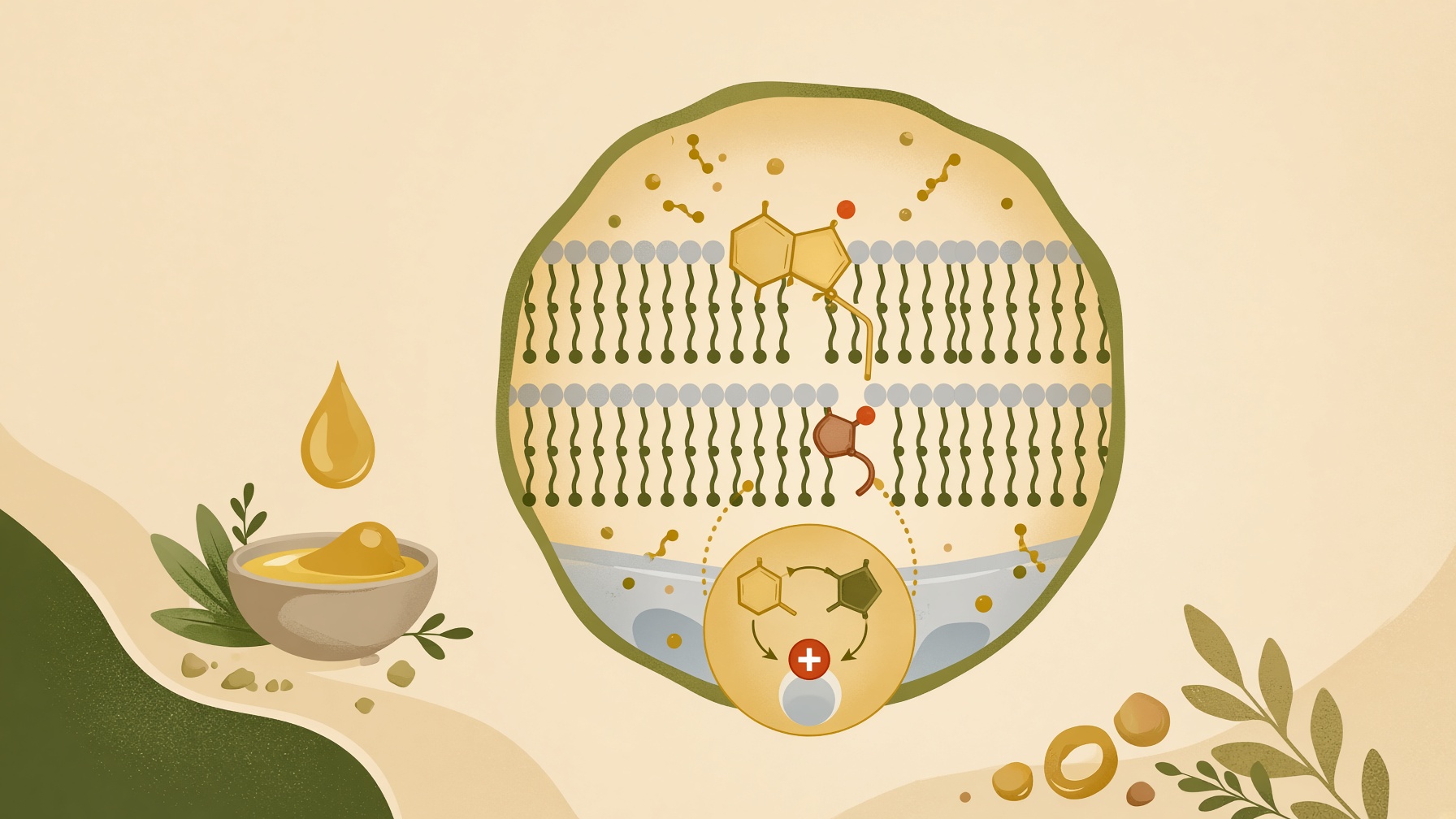
Its antioxidant action is also a defined chemical process. When alpha-tocopherol scavenges a free radical, it becomes a tocopheroxyl radical. To resume its chain-breaking antioxidant role, it must be reduced back to alpha-tocopherol. Vitamin C can contribute to this regeneration. This cycle helps show what antioxidant activity actually means at the molecular level: alpha-tocopherol participates in interrupting free-radical chain reactions and can then be regenerated to act again .2
Vitamin E's fat solubility matters for how the nutrient enters the body. Efficient absorption requires dietary fat and normal fat absorption. Frank vitamin E deficiency is rare in otherwise healthy people, but the situation changes when fat absorption is impaired. Disorders that cause fat malabsorption increase the risk of vitamin E deficiency because they interfere with the process needed to absorb the nutrient efficiently. The relevance of vitamin E deficiency therefore depends partly on whether normal fat absorption is functioning .1
Adequate vitamin E also supports normal immune function involved in defense against pathogens. Supporting a normal physiological function, though, is not the same as proving that high supplemental doses will “boost” that function beyond normal. The same distinction appears in chronic-disease research. Large randomized trials have not shown a clear benefit of high-dose vitamin E supplementation for preventing cardiovascular disease or cancer in generally healthy community-dwelling adults. That conclusion is specific to those prevention outcomes and that population; it should not be expanded into the claim that vitamin E supplementation has no role in every possible disease or clinical situation .1,2
Vitamin E therefore illustrates a broader principle in nutrition: a nutrient can have an essential physiological role without producing additional health benefits when consumed in amounts far beyond what the body requires. The biological function of alpha-tocopherol and the clinical effects of high-dose supplementation are related questions, but they are not the same question.


Join the discussion
No account or email is required. Your display name and comment will be public.