
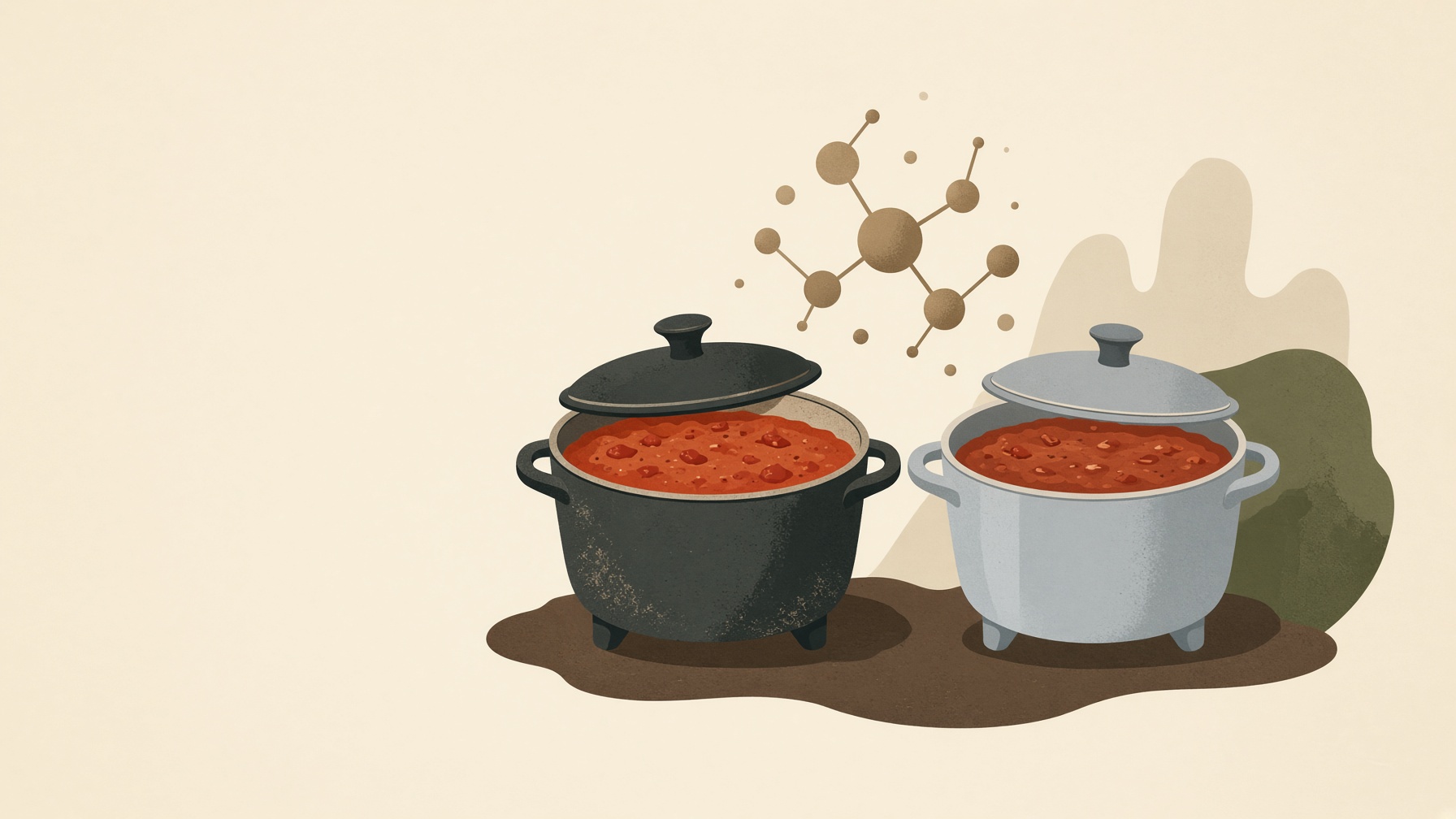
An ingredient list tells you what goes into a tomato sauce, while the pot seems to be just its container. If the ingredients stay the same, could the cooking vessel still help explain the iron measured in the finished sauce?
In a laboratory comparison, tomato sauce cooked in the tested cast-iron pots had a higher reported iron concentration than sauce cooked in the tested stainless-steel pots. The researchers used oil-cured GG-10 cast iron and 304 stainless steel.1
The pots were initially new, with a capacity of about two liters each. Each preparation began with equal quantities of commercial tomato sauce, salt and oil from the same lots. All preparations cooked for 11 minutes after boiling began. Each metal pot was used to cook seven successive batches following the same recipe.1
Those matched ingredients give the comparison its interest: the difference was found without starting with a different recipe. The sauce was acidic, with a reported pH of 4.12, and only two pots of each material were tested. This is a finding about particular vessels and cooking conditions, rather than a fixed contribution that follows every cast-iron pot into every meal.1
The measurement also needs a little unpacking. Iron concentration describes how much iron is present per unit weight of sauce. Comparing concentrations means comparing equal weights of the cooked food. It does not tell us how much iron was present in the entire finished batch, because that calculation also needs the batch's final weight. That weight was not reported.1
The higher concentration is consistent with a cookware contribution. It does not provide a precise amount of iron added by the pot, and the comparison did not isolate the chemistry of the surface as the sole explanation.1
What happens when someone eats it is a further question. This experiment analyzed food; it did not measure human absorption or changes in iron status. A food measurement therefore cannot establish the amount a person would absorb or demonstrate a nutritional benefit. Those outcomes remain open here, rather than having been tested and ruled out.1
With a sauce you make often, it's easy to remember the ingredients and barely think about the pot. You probably wouldn't mention it if someone asked for the recipe. But when you're asking what ended up in the food, how you cooked it is part of the question too.

Join the discussion
No account or email is required. Your display name and comment will be public.