
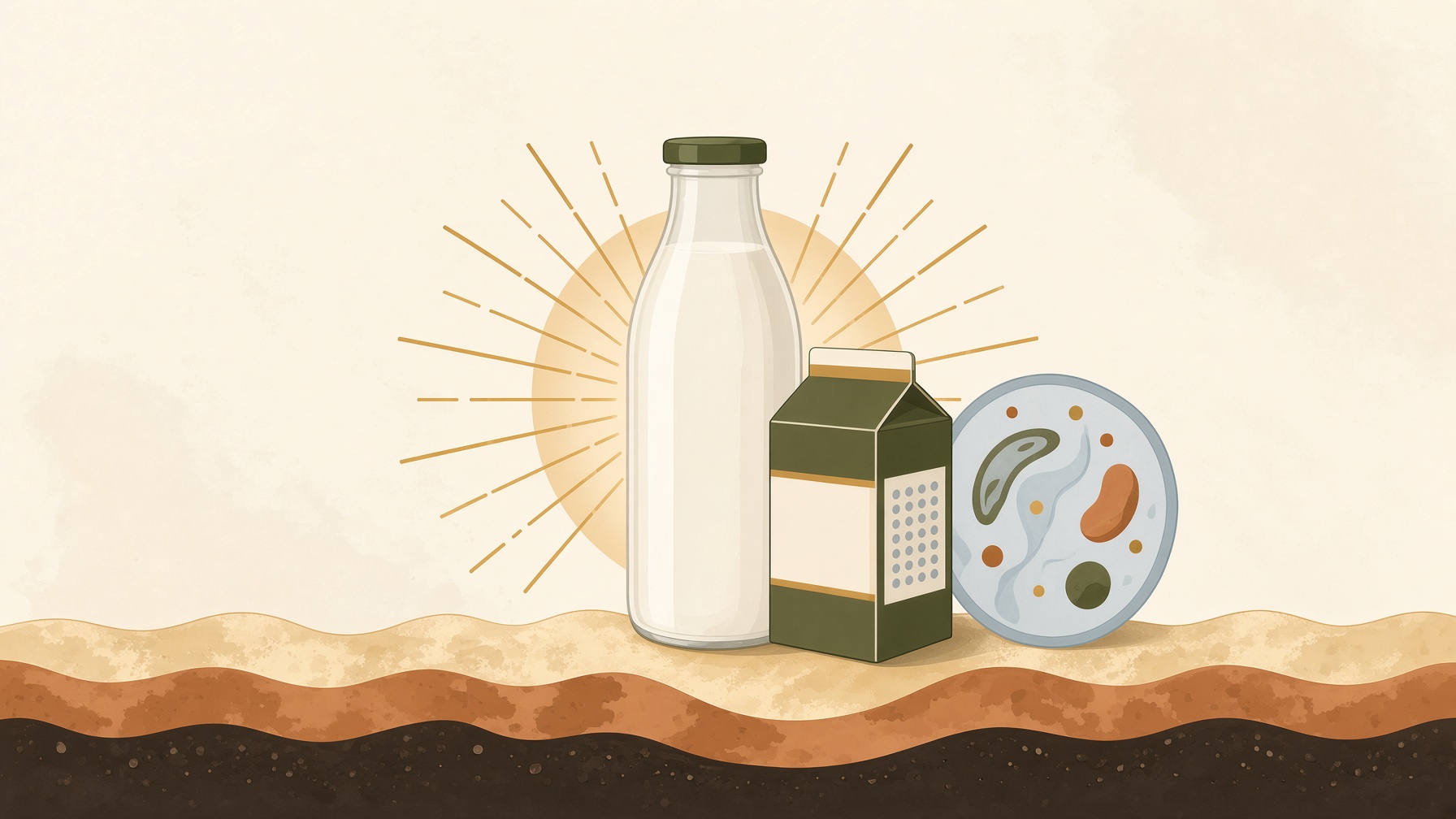
You put the milk in the refrigerator and turn to the rest of the groceries. On the next shopping trip, though, you notice the packages: a clear bottle, an opaque one, a carton. If keeping the milk cold is already part of the plan, what is the package being asked to do? It is a small detail to pause over in the dairy aisle. But following that question gives us a useful place to start: what, exactly, do we mean when we talk about preserving milk?
Light exposure is a separate condition from temperature. In controlled experiments with chilled milk, refrigeration did not prevent changes in particular chemical and sensory measures under the tested lighting. Light can activate substances in milk such as riboflavin, vitamin B2, and initiate oxidative chemistry. Light protection therefore addresses a condition that cooling alone does not. This chemical explanation does not identify one proven pathway behind every flavor response.1,2
The packaging comparison makes that role concrete. High-heat-treated 2% milk was kept at 4 ± 1°C under continuous LED lighting in clear, foil-shielded and light-protective containers made from polyethylene terephthalate (PET), a bottle-making plastic. The tested protective packaging limited B2 loss and selected indicators of oxidation over time. Clear PET lost more than 60% of its B2 within the first week under this protocol. That figure concerns one named vitamin under a particular exposure; it does not measure the loss of all milk vitamins. Nor do the oxidation measurements establish what someone would taste, because this experiment did not directly test flavor by tasting.1
Flavor requires a different kind of observation. With pasteurized skim and 2% milk held at 4°C for 24 hours, consumers tasted coded samples exposed to different LED light spectra, alongside shielded samples. Some tailored spectra produced better liking ratings and fewer unwanted flavors and aromas than white LEDs in plastic bottles. The result depended on the light spectrum and package, and it could not be generalized to glass. These were ratings of actual flavor and aroma, distinct from judgments based on how a package looked. The selected chemical measurements, including riboflavin and the volatile compound hexanal, did not always distinguish the light conditions as clearly as the tasters did. Their limited discrimination does not establish zero chemical change or equivalent flavor. A vitamin assay and a tasting test answer different questions about quality.2
None of those quality measures determines whether a bottle is microbiologically safe. Light-related chemistry and deterioration involving microorganisms require different evidence, and light need not explain every off-flavor. The packaging experiment measured microbial counts separately and excluded packages with elevated counts from its chemical analyses. It did not establish that every microbial hazard was absent. Continuous retail-style lighting also differs from intermittent household refrigerator lighting, so these experiments supply no universal home-exposure time limit. Their results concern the tested products, packages and exposures, rather than an extension of ordinary household shelf life.1,2
“Light-protected” is most useful as a specific description, rather than a general judgment about a carton of milk. The question is which aspect of quality is being discussed and under what storage conditions. Keeping those details in view makes the packaging claim easier to interpret. It gives you a clear basis for understanding the description, instead of expecting one word on the package to answer every question about the product.

Join the discussion
No account or email is required. Your display name and comment will be public.