
You might look at an egg and think about how much protein it contains. Then a different question comes up: what happens to any part that escapes digestion and absorption in the small intestine? Calling it “wasted” can feel like an answer, yet it leaves the next step unexplained. To follow the question, we need to be clear about what we are looking for: the protein originally eaten, or something later traced back to it. That takes us from counting grams to following what happens after the meal.
The amount eaten did not settle how much escaped digestion and absorption in the small intestine. In a comparison involving ten healthy adults, each person ate matched raw and cooked meals containing 25 g of egg protein with water, after overnight fasting. More of the raw egg protein was estimated to escape small-intestinal digestion and absorption. The estimates were approximately 35% of the meal's egg protein after the raw meal and 6% after the cooked meal. These fractions were reconstructed from chemical tracer labels and model assumptions, rather than measured by collecting material at the end of the small intestine.1
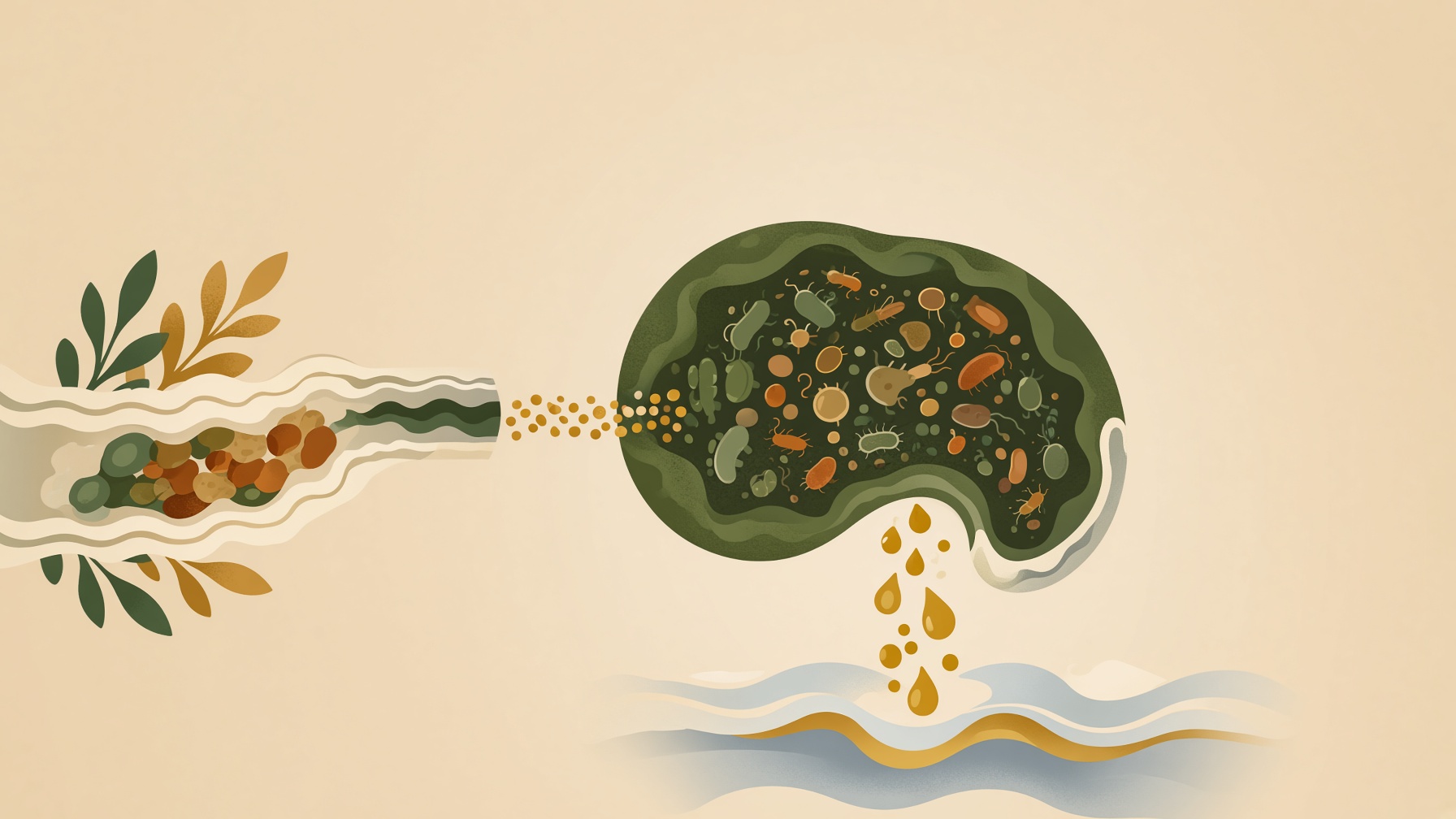
A chemical tracer label lets researchers connect material recovered later with the original meal, even when that material has changed chemically. Here, the informative connection involved tyrosine, an amino-acid component of the egg protein. Some of its label was recovered in phenol and p-cresol, products associated with microbial processing, in urine collected over 72 hours. Recovery was greater after the raw meal. The urinary finding concerned chemically different products, not intact egg protein passing into urine.1
That change in chemical identity supports a route involving microbial processing, followed by absorption of the resulting metabolites and their eventual excretion. The steps were inferred from the recovered label rather than watched directly. The findings also do not locate the entire process exclusively in the colon: some phenol formation can occur around the end of the small intestine and the beginning of the large intestine.1
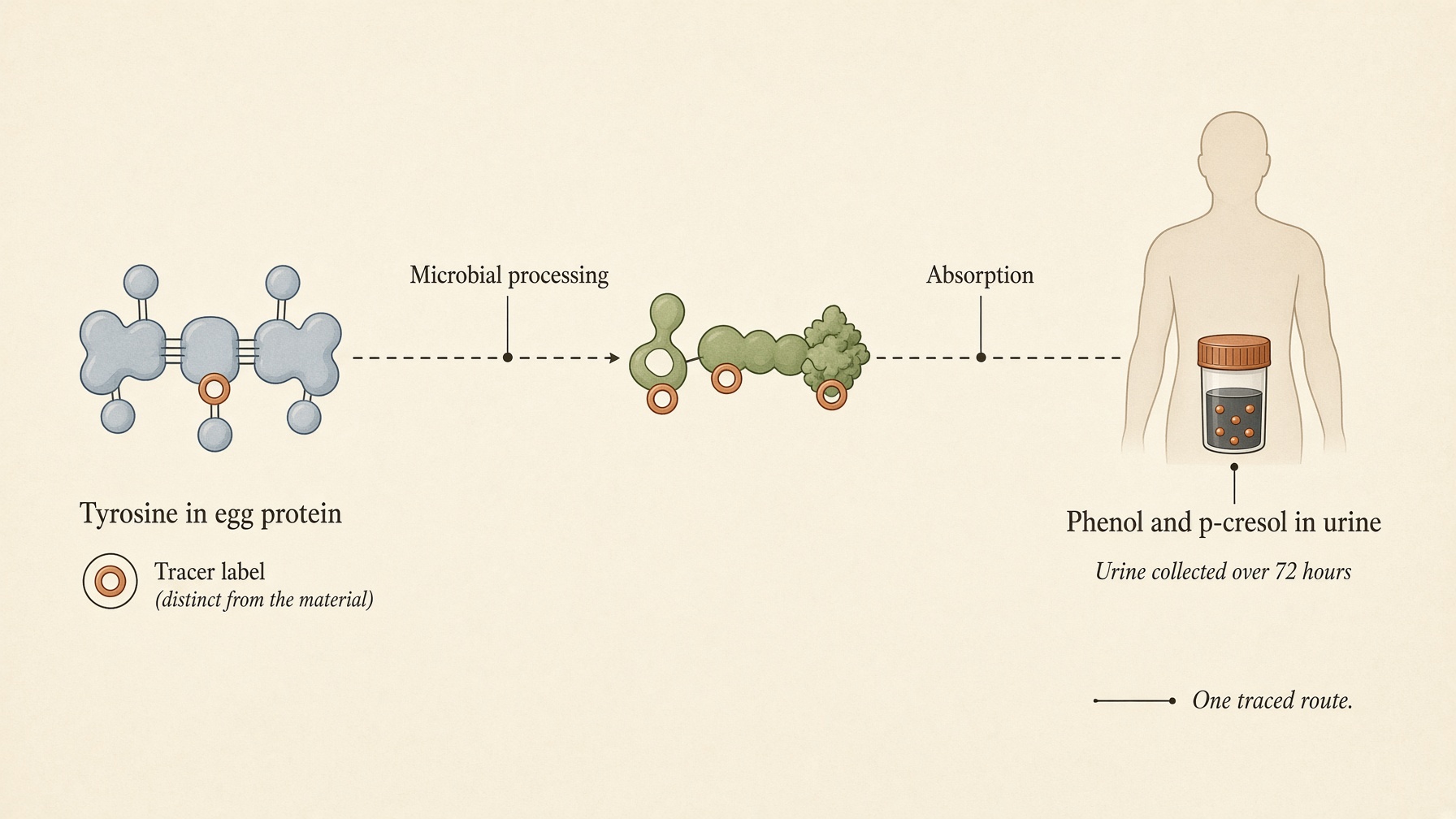
Urinary phenol recovery traces one route, rather than the fate of every gram that escaped small-intestinal digestion. Separately, the study estimated how much labeled nitrogen remained in the body over 72 hours, with lower retention after the raw meal. That estimate is different from tracking phenols in urine. Neither measurement shows how much protein reached muscle or establishes the meal's overall nutritional value.1
The words “used” and “wasted” do not specify which material or which stage of digestion is being discussed. A more precise answer keeps track of both. It also separates an account of where material went from a judgment about its nutritional value. That distinction allows the question to be answered without treating the whole meal as having one single fate.
Join the discussion
No account or email is required. Your display name and comment will be public.