

The body does not use and store fuel in exactly the same way throughout the day. A meal temporarily changes the nutrients and hormones circulating in the blood, and those conditions gradually change again as time passes without food. Following that shift provides a useful way to see how metabolism adapts to nutrient availability from one part of the day to the next.
The absorptive, or fed, state occurs after a meal while nutrients are being digested and absorbed. The postabsorptive state follows as absorption of nutrients from the meal declines and the body increasingly relies on endogenous fuel stores. Longer periods without food extend this shift into fasting metabolism. Across a typical day, metabolism moves back and forth between these states as meals alternate with fasting intervals. This everyday cycle provides the basic framework for understanding why glucose storage is emphasized at one point and stored-fuel mobilization becomes more important later .1
After feeding, rising blood glucose contributes to increased insulin secretion. The liver shifts toward net glucose uptake and glycogen storage, with insulin promoting glycogen synthesis and suppressing hepatic glucose production. In this fed state, the liver therefore has an important role in taking up some of the available glucose and storing it in glycogen form .1
As the postabsorptive period begins, blood glucose generally falls from its post-meal level and insulin concentrations also decline. As insulin levels decline and the hormonal environment shifts, hepatic glycogen metabolism moves away from net storage and toward glycogen breakdown. Glucagon contributes to this transition and supports hepatic glucose production during the postabsorptive period. The hormonal environment has therefore changed from one that supports post-meal glucose storage toward one that favors mobilization of stored liver glycogen as the interval without food continues .1
During fasting, hepatic glucose production helps maintain circulating glucose for tissues that continue to depend partly or entirely on it. Early in fasting, both glycogenolysis and gluconeogenesis contribute to that glucose supply, with their relative contributions changing as the fast continues .1
As insulin levels decline during fasting, adipose tissue releases more fatty acids into the circulation, allowing many tissues to increase their reliance on fat as a fuel. This shift develops alongside changes in hepatic glucose production rather than waiting until liver glycogen is completely depleted. This marks a further shift in fuel use as the period without incoming nutrients lengthens .1
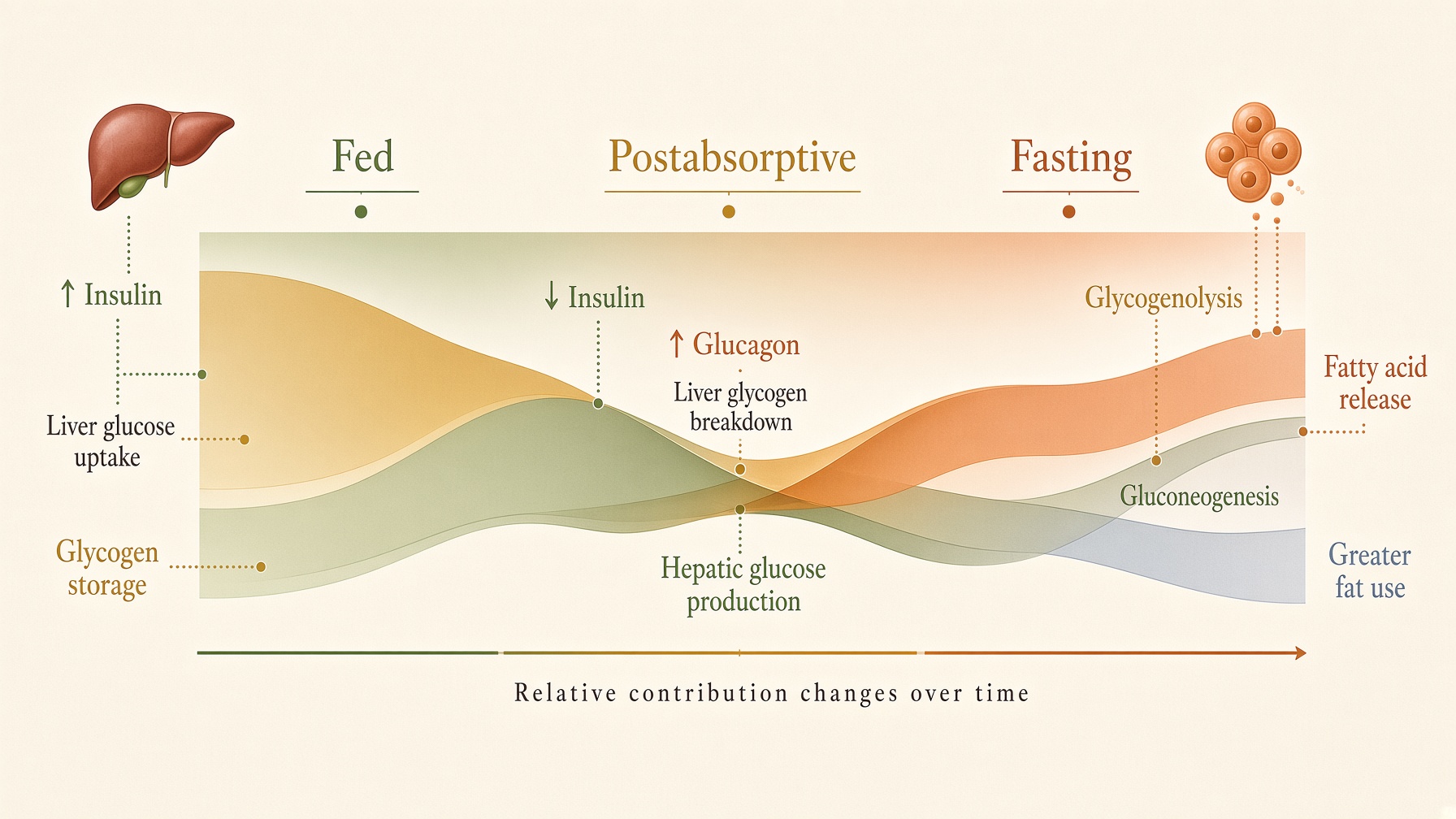
The transition from one metabolic state to another is gradual rather than an abrupt switch. Several fuels and pathways remain active at the same time, but their relative contributions change as nutrient and hormonal conditions change. Thinking in terms of shifting priorities rather than isolated “on” and “off” pathways gives a more accurate picture of how the body manages energy across the day.
Join the discussion
No account or email is required. Your display name and comment will be public.