
Published in connection with Global Obesity Forum 2026 | October 26
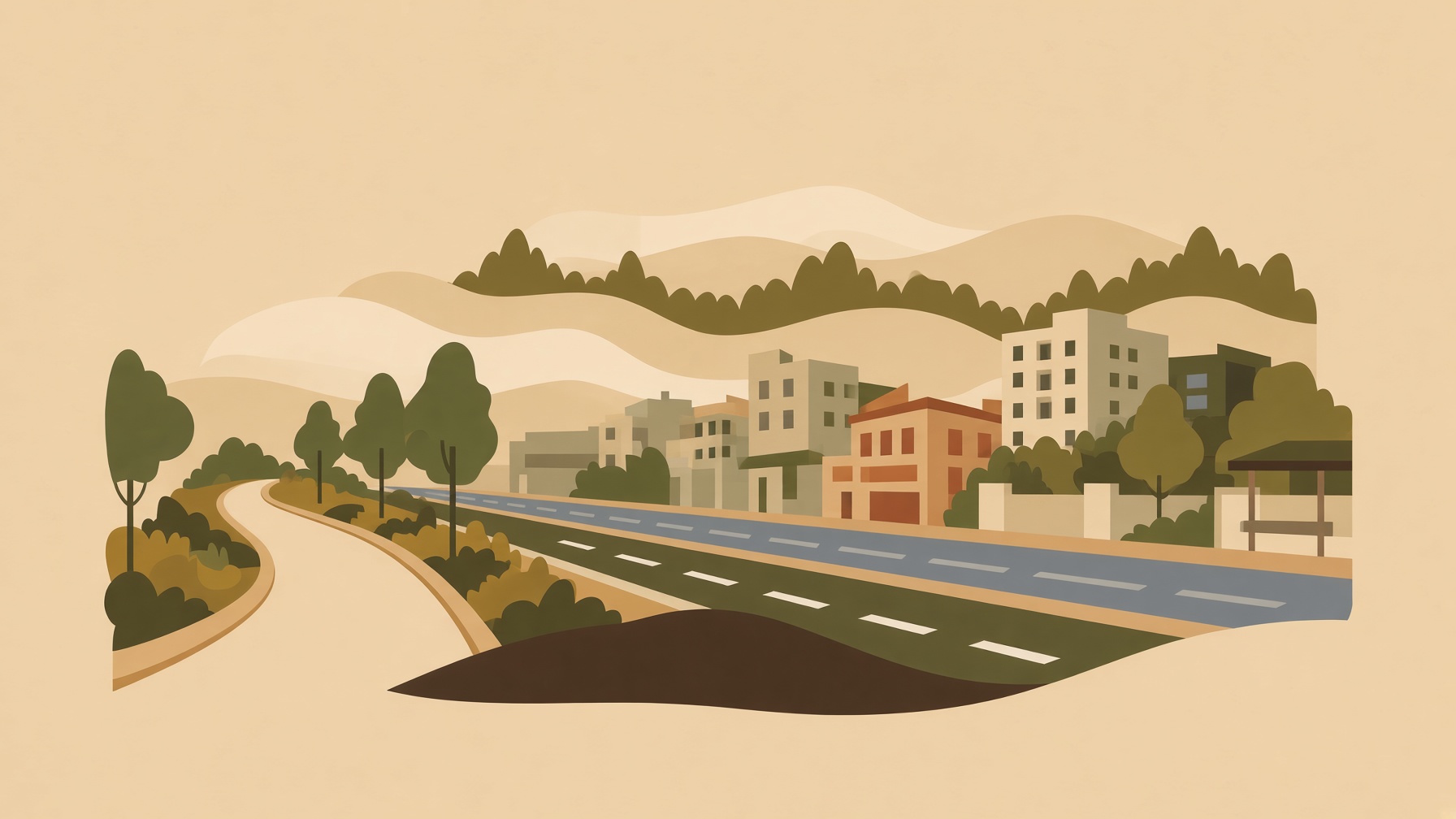
Two people may live the same distance from a park but face very different routes to get there. One can use connected sidewalks and safe crossings; the other faces fast traffic or gaps in pedestrian space. A short distance on a map does not always mean an easy walk.
The October 26, 2026 Global Obesity Forum in Madrid, Spain, was organized by the World Obesity Federation alongside the Madrid Global Obesity Summit. Its agenda focused on shared accountability: how governments, health systems, researchers, communities, and people living with obesity can contribute to progress toward 2030. That discussion extends beyond health services and individual behavior. Advice to move more can sound straightforward, yet the opportunities to walk, cycle, or spend time outdoors depend partly on the environments in which people live.1
The Opportunity to Move Is Built Into Daily Life
A planned workout is one way to be active, but physical activity also happens during transportation, errands, household tasks, and other daily routines. Walking, cycling, and other forms of active mobility can make movement part of ordinary journeys rather than a separate activity requiring dedicated exercise time.2
Whether those opportunities are practical can depend on the surroundings. Connected sidewalks, safe crossings, traffic conditions, accessible routes, and proximity to everyday destinations can influence how people move through their neighborhoods. A nearby store, for example, may be within a comfortable walking distance but difficult to reach without a safe pedestrian route. Similarly, a park may be geographically close without being easily accessible to everyone who lives nearby. These differences do not mean that everyone in the same neighborhood will have similar activity habits. Work schedules, health, mobility, household responsibilities, preferences, and transportation needs also shape daily routines. The physical environment is one influence among several, but it can affect which opportunities for movement are realistically available.2,3
What Neighborhood Research Actually Shows
Researchers use the term built environment to describe human-made features of the places people use, including street networks, transport infrastructure, access to destinations, and recreational spaces.
The International Physical Activity and Environment Network (IPEN) Adult Study investigated relationships between neighborhood environments, physical activity, and weight-related outcomes using data from more than 14,000 adults across 12 countries on five continents. A 2020 synthesis published in the Annual Review of Public Health brought together and reanalyzed findings from eight primary IPEN papers. Neighborhood characteristics were associated with several measures of physical activity, including walking for transportation and recreation and movement measured using accelerometers. Associations with overweight and obesity were also observed. Combinations of environmental characteristics were generally more strongly associated with activity outcomes than individual features considered separately.4
A 2025 systematic review in Obesity Reviews examined 19 studies investigating whether physical activity might help explain associations between the built environment and adult obesity. The findings suggested that physical activity statistically accounted for part of some observed relationships, particularly those involving neighborhood walkability. In analyses using objectively measured moderate-to-vigorous physical activity, activity accounted for approximately 8.5%–11.6% of the observed association between neighborhood walkability and body mass index (BMI). This is a statistical mediation estimate, not a measure of weight loss caused by neighborhood changes. Results were less consistent for other environmental characteristics, including street connectivity, accessibility, and green space.5
These findings are informative, but they do not establish a straightforward causal relationship. Eighteen of the 19 studies in the 2025 review were cross-sectional, meaning that environmental characteristics, activity, and weight-related measures were generally assessed at the same point in time. This limits researchers' ability to determine whether the environment influenced behavior or whether other factors contributed to the observed patterns.5
Residential choice introduces another complication. People who prefer walking or other forms of physical activity may be more likely to choose neighborhoods that support those activities. The review found that most included studies did not adequately account for this possibility. The evidence therefore supports an association between neighborhood design and physical activity, with possible implications for weight-related outcomes. It does not establish how much changing a particular street, park, or transport route would alter an individual's body weight.5
Why This Is Not a Simple Explanation for Body Weight
Physical activity contributes to health and energy expenditure, but obesity cannot be explained by neighborhood design or exercise habits alone.
The World Health Organization describes obesity as a chronic disease arising from complex interactions among biological susceptibility, environmental conditions, social circumstances, and behavioral influences. Its response framework includes prevention, supportive environments, and access to appropriate health care rather than relying exclusively on individual behavior change.6
A neighborhood that supports walking may create more opportunities to be active. It does not guarantee a particular weight outcome, just as living somewhere with fewer opportunities for movement does not determine an individual's health. The distinction between population-level evidence and individual experience matters here. An association observed across thousands of participants cannot explain why any particular person has a certain body weight. Nor should it become a basis for judging someone's motivation or personal choices. The relevance of neighborhood design also extends beyond weight management. Walking, cycling, and other accessible forms of movement can support physical fitness, mobility, participation in daily activities, and general health, regardless of whether a person's weight changes.2
What Can Change Beyond Individual Motivation?
Public-health guidance increasingly recognizes that promoting physical activity involves more than encouraging people to exercise.
The WHO's Global Action Plan on Physical Activity 2018–2030 calls for environments that provide equitable access to safe places for movement. Its recommendations include creating active environments and improving opportunities for people of different ages and abilities to participate in physical activity. Such environments may include connected walking routes, accessible public spaces, safer cycling infrastructure, and transport systems that accommodate active travel. These features address a practical question: whether regular movement can fit into everyday life without requiring people to overcome unnecessary physical or logistical barriers.3
The appropriate solutions will not be identical everywhere. Dense cities, suburban neighborhoods, and rural communities have different transport patterns, infrastructure, and access challenges. People with disabilities or other mobility limitations may also require different forms of access and support. Environmental changes are not replacements for medical care, nutrition support, or individually appropriate activity programs. They address a different part of the challenge: the conditions in which people are expected to make and sustain behavioral choices. Encouraging someone to walk more and ensuring that walking is a practical option are related, but distinct, responsibilities.2,3
The Question Behind the 2026 Forum
The Global Obesity Forum 2026 places shared responsibility at the center of its discussions. Its agenda emphasizes the complementary roles of policymakers, health systems, scientific communities, civil society, and people with lived experience of obesity in translating commitments into sustained action.1
That approach is consistent with the WHO's 2026 Technical Package to Stop Obesity, which organizes recommended policy interventions around three areas: adapting environments to enable healthy diets and active living, creating knowledge and skills for healthier behaviors, and transforming health systems to improve obesity prevention and care.7
Neighborhood design fits within the first of these areas. The research on built environments and physical activity offers a reason to consider how streets, public spaces, and transport connections can support active living, while also acknowledging that their effects on obesity are neither uniform nor fully established.4,5
This creates a broader way to think about personal responsibility. Individual decisions remain important, but the range of practical choices depends partly on circumstances that individuals cannot readily change on their own. A conversation about staying active is incomplete when it focuses only on motivation. It also needs to consider the routes people can use, the destinations they can reach, and the spaces available to them. A neighborhood cannot determine anyone's health, but it can help shape the opportunities they have to move.

Join the discussion
No account or email is required. Your display name and comment will be public.