

A hard workout is one thing. Knowing you have to do it all again later that day is another. When only a few hours separate two demanding sessions, your body has less time to refill its fuel stores, replace lost fluids, and begin repairing exercised muscle. In that situation, recovery nutrition is less about following the usual post-workout routine and more about figuring out what actually needs to be restored before you go again.
Short-term recovery usually means there are only a few hours before the next bout of exercise, often somewhere within a 2- to 24-hour window. With so little turnaround time, priorities can shift. What matters most depends on what the first session depleted and what the next one will demand .1
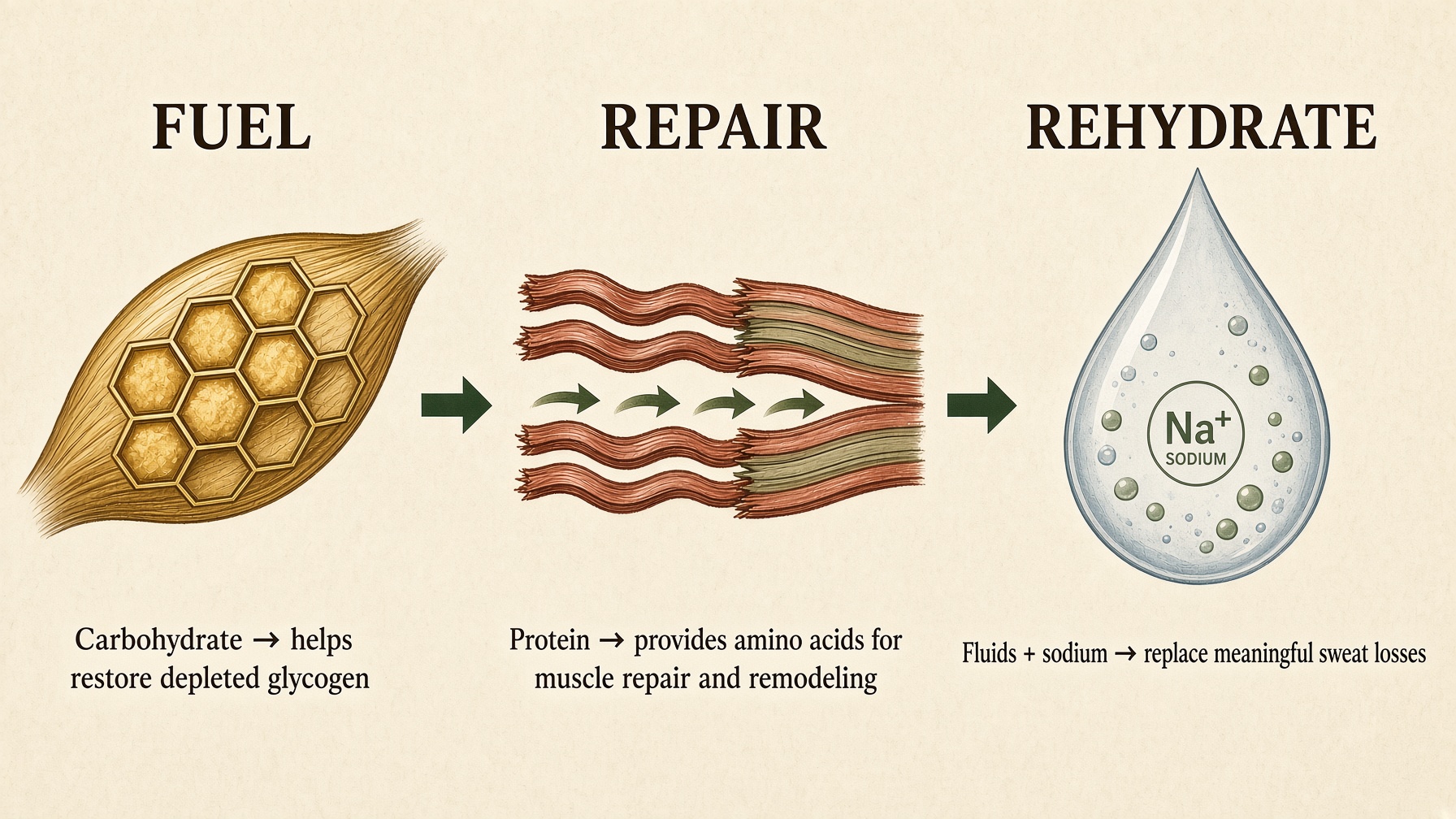
Carbohydrate becomes especially important when exercise has substantially reduced glycogen, the stored form of carbohydrate in muscle and liver. Eating carbohydrate after exercise helps rebuild muscle glycogen more quickly than consuming no carbohydrate. When another strenuous session is only hours away, restoring those fuel stores can become one of the most urgent parts of recovery. That does not make carbohydrate the top priority after every workout; the urgency is greatest when recovery time is short and the previous effort has meaningfully depleted glycogen .1,2
Protein is doing a different job. Rather than mainly refilling fuel stores, it supplies the amino acids muscles use as they repair and remodel after exercise. It remains an important part of recovery, but it does not simply take the place of carbohydrate when restoring fuel is the main concern. Total protein intake across the day also matters, and recovery does not appear to depend on hitting one narrowly defined post-exercise moment .1
Soreness can also be a misleading way to judge recovery. Protein supplementation after resistance exercise has shown some evidence of helping preserve or restore muscle strength at certain points during recovery, even when overall muscle soreness did not significantly improve. Feeling less sore, recovering muscle function, and being ready to perform again are related, but they are not the same thing. A strategy may affect one of those outcomes without changing the others to the same extent .4
Fluid replacement matters most when exercise has caused meaningful sweat loss. How much fluid and sodium are lost can vary greatly from one person or workout to another, so there is no single recovery drink that makes sense in every situation. Carbohydrate-electrolyte drinks may improve some measures of fluid retention compared with water under certain conditions, but that does not make a sports drink automatically better after exercise. Water can still be a reasonable option, particularly when food eaten during recovery also provides fluid, sodium, carbohydrate, and other nutrients .1,3
Can Supplements Speed Up Recovery?
Supplements make the picture more complicated. Some may influence specific aspects of recovery in certain situations, but none replaces the basics. Creatine taken with carbohydrate may affect glycogen storage under some conditions, although whether that improves performance in the next session is less clear. Caffeine has produced mixed findings and may come with a trade-off if it interferes with later sleep. Sodium bicarbonate may be relevant in some repeated high-intensity settings, but it is not a universal post-exercise recovery strategy .1
The same caution is useful when a recovery product is promoted because it changes a blood marker of muscle damage or inflammation. A biomarker moving in the “right” direction does not necessarily mean performance several hours later will improve. Recovery can be measured through fluid balance, glycogen restoration, soreness, muscle function, biochemical markers, or subsequent performance, and those outcomes do not always move together .1,4
When the turnaround is short, recovery is not about finding a magic shake or one perfect nutrient. It is about asking what the last workout took out of you and what needs to be restored before the next one begins. After a glycogen-depleting effort, restoring fuel may matter most; after a session that causes substantial sweat loss, fluid and electrolyte replacement may become more important. The point is not to crown one nutrient the universal winner. It is to match recovery to what the previous effort demanded and what comes next.


Join the discussion
No account or email is required. Your display name and comment will be public.