
Published in connection with World Osteoporosis Day 2026 | October 20
Your muscles tell you when a workout is demanding. Your breathing quickens, your legs grow tired, and the effort becomes hard to ignore. Bones offer no comparable feedback, leaving a less obvious question: is the exercise also challenging your skeleton in a useful way?
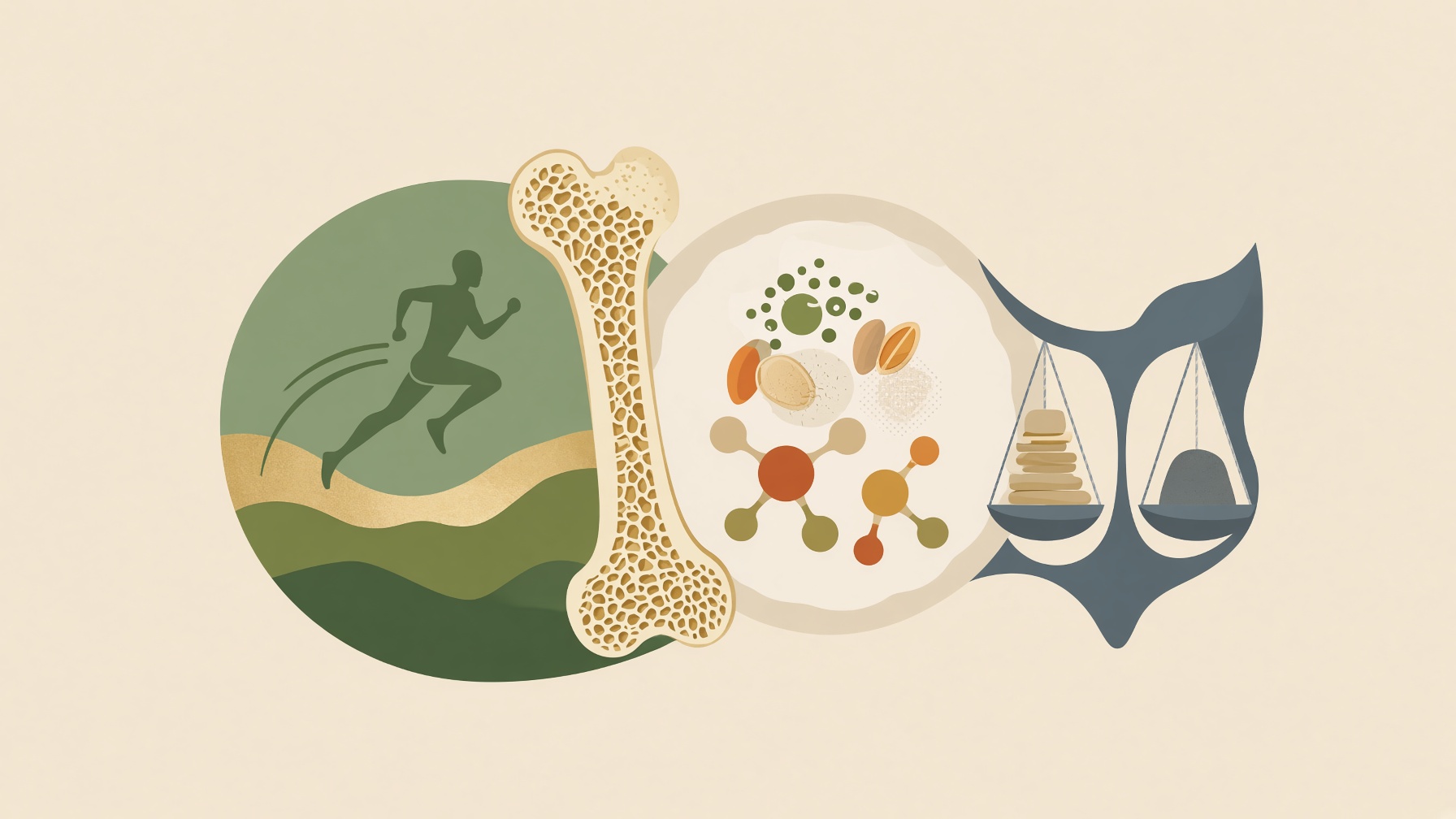
World Osteoporosis Day, observed on October 20, draws attention to this less visible side of physical health. Its 2026 campaign, “Build, Protect, Strengthen Your Bones for Life,” emphasizes bone health throughout life, bringing together exercise, nutrition, osteoporosis awareness, and fracture prevention. Unlike muscle fatigue or breathlessness, the effects of exercise on bone tissue are not something you can easily feel during a training session.1
Bones Respond to More Than Movement
Bone is living tissue that continually changes through a process called remodeling. Old or damaged bone tissue is broken down, and new tissue forms to replace it. Mechanical forces, including those generated by muscle contractions and weight-bearing activities, help influence how bone adapts over time.2,3
But being physically active and placing an effective training stimulus on the skeleton are not necessarily the same thing.
Resistance exercise, walking, running, and activities involving impact place different demands on bones. They differ in the magnitude and characteristics of the forces involved. Exercise recommendations for bone health therefore consider the nature of the activity, rather than simply whether it feels strenuous.3
This does not make walking or other lower-impact activities unimportant. They can support physical fitness, mobility, and function even when their effects on bone mineral density are modest. Activities that develop strength and balance also have an important role, particularly for people at risk of falling.3
What Happens to Bone Density With Exercise?
Exercise research provides evidence that physical training can influence bone mineral density, although results vary between programs and populations. A 2023 systematic review and meta-analysis published in Osteoporosis International examined 80 controlled exercise studies involving 5,581 postmenopausal women. The included interventions lasted at least six months. The researchers found favorable average effects of exercise on bone mineral density at the lumbar spine, femoral neck, and total hip compared with control groups.4
The effects were not identical across studies. Training programs differed in exercise type, duration, supervision, and other characteristics. The degree of variation between study results also differed by skeletal site, and the average effects were generally modest. These findings support the role of exercise in maintaining bone health, but they require careful interpretation.4
Bone mineral density is an important indicator of bone strength, but an improvement in this measurement does not by itself establish that a particular exercise program prevents fractures. Fracture risk also depends on factors such as falls and physical function, as well as aspects of bone strength that are not fully captured by bone density measurements. A favorable average response across a group also does not mean that every participant will experience the same change. The evidence demonstrates what exercise can achieve in the populations studied, rather than providing a reliable prediction of how any one person's bones will respond.3,4
Strength and Balance Have Different Roles
One of the important distinctions in osteoporosis exercise guidance is between stimulating bone tissue and reducing the likelihood of falling.
A 2022 UK expert consensus statement recommended resistance and appropriately selected impact exercise to promote bone strength. It also recommended activities that improve muscle strength and balance to reduce falls.3
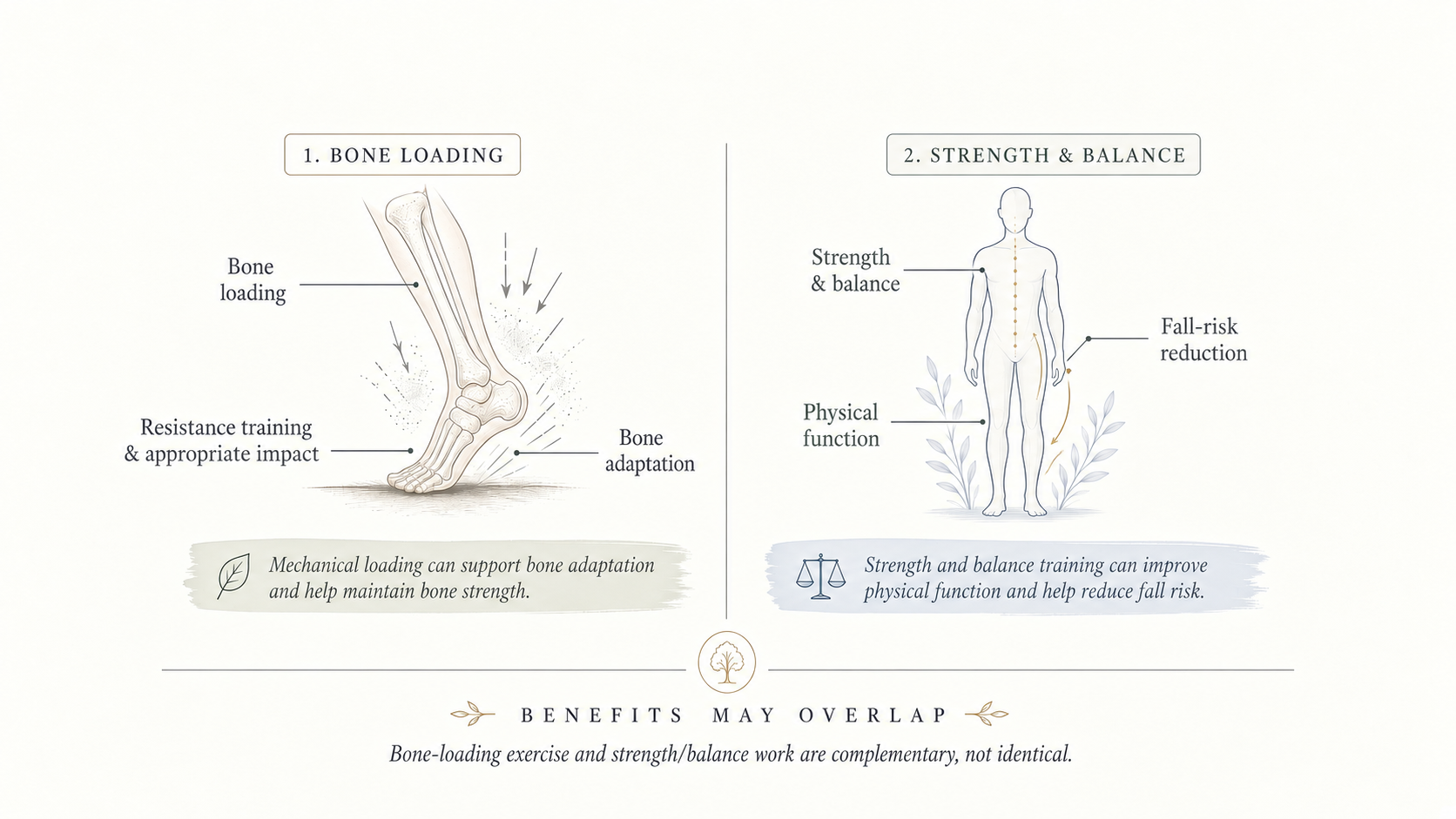
These recommendations address related but different outcomes. An exercise may contribute to stronger muscles or better balance without producing a large measurable change in bone density. Those benefits can still matter, particularly for people at increased risk of falling. The distinction also affects how exercise should be adapted. People with osteoporosis are generally encouraged to remain physically active. However, those with vertebral fractures or multiple low-trauma fractures may need to limit the impact of certain activities and receive individualized guidance. The UK consensus recommends that these individuals usually keep impact exercise at or below a level equivalent to brisk walking, unless undertaking higher-impact activity with appropriate individualized advice. This is a precautionary recommendation, reflecting limited evidence about the risks of higher-impact exercise in these groups. The goal is not to discourage movement. It is to find activities that provide meaningful benefits while accounting for an individual's fracture history, balance, strength, and physical capabilities.3
Nutrition Supports a Different Part of the Process
Exercise is only one component of bone health.
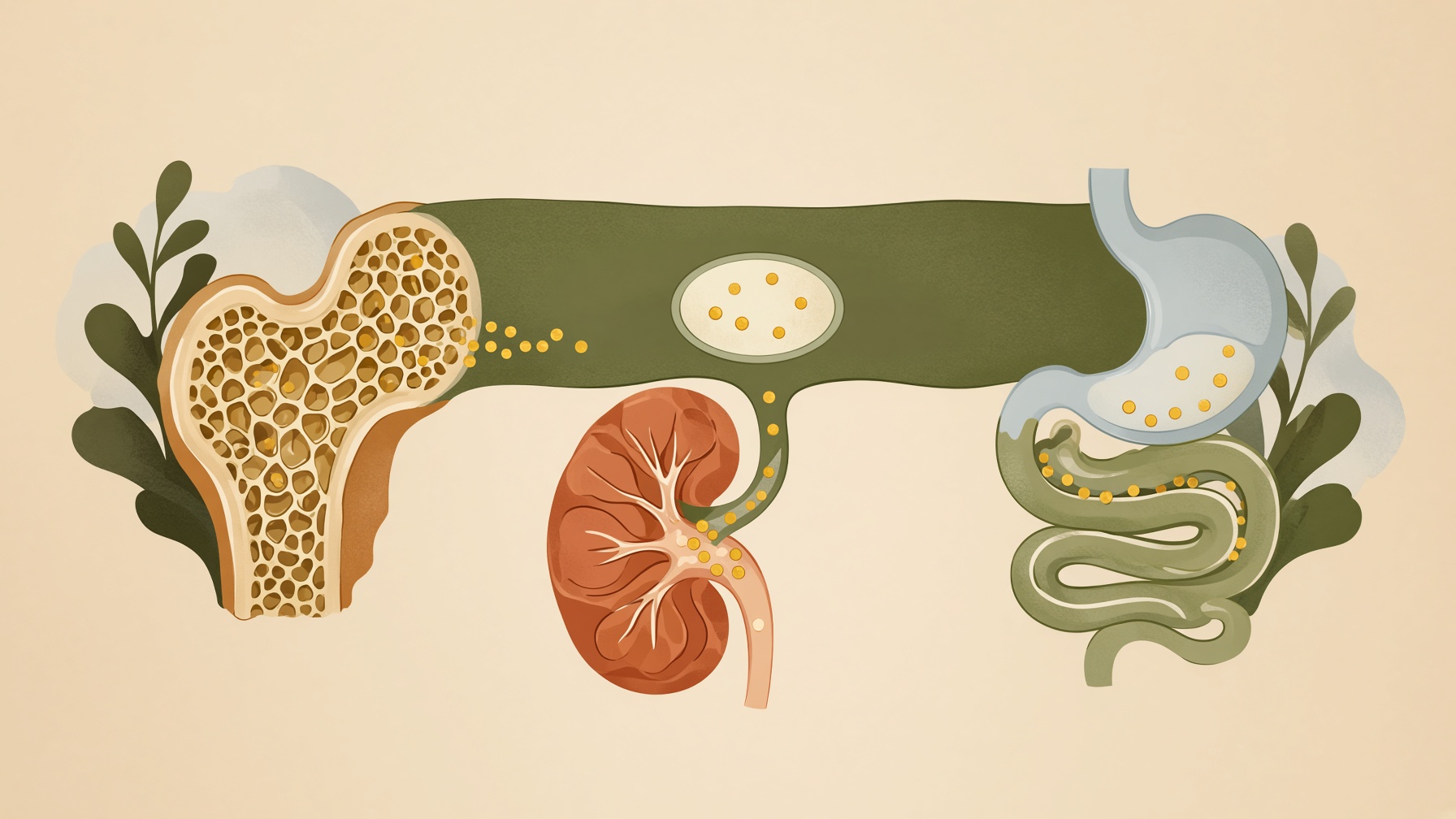
Calcium is a major mineral component of bone, while vitamin D helps the body absorb calcium. Protein is also important for building and maintaining bone and muscle tissue. Inadequate intake of these nutrients can compromise skeletal health. The International Osteoporosis Foundation emphasizes adequate protein intake alongside sufficient calcium, particularly for older adults and people at risk of osteoporosis-related complications. Protein can come from both animal and plant sources, and a balanced diet that provides enough protein is more important than relying on one particular food.2,5
But consuming extra calcium or protein does not automatically guarantee stronger bones. Nutritional needs vary, and supplementation is not a substitute for assessing dietary adequacy, physical activity, fracture risk, or the need for medical treatment. Exercise and nutrition serve complementary roles: physical activity provides mechanical challenges that can influence the musculoskeletal system, while adequate nutrition supplies the materials needed to maintain bone and muscle tissue.2,5
A Workout Is Not the Whole Measure of Bone Health
A demanding workout can tell you that your muscles and cardiovascular system have been challenged. It cannot tell you, simply by how it feels, how much your bones have adapted. That is why bone health requires a broader view of physical activity.
Resistance training, suitable weight-bearing or impact activity, balance work, and adequate nutrition each contribute in different ways. For people with osteoporosis, fracture prevention and appropriate medical treatment remain important parts of that approach. World Osteoporosis Day 2026 brings these different elements together under a lifelong perspective: building bone health before problems arise, recognizing risks, and maintaining mobility and independence as circumstances change.1,3
The question is not whether a workout feels hard enough. It is whether the activities you choose, alongside adequate nutrition and appropriate care, address the different demands of keeping your bones healthy. That is a much broader measure of progress than fatigue alone.
Join the discussion
No account or email is required. Your display name and comment will be public.