
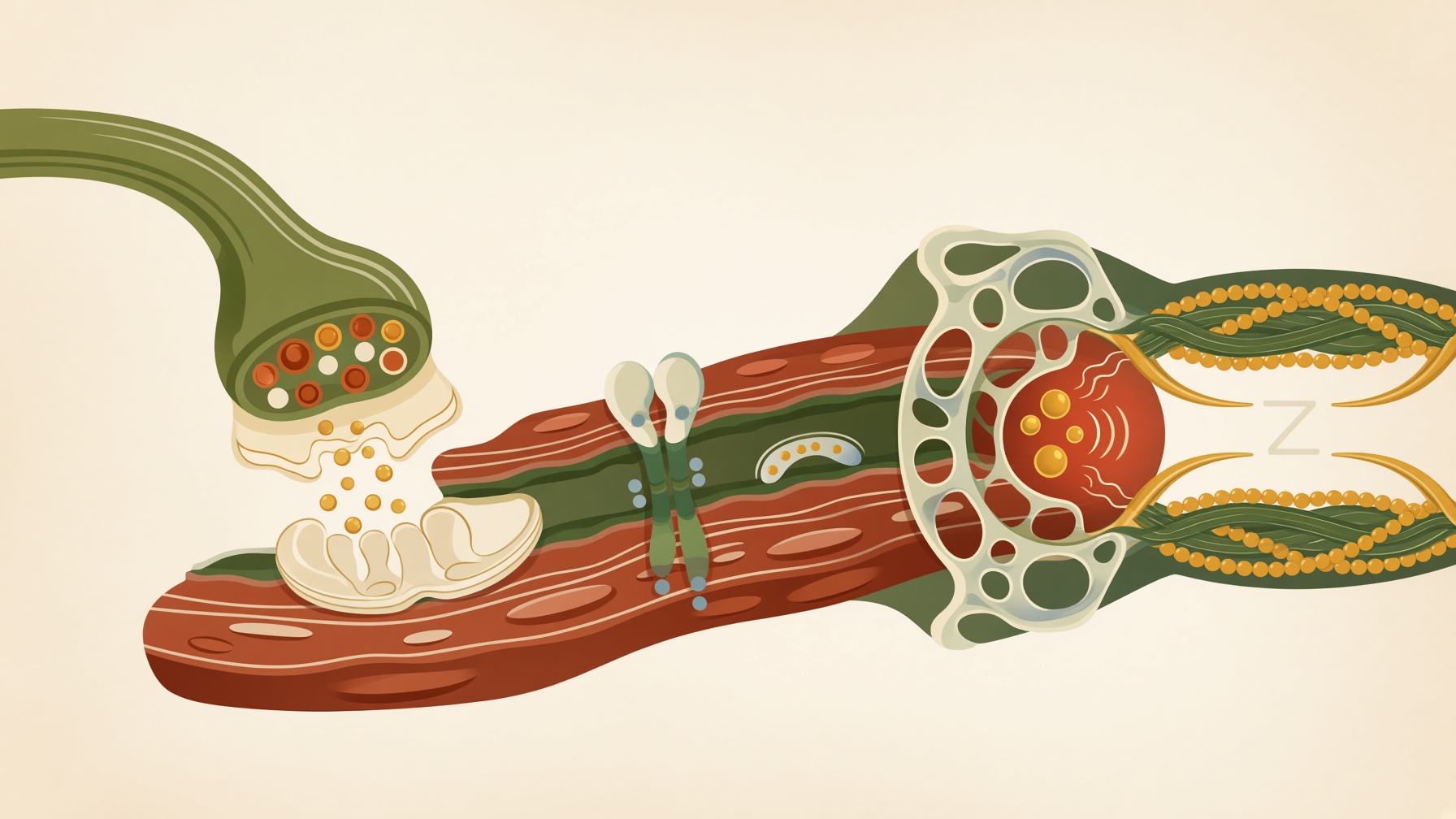
Before a skeletal muscle can contract, a message has to cross from nerve to muscle. At the neuromuscular junction, that neural signal becomes a chemical message, then an electrical signal inside the muscle fiber, and finally a calcium-regulated interaction between the proteins that produce contraction.
Skeletal muscle contraction begins when a motor neuron stimulates a muscle fiber. The meeting point is the neuromuscular junction, a specialized synapse where the terminal of a motor neuron communicates with a skeletal-muscle fiber. This is where the motor neuron's signal is transferred to the muscle fiber.
At the neuromuscular junction, the motor-neuron axon terminal releases acetylcholine. The acetylcholine then binds to nicotinic acetylcholine receptors at the motor end plate of the skeletal-muscle fiber. This interaction transfers the signal across the neuromuscular junction and triggers electrical changes in the muscle membrane .1
When acetylcholine binds, the nicotinic receptor channels open, allowing sodium to move into the muscle fiber while potassium moves out. The resulting current is dominated by inward sodium movement and depolarizes the motor end plate. This local depolarization must reach threshold before the next step occurs. Once that threshold is reached, voltage-gated sodium channels in the muscle membrane open .1
Sodium entry through those voltage-gated channels produces a skeletal-muscle action potential that rapidly propagates along the sarcolemma. That electrical excitation is then coupled to the release of calcium from the sarcoplasmic reticulum .2
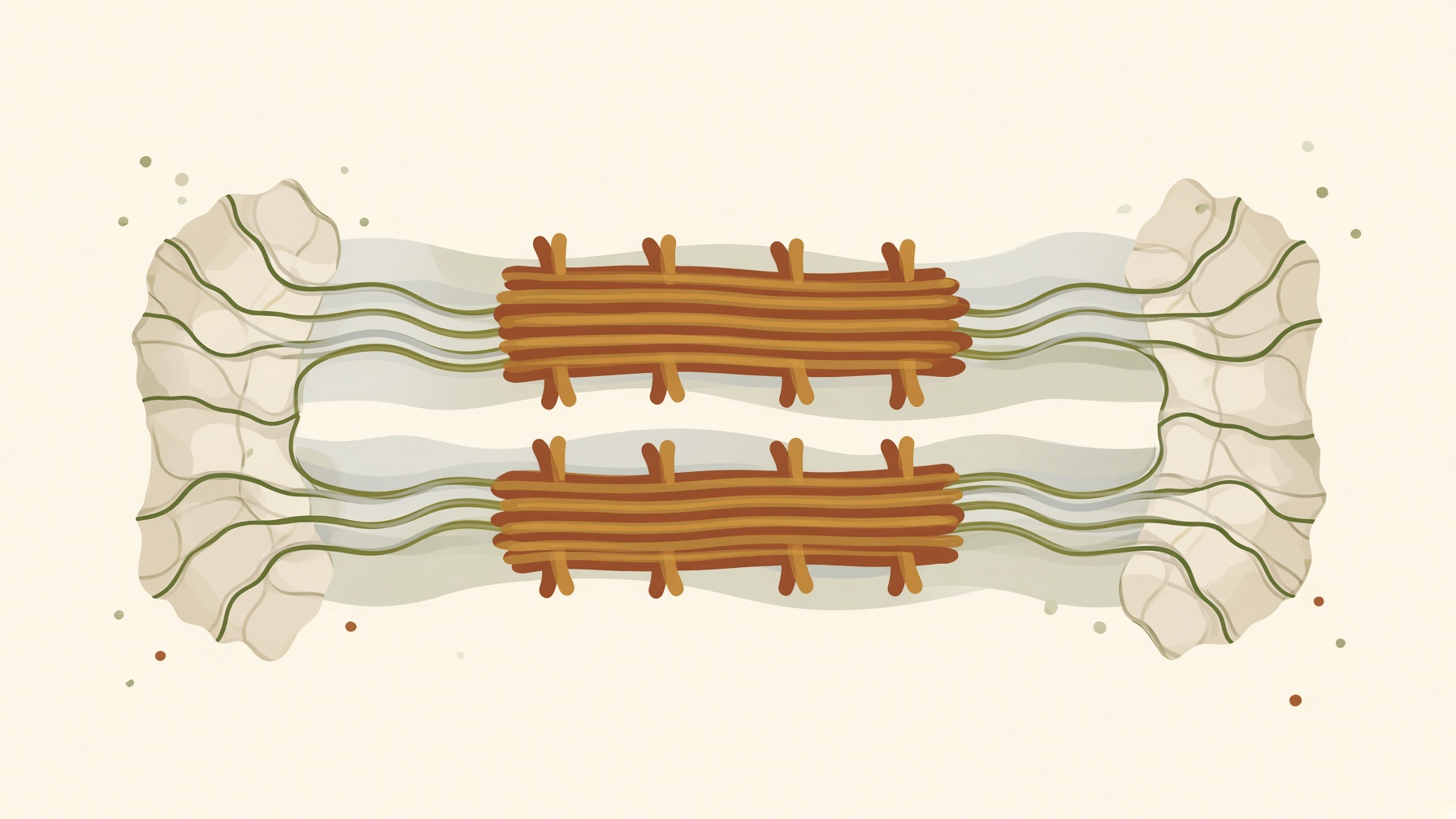
Released calcium acts on the thin-filament regulatory system. In skeletal muscle, it binds principally to troponin C, which leads to a shift in tropomyosin, which in turn normally blocks the myosin-binding sites on actin. This way, myosin-binding sites on actin become available. Myosin can then interact with actin. As cross-bridge cycling begins, myosin pulls the thin filaments toward the center of the sarcomere, causing the muscle fiber to contract .2
This sequence shows how closely the nervous and muscular systems depend on one another. A signal that begins in a motor neuron can produce a physical response in a muscle fiber within a very short time. The neuromuscular junction is the point that connects these two systems and makes voluntary movement possible.
Join the discussion
No account or email is required. Your display name and comment will be public.