
The word “essential” can sound like a judgment about how important a nutrient is. In nutrition, however, it has a much narrower meaning. For fatty acids, the term refers to whether the human body can synthesize enough of a particular fatty acid to meet its needs or must obtain it from the diet.
The body can synthesize many fatty acids in amounts sufficient to meet physiological needs, so these are generally described as nonessential. That label does not mean they are biologically unimportant. Two fatty acids are key exceptions: linoleic acid and alpha-linolenic acid. Humans cannot introduce double bonds at the positions required to synthesize these fatty acids, so they must be obtained from the diet. Linoleic acid and alpha-linolenic acid are therefore considered the two essential fatty acids .1
Because the body cannot make these two fatty acids, they must be obtained from the diet. Alpha-linolenic acid is an omega-3 fatty acid, while linoleic acid is an omega-6 fatty acid. They are often described as the two essential parent fatty acids. That distinction matters because the terms omega-3 and omega-6 refer to broader families of fatty acids. Not every member of those families is itself nutritionally essential. Calling alpha-linolenic acid an essential omega-3, for example, should not be extended into the claim that every omega-3 fatty acid must be obtained directly from food .1
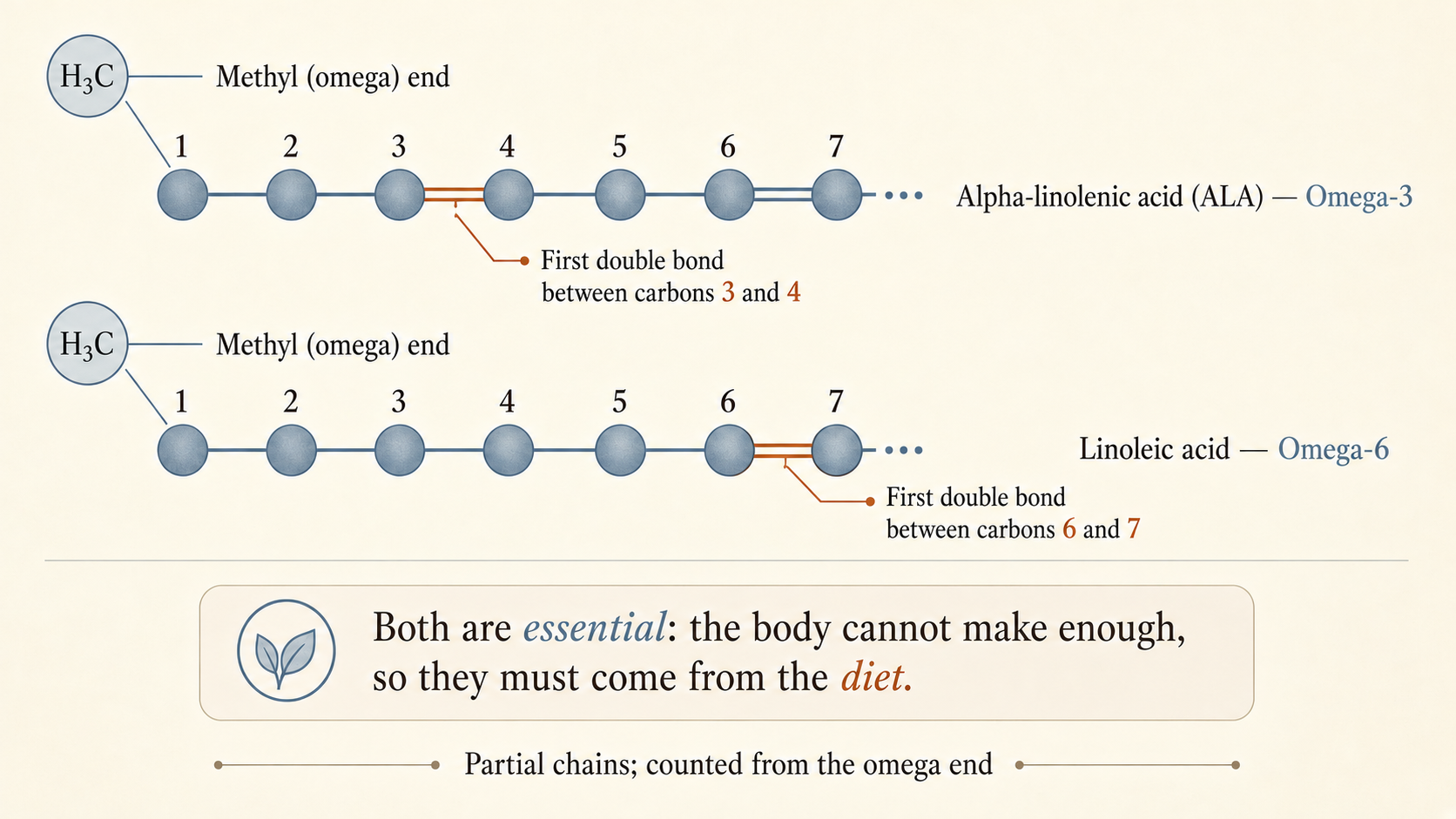
The omega number describes a structural feature of a fatty-acid molecule. One end of the chain is the methyl, or omega, end. When counting from that end, an omega-3 fatty acid has its first double bond at the third carbon, whereas an omega-6 fatty acid has its first double bond at the sixth carbon. The omega label therefore describes molecular structure rather than whether the fatty acid must be obtained directly from food .1
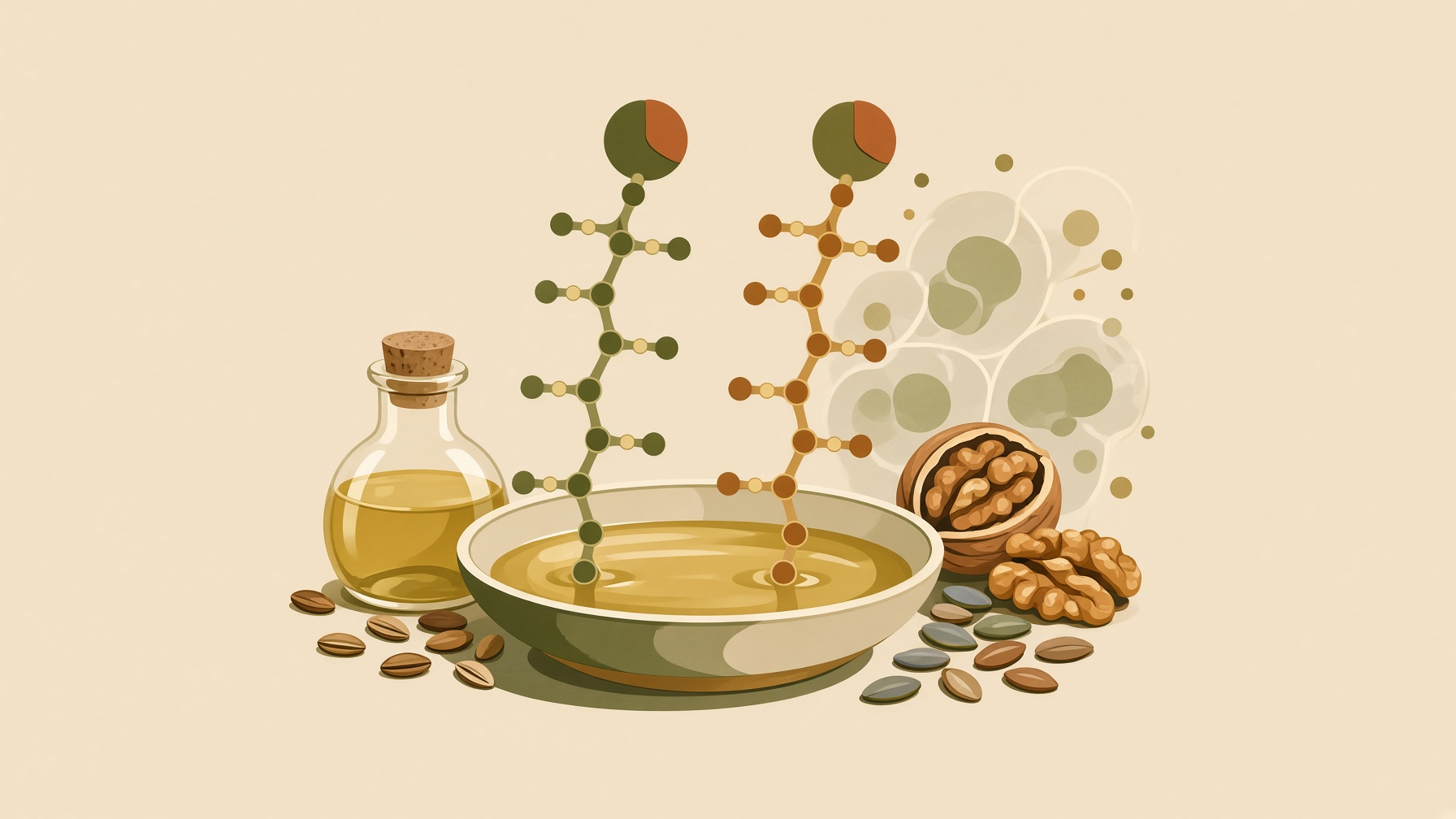
Both essential fatty acids occur in familiar foods. Flaxseed oil provides linoleic acid and alpha-linolenic acid and is particularly rich in ALA. Edible hemp seeds, hempseed oil, and walnuts also provide both essential fatty acids, although their relative proportions differ among foods. Linoleic acid is also abundant in many commonly consumed vegetable oils. Because these fatty acids are widely available in typical diets, clinically apparent essential-fatty-acid deficiency is uncommon in people consuming adequate diets. It can nevertheless occur in circumstances involving severe malabsorption, extremely restricted intake, or inadequate provision of essential fats during parenteral nutrition .2,3
The distinction between omega classification and essentiality helps prevent a common misunderstanding. Omega-3 and omega-6 describe where particular double bonds occur within a fatty-acid molecule, whereas essentiality describes whether the body can supply enough of that fatty acid on its own. A fatty acid can therefore belong to an important biological family without necessarily being nutritionally essential.



Join the discussion
No account or email is required. Your display name and comment will be public.