
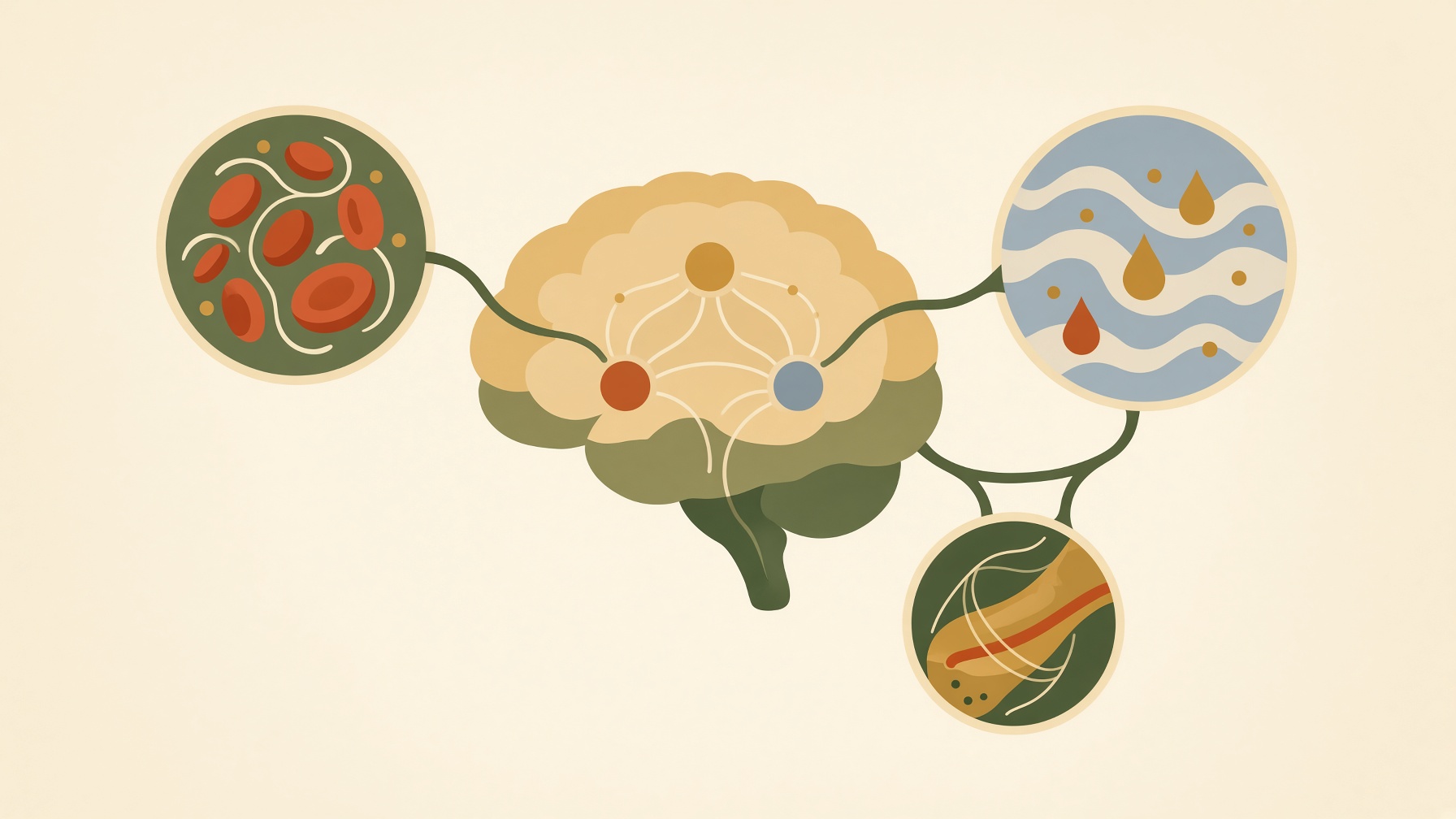
Thirst feels immediate and simple, yet the sensation is produced by a surprisingly sophisticated regulatory system. A small disturbance in body-fluid balance can create a powerful motivation to drink, and that motivation can begin fading before the water has fully entered the circulation. Understanding that timing reveals how much more is happening than the simple feeling of being “dry”.
Thirst is a homeostatic mechanism that promotes water intake when body-fluid balance is disturbed. Small increases in plasma tonicity are particularly effective at stimulating thirst, whereas larger changes in circulating volume or pressure can also contribute. Sodium salts are the major determinants of plasma tonicity under ordinary physiological conditions, which helps explain the close relationship between plasma sodium concentration and osmotic thirst. These osmotic and volume-related signals can interact rather than operating as completely separate systems .1,2
These changes are detected through neural circuits that integrate osmotic information with signals related to blood volume and pressure. Hormonal signals such as angiotensin II can also promote thirst when extracellular volume is reduced. The brain therefore combines several sources of information when generating the motivation to drink .2
Once drinking begins, thirst can diminish remarkably quickly. Sensory signals generated in the mouth and oropharynx during drinking contribute to thirst satiation. Gastrointestinal feedback also contributes, including signals related to gastric filling and the volume or composition of ingested fluid. Together, these preabsorptive signals can suppress thirst rapidly, well before the ingested water has fully corrected the underlying osmotic or volume disturbance .2,3
Age can change how strongly this system responds. Age can change how strongly this system responds. In some experimental settings, older adults show a blunted thirst sensation or drink less in response to dehydration or fluid-balance challenges, although the magnitude of this age-related difference varies across conditions. Older adults are also more vulnerable to dehydration for several reasons beyond thirst alone, including changes in renal water conservation, body composition, health status, and access to fluids .4
Thirst is unusual because it is both reactive and anticipatory. The body can detect a developing fluid imbalance, generate a strong motivation to drink, and then begin dialing that motivation back before the water has finished correcting the problem. That timing helps prevent both undercorrection and unnecessary continued drinking, while also showing why the sensation of thirst is not a perfect real-time measurement of total body water.
Join the discussion
No account or email is required. Your display name and comment will be public.