
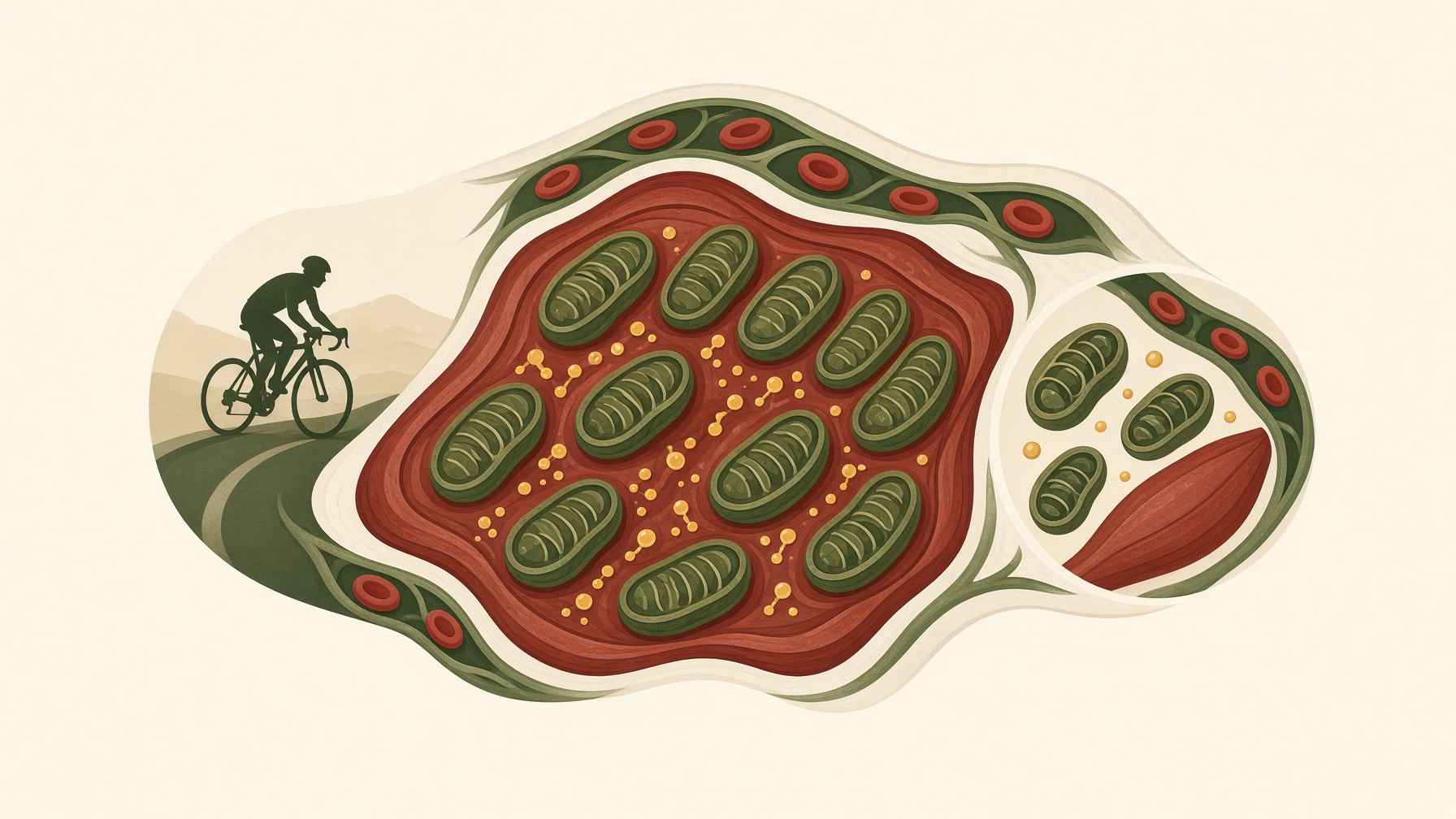
Endurance activities such as long-distance running, cycling, or swimming place a very different demand on skeletal muscle than short bursts of intense effort. To keep working over longer periods, muscle must be able to continue producing usable energy while maintaining an adequate supply of oxygen to active fibers. Repeated endurance training gradually changes the muscle in ways that make this sustained activity easier to support. Some of the most important adaptations occur within the muscle fibers themselves, while others involve the small blood vessels that surround them.
Endurance training can increase the mitochondrial content of skeletal muscle. Greater mitochondrial content enhances the muscle’s capacity for oxidative ATP, the cell’s immediate energy currency, resynthesis during prolonged exercise. That distinction matters: the adaptation does not mean that the muscle simply accumulates a larger resting supply of ATP. Instead, it allows the muscle to continue resynthesizing ATP through oxidative metabolism during activity .1,2
Endurance training can also increase the capillary supply around skeletal-muscle fibers by promoting the growth and remodeling of small blood vessels. Greater capillary supply supports oxygen delivery to active muscle fibers. This vascular adaptation works alongside the changes within the muscle fibers, helping the increased oxidative machinery receive the oxygen it needs during exercise .1,2
Together, these adaptations help the muscle meet the demands of prolonged activity. As a result, low-to-moderate activity can often be maintained for longer before fatigue begins to limit performance. The benefit has limits, however, particularly as exercise becomes longer or more demanding .2
Over time, these adaptations make skeletal muscle better prepared for the repeated energy demands of prolonged activity. This does not prevent fatigue altogether, especially when exercise becomes very long or intense, but it can delay the point at which maintaining the same level of activity becomes difficult. The result is skeletal muscle that is better adapted to sustaining prolonged activity.
Join the discussion
No account or email is required. Your display name and comment will be public.