
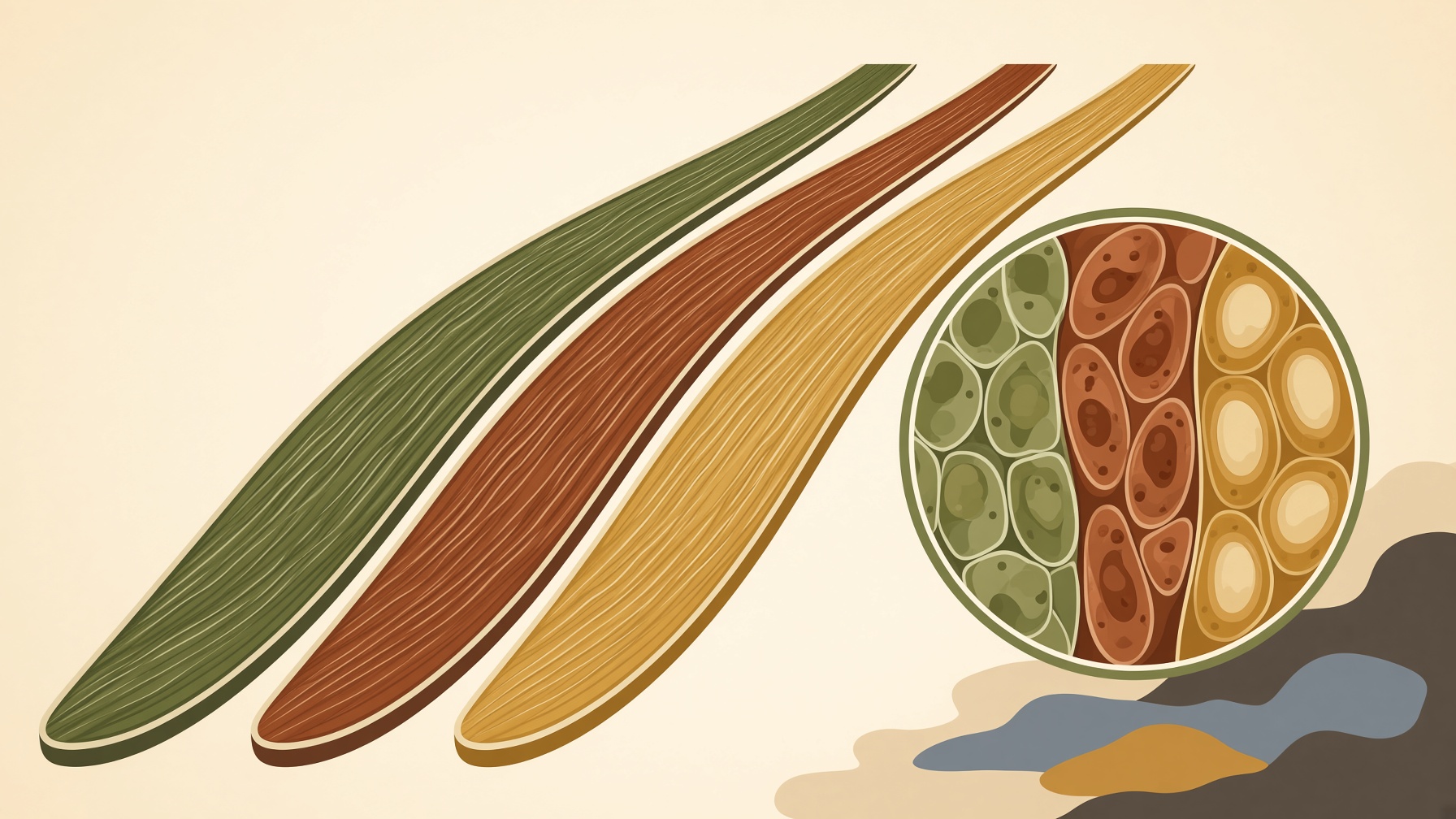
Muscle fibers are often described as “slow” or “fast,” but those labels capture only part of the difference. A useful comparison also considers how fibers produce ATP and how well they sustain activity before fatigue develops. The familiar three-type model provides a useful way to organize these differences, although real muscle fibers show more variation than the model suggests.
In that simplified physiological scheme, skeletal-muscle fibers are grouped as slow oxidative, fast oxidative, and fast glycolytic. Human muscle fibers are also commonly described as Type I, Type IIa, Type IIx, or hybrid phenotypes, which adds more detail to this simplified classification. Most human skeletal muscles contain a mixture of fiber phenotypes, and hybrid fibers may also be present. The three-type model is therefore most useful for comparing general fiber characteristics .1,2
Slow oxidative fibers contract more slowly than fast-twitch fiber types and rely heavily on mitochondrial oxidative metabolism to produce ATP. They can sustain low-to-moderate-force activity for long periods and are highly resistant to fatigue .1
Fast oxidative fibers contract more rapidly than slow oxidative fibers while still retaining substantial oxidative capacity. They can produce much of their ATP aerobically. They are less fatigue-resistant than slow oxidative fibers, but can still sustain activity longer than fast glycolytic fibers .1
Fast glycolytic fibers complete the comparison with rapid contractile kinetics and a different metabolic emphasis. They rely heavily on anaerobic glycolysis for rapid ATP production. They also generally fatigue more rapidly than both slow oxidative and fast oxidative fibers .1
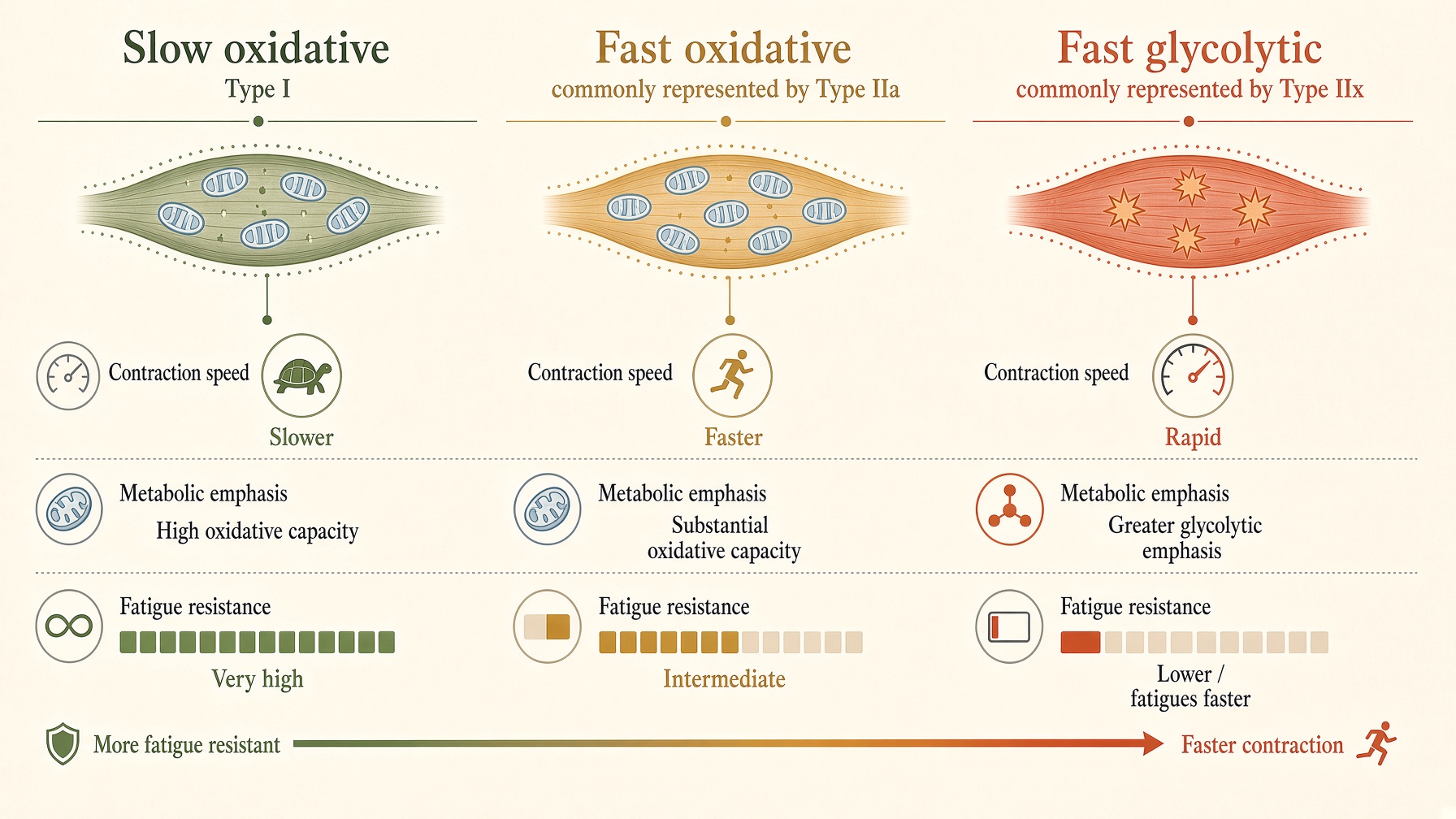
These fiber characteristics help explain why different muscles are better suited to different kinds of activity. Some fibers are adapted for prolonged, fatigue-resistant work, while others are better equipped for rapid and powerful contractions. The balance between contraction speed, metabolic strategy, and fatigue resistance allows skeletal muscle to meet a wide range of physical demands. Rather than fitting into completely separate categories, muscle fibers show a spectrum of characteristics that reflects the different roles they perform during movement and exercise.
Join the discussion
No account or email is required. Your display name and comment will be public.