
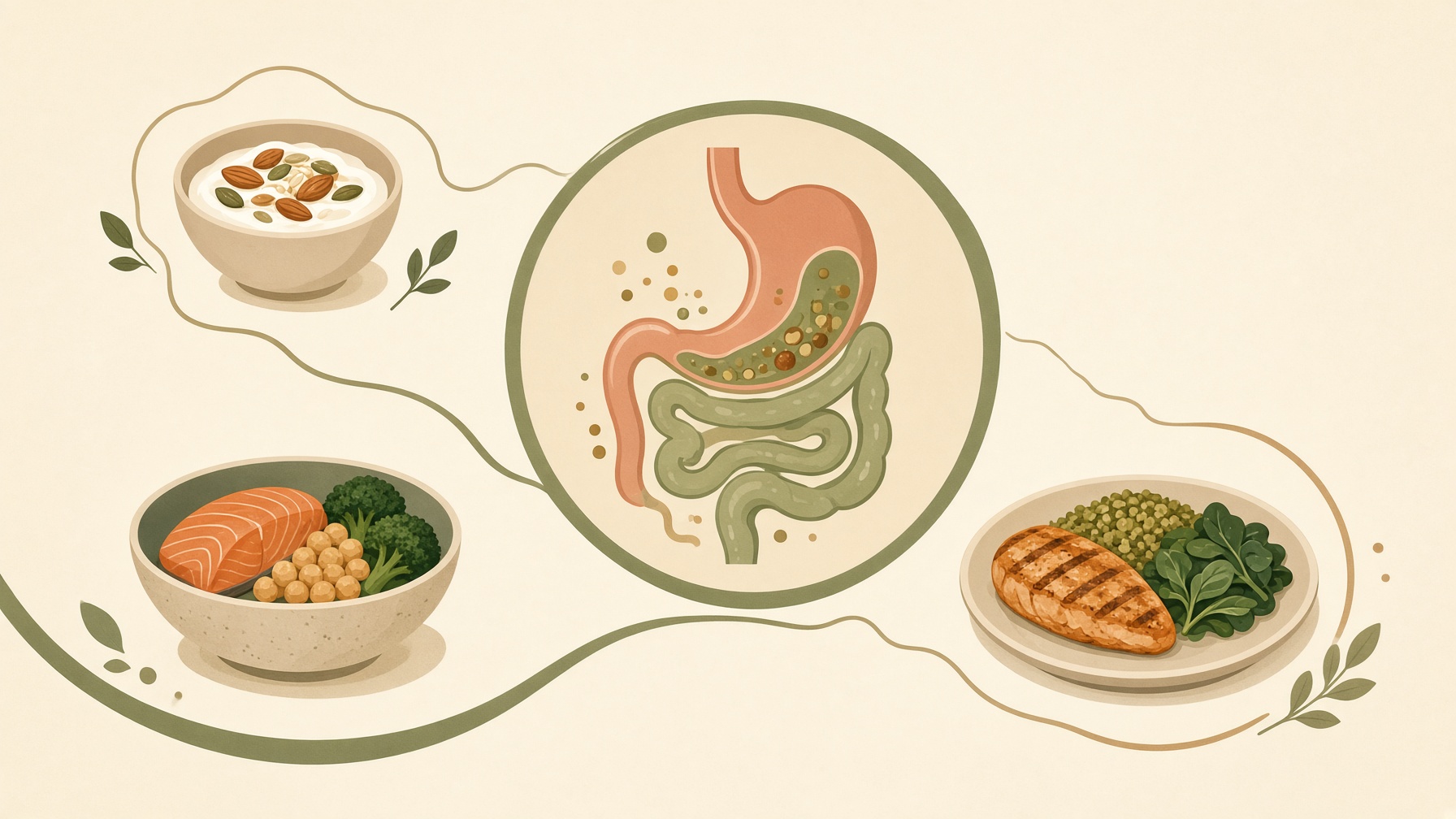
The Daily Protein Target: Why Hitting It across Ordinary Meals Is Harder than It Looks
Protein targets can fit familiar meals without perfectly equal portions, since total intake and meal distribution address different questions.
Categories
Human nutrition and metabolism looks at how food nourishes the body and what happens after we eat. Nutrition focuses on the relationship between food, nutrients, and health. Metabolism is the set of processes the body uses to process, store, and use nutrients and manage energy under different conditions.
The body needs energy and nutrients to function and repair itself. How nutrients are supplied, processed, and used plays an important role in health. Nutrition is one part of a wider picture that includes genetics, environment, life stage, physical activity, sleep, and other aspects of lifestyle.
This category covers how carbohydrates, fats, and proteins are digested, absorbed, stored, and used; how vitamins and minerals support normal body functions; and how the body manages energy in different states. It also includes fiber, hydration, dietary patterns, nutrient requirements, food safety, body composition, and eating habits such as what people eat, how much they eat, and how often.
Here, we look at what nutrients do in the body, how food relates to energy and metabolism, and how dietary patterns and eating habits fit into overall health. We also unpack common nutrition concepts so they are easier to understand and judge. The goal is to support more informed food and lifestyle choices, with less reliance on nutrition misinformation, pseudoscience, and unsupported claims.
Our approach emphasizes evidence, practicality, flexibility, and respect for different cultural contexts. We aim to translate nutrition science into useful everyday understanding. That means explaining how nutrition works, where individual differences matter, and how to think more critically about nutrition information and trends.
From this collection
Protein targets can fit familiar meals without perfectly equal portions, since total intake and meal distribution address different questions.
Midlife metabolism does not follow one universal decline, and population averages cannot explain an individual's changing calorie needs or weight.
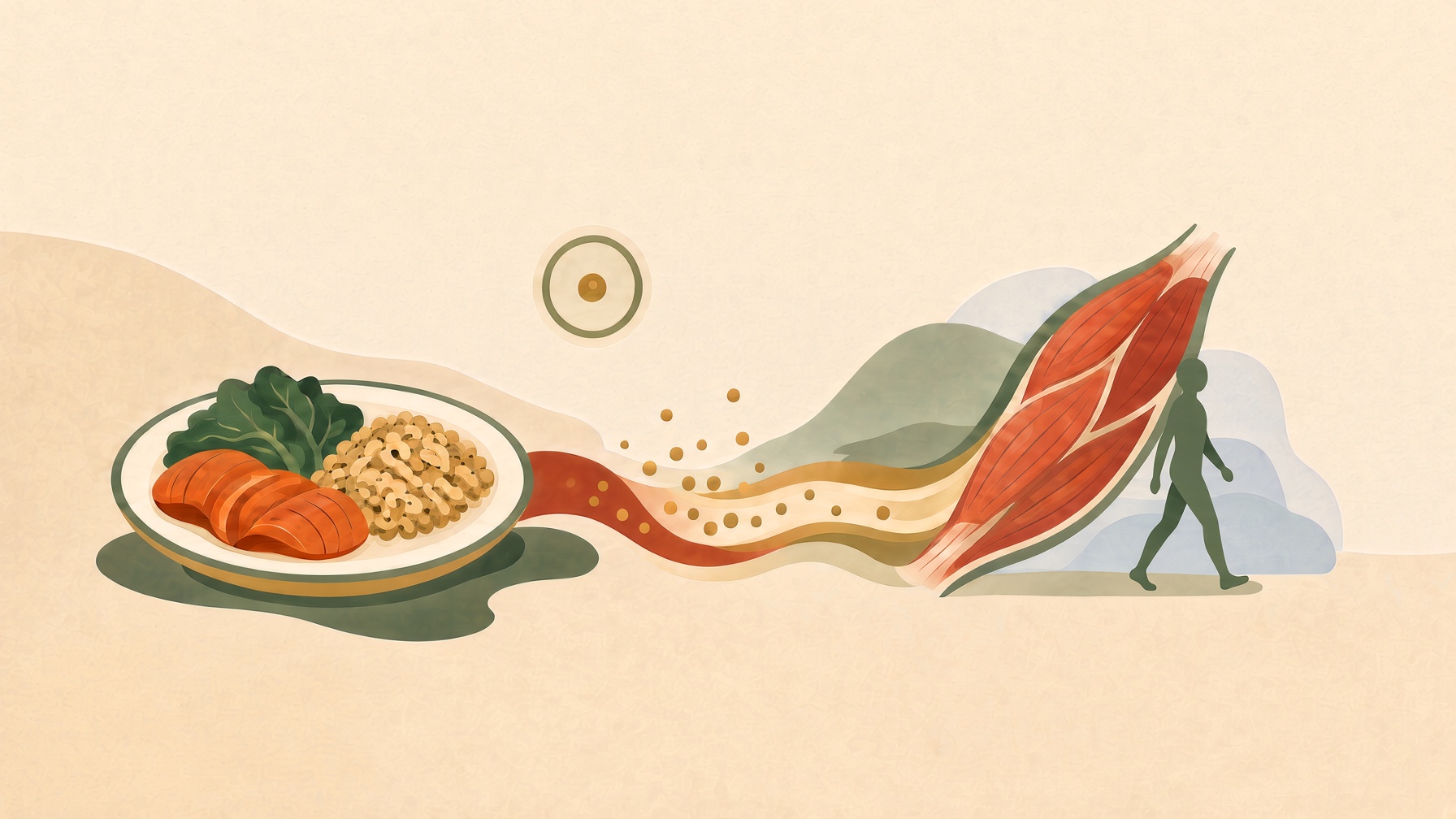
Walking after meals can reduce post-meal glucose excursions, but studies do not establish one ideal start time or a requirement to walk after every meal.
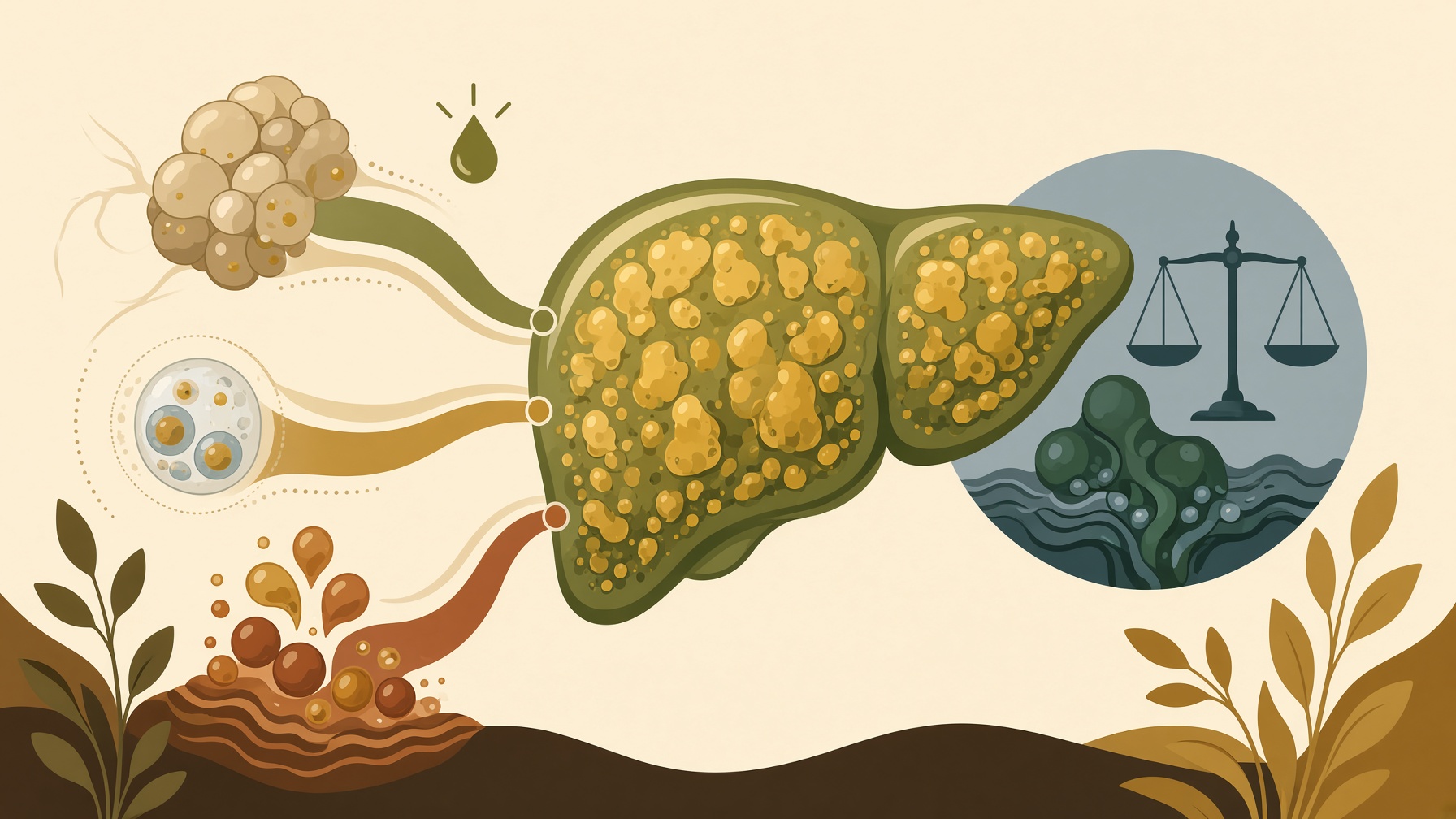
Fatty liver develops when incoming fat and fat synthesis outpace oxidation and export, so carbohydrates alone cannot explain metabolic liver fat.
Lapse and relapse describe different patterns of behavior change, but research offers no fixed number of missed days that separates the two.
Fast and slow weight loss can differ beyond the scale, so comparing outcomes requires attention to body composition and the support within each program.

The 3,500-calorie rule assumes a fixed rate of weight loss, but changing energy needs make a straight-line forecast unreliable over time.
Food cues and the circumstances around a meal can influence eating patterns, but average research findings cannot explain every individual choice.
Water-soluble vitamins differ in absorption and storage, so urinary excretion does not guarantee that excess supplement doses are harmless.

Added fibers count on U.S. nutrition labels through specific regulatory paths, so resisting digestion alone does not make every ingredient qualify.
Dehydration can strain circulation and reduce cooling during exercise, adding to the challenge of releasing heat in demanding conditions.
Carbohydrate metabolism supplies more than immediate energy, providing glucose-derived material that cells can store or use to build molecules.