
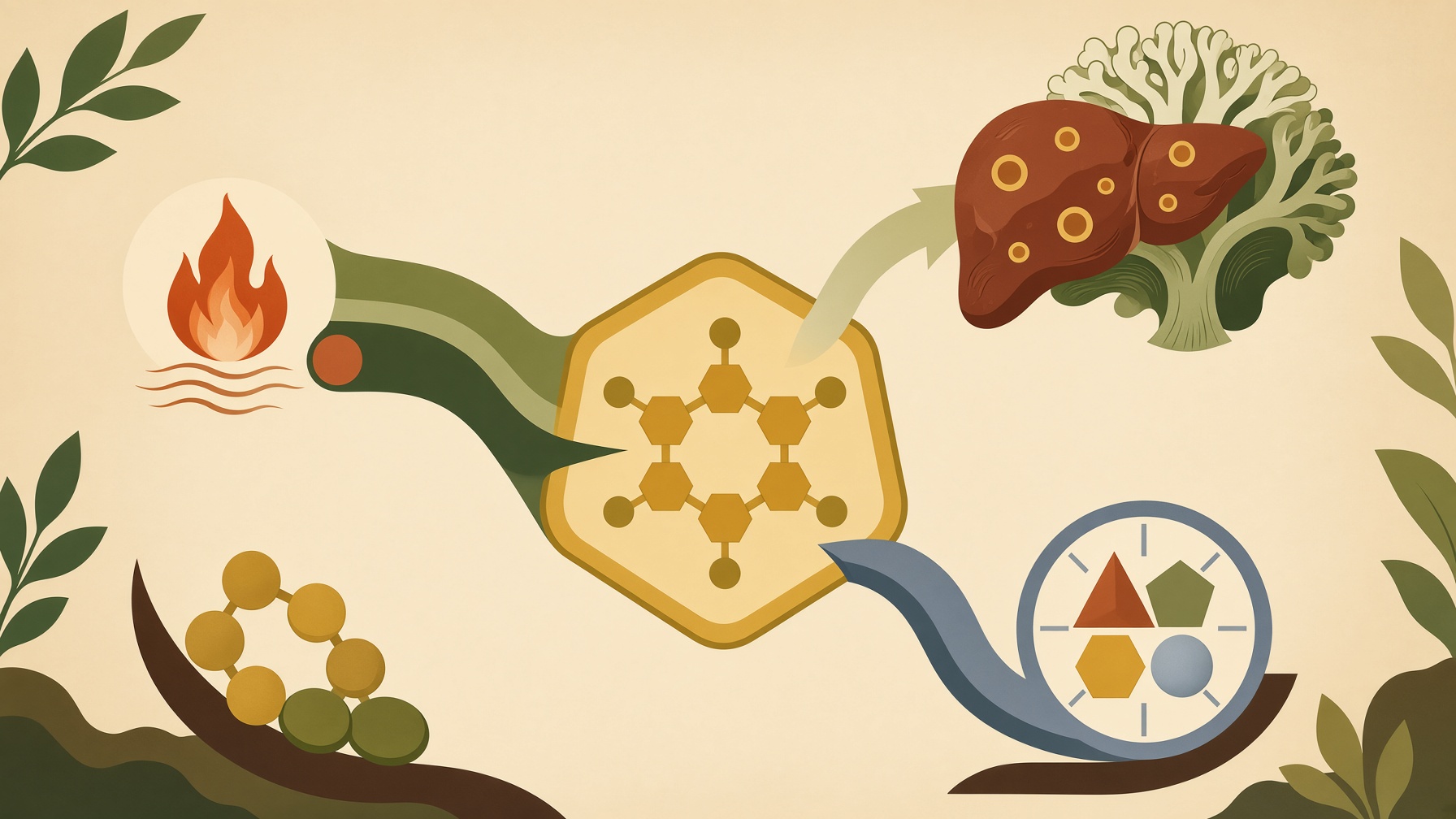
Carbohydrates are often discussed mainly as fuel, which can make their role in metabolism sound one-dimensional. Glucose certainly serves as an important energy substrate, but its metabolic value does not end when immediate ATP production is no longer the priority. The same molecules and intermediates can be redirected according to the needs of different tissues and different metabolic states.
Dietary carbohydrate is an important source of glucose for cellular energy metabolism. Mature red blood cells lack mitochondria and therefore depend on glycolysis for ATP production. Under ordinary fed conditions, glucose is also the brain’s predominant fuel. The brain is not limited to glucose in every circumstance, however. During prolonged fasting or sufficiently carbohydrate-restricted states, ketone bodies can become an increasingly important alternative fuel. Carbohydrate’s role as an energy source therefore varies with both the tissue involved and the metabolic state .1,2
Glucose can also be stored for later use. When glucose availability exceeds immediate oxidative needs, some can be converted to glycogen. Most body glycogen is stored in skeletal muscle and the liver, but those stores serve different functions. When blood glucose falls, liver glycogen can be broken down and glucose released into the circulation. Skeletal-muscle glycogen, by contrast, is used mainly within the muscle itself and is not directly released into the blood as free glucose. Glycogen storage therefore provides more than one kind of glucose reserve rather than a single interchangeable pool .3
Glucose metabolism also supplies material for processes beyond immediate ATP production or energy storage. The pentose phosphate pathway can use glucose-6-phosphate to support the production of ribose-5-phosphate and NADPH. Ribose-5-phosphate contributes to nucleotide synthesis, while NADPH supports reductive biosynthesis and cellular redox systems. In this way, glucose-derived metabolism can provide useful biochemical intermediates as well as fuel .4
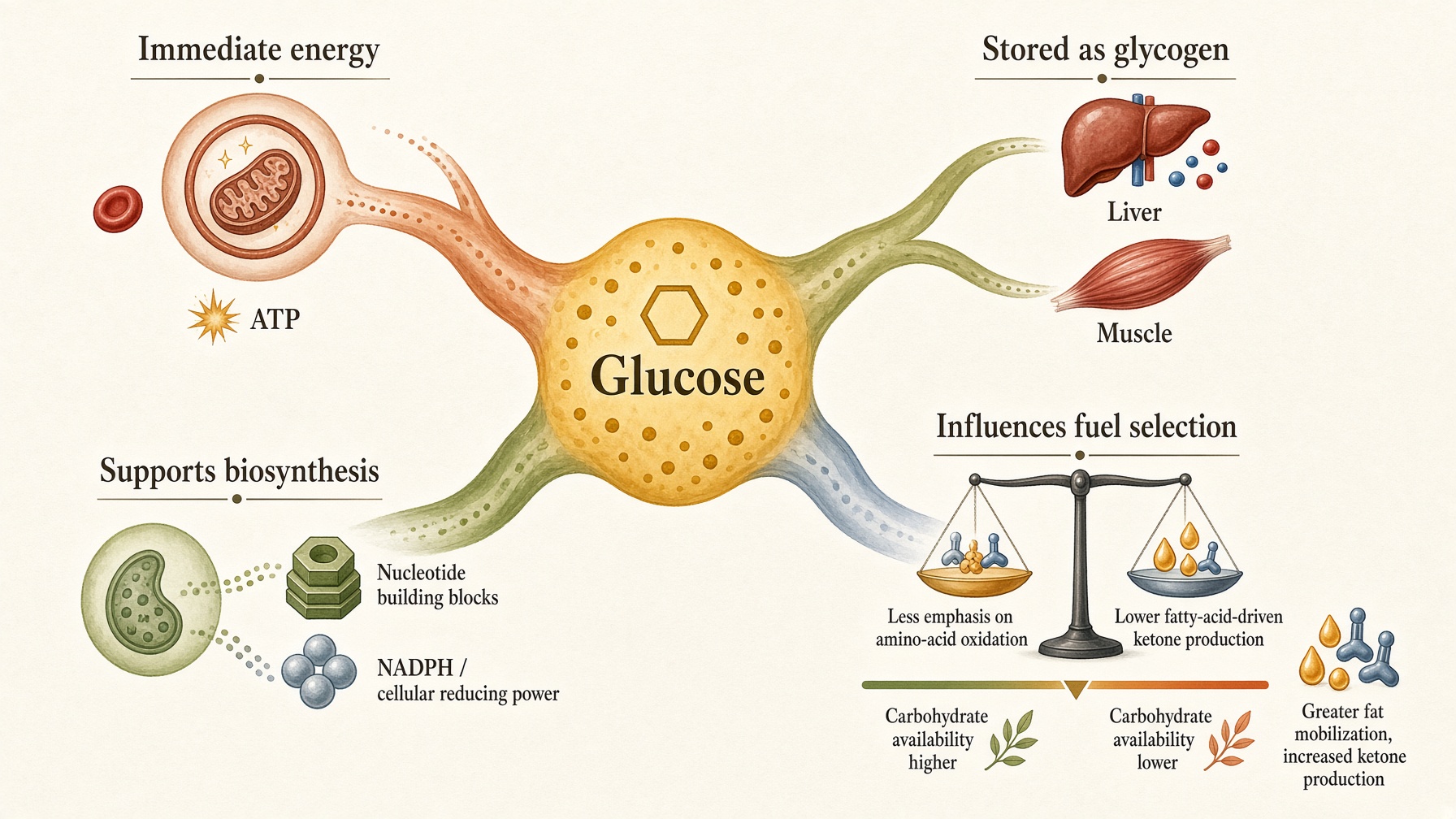
Carbohydrate availability can also influence how the body uses other fuels. In some conditions, providing carbohydrate reduces amino-acid oxidation and nitrogen loss, contributing to what is commonly called a protein-sparing effect. This effect is relative and context-dependent rather than a complete prevention of protein breakdown, because protein metabolism is also shaped by total energy intake, dietary protein, hormonal signals, and physical activity .5
Carbohydrate status also helps shape hepatic ketone production through changes in the hormonal and substrate environment. Higher insulin signaling suppresses adipose-tissue lipolysis and reduces fatty-acid delivery to the liver, limiting ketogenesis. When carbohydrate availability and insulin signaling fall sufficiently, fatty-acid mobilization and hepatic ketone production can increase, allowing ketone bodies to become more important alternative fuels for several tissues .2
The broader point is that a nutrient’s metabolic importance cannot always be captured by asking how much energy it provides. Glucose sits at junctions where cells can decide whether carbon should be used immediately, stored, or redirected into other biochemical pathways. Seeing carbohydrate metabolism in that wider context makes “fuel” an important description, but not a complete one.


Join the discussion
No account or email is required. Your display name and comment will be public.