
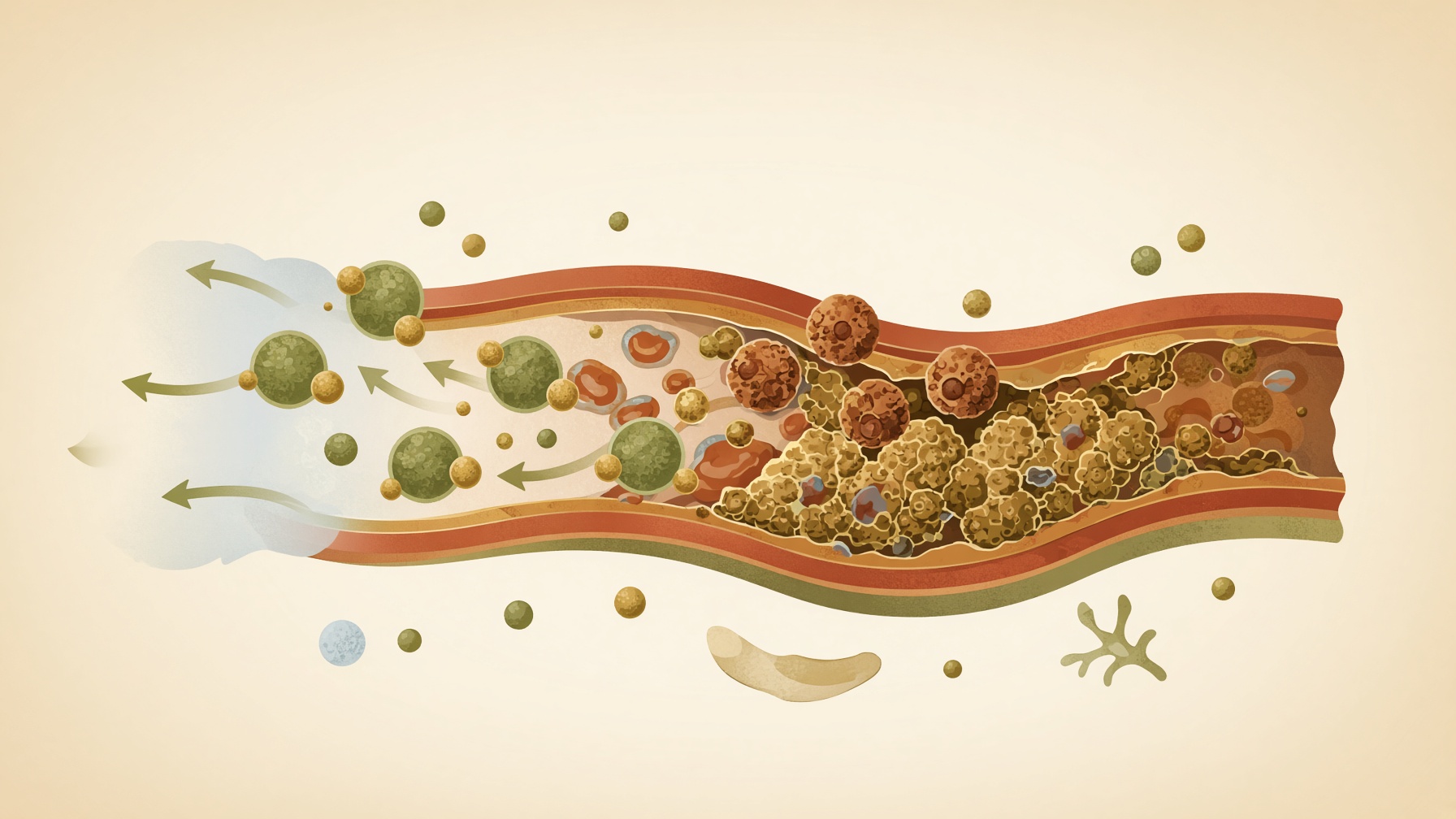
“Good cholesterol” and “bad cholesterol” are familiar labels, but they can make LDL and HDL sound simpler than they are. The shorthand points toward real differences in how these systems handle cholesterol, yet it becomes misleading if the labels are taken as literal descriptions of two different kinds of cholesterol.
LDL-C is commonly called “bad cholesterol,” while HDL-C is often called “good cholesterol,” but both terms are public-health shorthand. LDL refers to lipoprotein particles, while HDL is a heterogeneous lipoprotein system; LDL-C and HDL-C refer to the cholesterol carried within those lipoproteins. LDL also has a normal transport role: it is a major carrier of cholesterol from the liver-derived lipoprotein pathway to peripheral tissues. A higher HDL-C value itself is not established as a simple causal target for protection .1
LDL-C has cardiovascular relevance because circulating LDL particles can enter the arterial wall, where retained particles contribute to the development of atherosclerosis. Hepatic LDL-receptor activity is also a major determinant of how efficiently LDL is cleared from the circulation; reduced receptor function can therefore increase circulating LDL levels and prolong exposure. Over time, greater exposure to LDL and other atherogenic apoB-containing particles increases the opportunity for their retention in the arterial wall and the progression of atherosclerotic disease .2
HDL participates in cholesterol efflux and reverse cholesterol transport, processes that help move excess cholesterol away from peripheral cells, including macrophages, toward pathways that can ultimately return it to the liver or promote its elimination. Once cholesterol reaches the liver, it can be reused in hepatic metabolism, secreted into bile, or converted to bile acids for biliary secretion. Reaching the liver does not guarantee net elimination from the body, however, because some cholesterol and bile acids can later be reabsorbed from the intestine rather than lost in feces .1
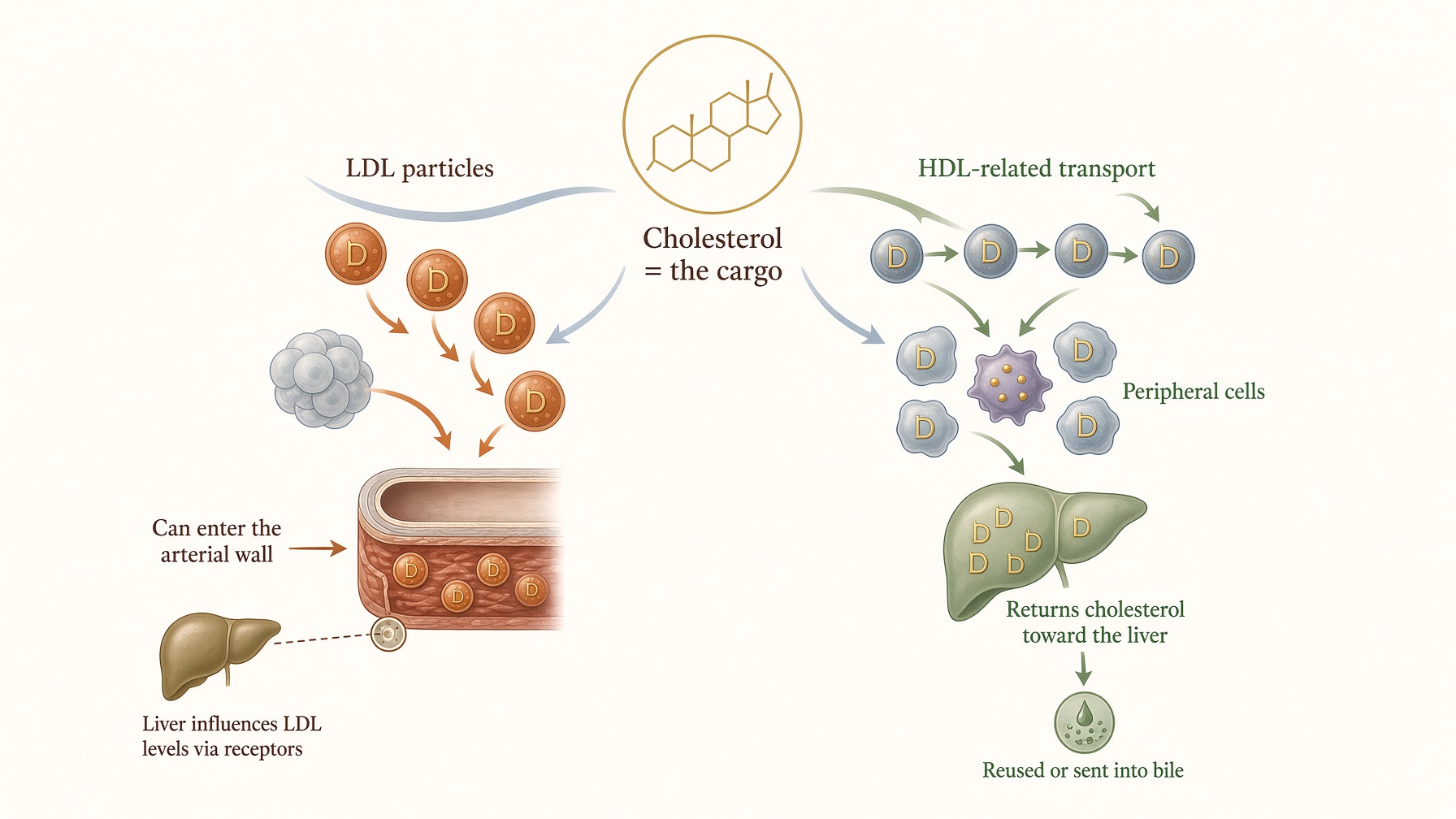
The deeper problem with the “good” and “bad” labels is that they turn complex transport particles into simple moral categories. Cholesterol itself is an essential molecule, and the biological consequences depend heavily on which particles are carrying it, how many of those particles are circulating, where they travel, and how they interact with tissues. Keeping those distinctions in view makes LDL-C and HDL-C much more informative than their familiar nicknames suggest.
Join the discussion
No account or email is required. Your display name and comment will be public.