
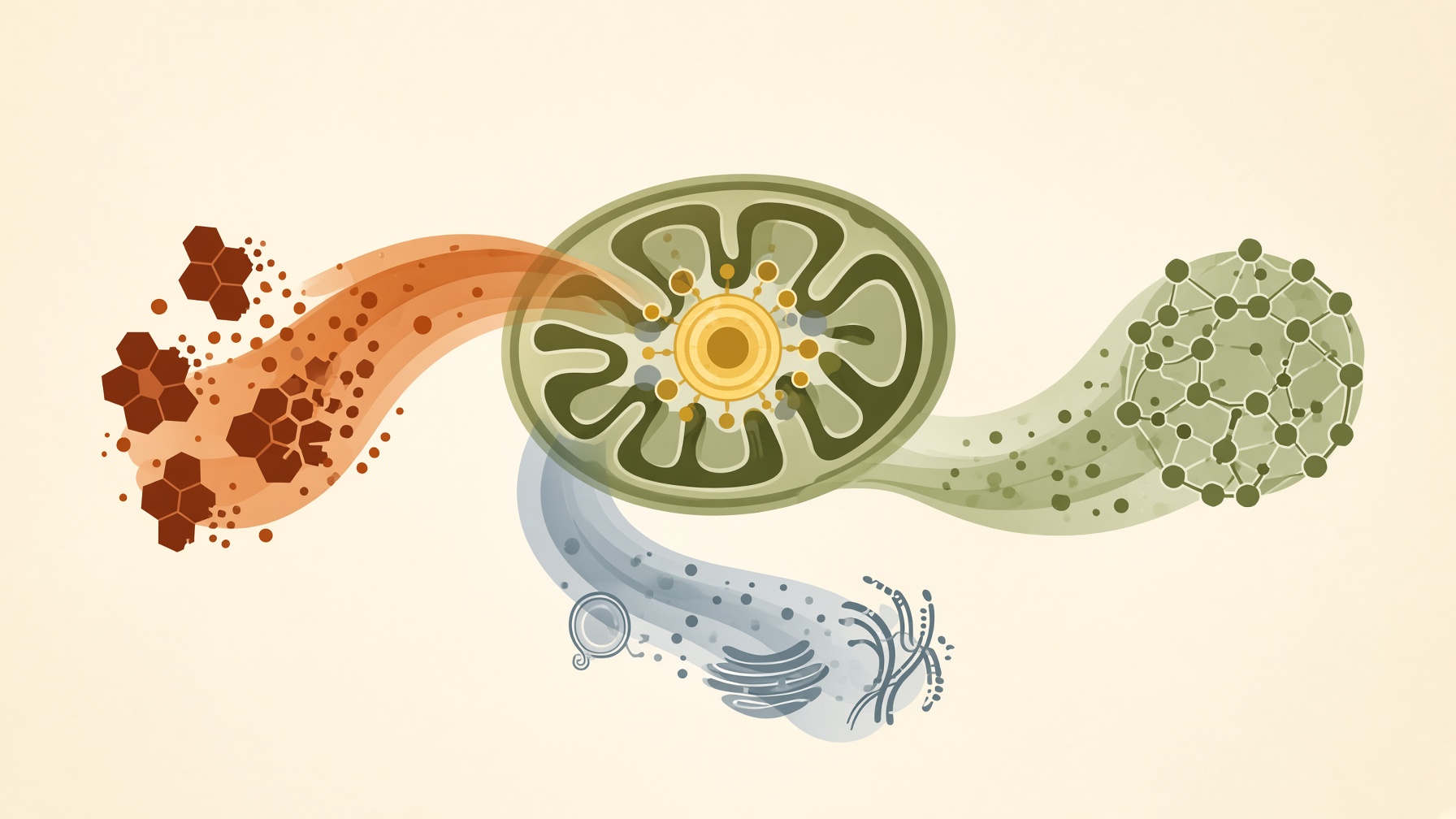
Metabolism is often spoken about as though it were a single process, but at the cellular level it includes many biochemical reactions with different jobs. Some pathways break molecules down, others build more complex molecules, and cellular work depends on ways of making usable energy available where it is needed. ATP sits at the center of much of that energy transfer.
Metabolism is the sum of the body’s biochemical reactions, including both catabolic and anabolic pathways. These metabolic processes occur continuously throughout the living human body. This broad view of metabolism helps explain why both breakdown and synthesis are essential parts of normal cellular activity .1
Catabolism refers to pathways that break larger molecules into smaller ones. This includes the breakdown of food-derived molecules, but cells can also break down compounds that did not come directly from food. Catabolic pathways can release free energy that cells capture in usable forms. Anabolism works in the opposite direction by building larger or more complex molecules from smaller precursors. Building those molecules requires an input of usable cellular energy .1
ATP is one of the main molecules cells use to transfer energy. It is a principal cellular energy currency, and ATP hydrolysis can directly power molecular machines and other forms of cellular work. Skeletal muscle provides a concrete example. ATP supplies immediate energy for skeletal-muscle contraction and for the associated handling of calcium. ATP hydrolysis can therefore be coupled directly to processes that require energy .1
A common ATP-hydrolysis reaction produces ADP and inorganic phosphate, or Pi. Cells continually regenerate ATP from ADP and Pi as ATP is used. During hydrolysis, free energy is released that can be coupled to cellular work .1
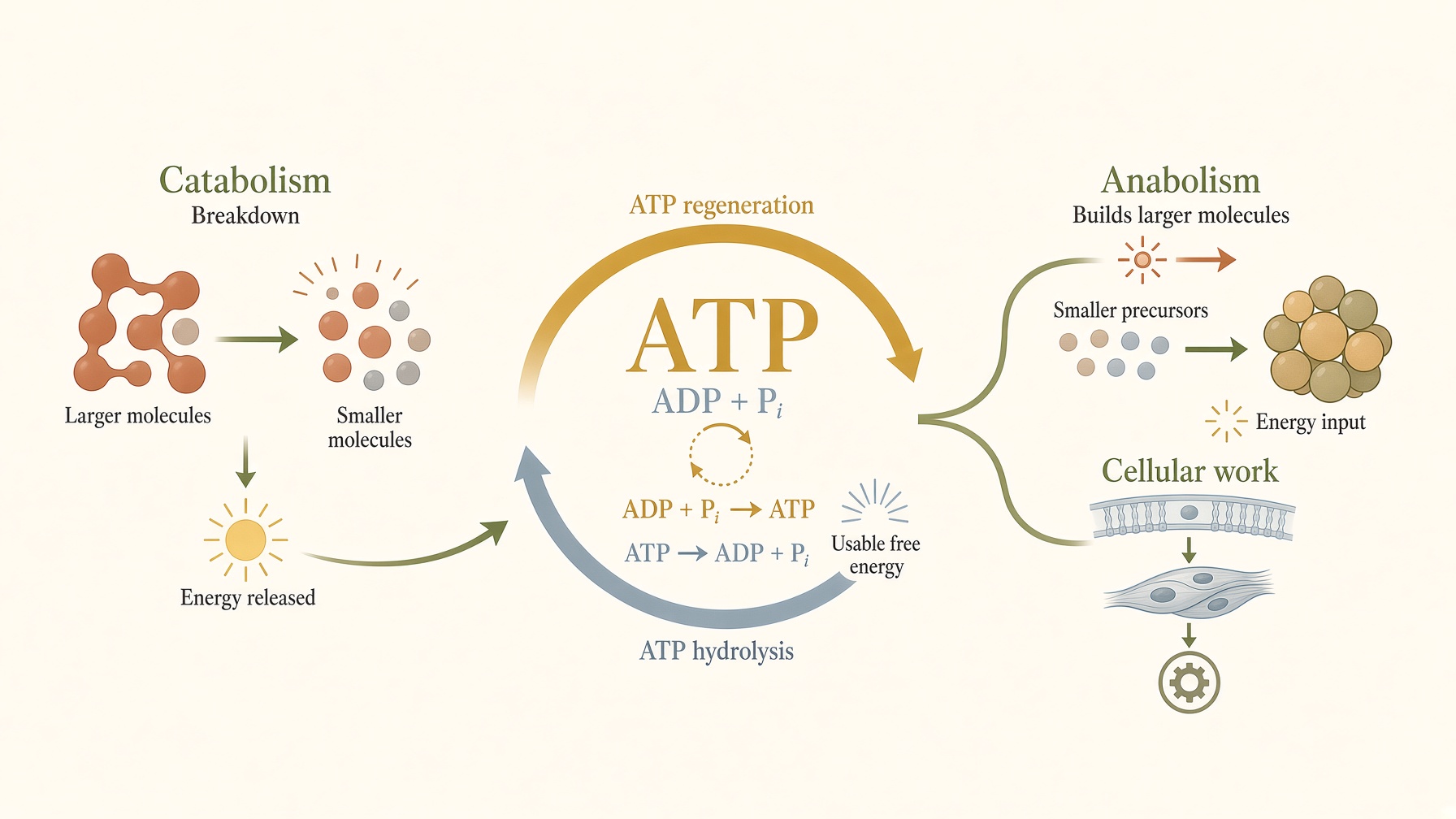
The constant balance between breakdown, synthesis, and energy transfer allows cells to respond to changing demands. ATP helps connect these processes by linking energy released in some reactions with the work required by others, making metabolism a coordinated network rather than a collection of isolated reactions.
Join the discussion
No account or email is required. Your display name and comment will be public.